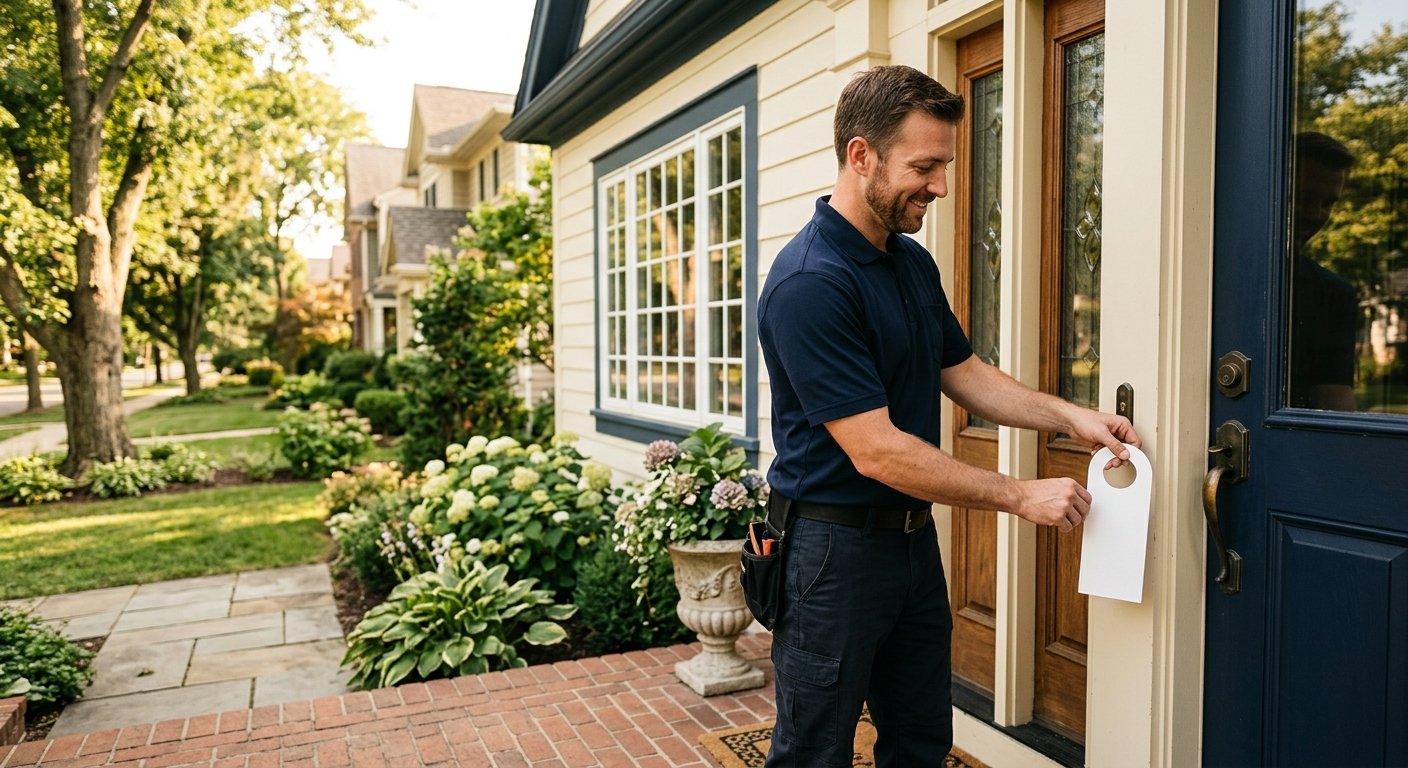
Send real estate farming postcards at least once a month for a minimum of six months — and ideally 12–24 months — to build the name recognition that converts neighbors into clients. The average homeowner needs to see your name 7 to 11 times before thinking of you when it’s time to sell, which makes consistent, repeated mailing the single most important factor in a successful farming campaign.
- Mail at least once a month; commit to six months before evaluating results — agents who dominate neighborhoods have typically been mailing the same homes for 12–24 months.
- A solo agent should start with 300–500 homes; target neighborhoods with 5%–8% annual turnover for 15–40 potential listings per year in a 500-home area.
- Rotate postcard formats (market update, just listed, just sold, home valuation offer) to keep the campaign fresh and give homeowners a reason to keep reading.
- Geographic farming postcards typically generate a 0.5%–2% response rate from cold audiences — on a 500-home farm, that is 2–10 inbound leads per mailing.
- EDDM postcard rates run approximately $0.20–$0.25 per piece, making it one of the most cost-efficient options for high-volume neighborhood saturation.
This guide breaks down exactly how often to mail, when to mail, and how to structure your campaign so you’re the agent whose name comes up at the kitchen table when a neighbor decides to list.
What Is Real Estate Farming (And Why Postcards Still Win)
Geographic farming means planting your marketing roots in a specific neighborhood or zip code and tending to it consistently until you become the go-to agent in that area. It’s one of the most proven lead-generation strategies in real estate — and physical mail is still the most effective vehicle for it.
According to the U.S. Postal Service, 98% of consumers check their mail daily, and direct mail consistently outperforms digital channels in response rate for local targeting. While email inboxes are overwhelmed and digital ads scroll past in half a second, a well-designed postcard sits on a kitchen counter and gets seen multiple times.
Real estate prospecting postcards let you target specific carrier routes, neighborhoods, or custom lists — which means every dollar you spend goes to actual homeowners in your farm area, not a broad audience with no connection to your market.
The Right Farm Size: Start Here Before You Plan Frequency
Before talking about timing, you need the right farm size. Most agents try to farm too large a territory too early and spread their budget too thin.
A practical starting point:
- 300–500 homes for a solo agent building a new farm
- 500–1,000 homes for a team with dedicated marketing budget
- Aim for neighborhoods with 5%–8% annual turnover — that’s 15–40 potential listings per year in a 500-home area
A smaller farm lets you mail more often with better design and higher-quality printing — which compounds faster than a larger farm you can only hit once a quarter. Budget per piece and mailing frequency are directly linked to farm size.
How Often Should You Send Real Estate Farming Postcards?
The short answer: once a month, minimum. Here’s why that frequency matters and how to structure it.
The 6-Month Minimum Rule
Commit to six months before you evaluate results. Homeowners don’t usually make the decision to sell on the same day your postcard arrives. They think about it for months. Your postcard needs to be waiting in their mental filing cabinet when that decision crystallizes.
Agents who mail twice and quit aren’t farming — they’re sampling.
Farming requires patience. The agents who dominate neighborhoods have typically been mailing the same homes for 12–24 months consistently.
Recommended Mailing Frequency by Stage
Launch Phase: Months 1–3
Mail every 3–4 weeks. You’re building name recognition from zero, so hitting households frequently early accelerates the familiarity curve.
Growth Phase: Months 4–9
Settle into a monthly mailing rhythm. Rotate your postcard formats — market update one month, just listed/just sold the next, a neighborhood-specific offer the next.
Dominance Phase: Month 10+
Monthly at minimum, with tactical boosts around spring selling season, fall listings push, and any major local market event such as rate changes or inventory shifts.
Timing Your Campaigns Around the Real Estate Calendar
Consistency is the foundation — but smart timing amplifies your results. Layer these campaign moments on top of your monthly cadence.
Spring (February–April): Prime Listing Season
This is the most competitive window. Homeowners are actively thinking about selling. Increase your frequency to every 2–3 weeks in February and March. Lead with market data: what homes sold for in their neighborhood last quarter, current inventory stats, and a clear call-to-action to schedule a home valuation.
Summer (May–July): Just Listed / Just Sold Momentum
Use just listed and just sold postcards aggressively during active listing months. Every listing you close in the farm area is marketing gold. Mail it to the surrounding 200–300 homes within 72 hours of listing or closing. This is circle prospecting at its most effective — neighbors want to know what the house sold for, and your postcard tells them while keeping your name front and center.
Fall (August–October): The Second Selling Window
The fall market is underrated. Families who didn’t move in spring are now motivated. Target homeowners who received your spring mailers but didn’t respond. A market update showing summer sold prices paired with a “still thinking about selling?” message can unlock conversations that spring couldn’t.
Winter (November–January): Stay Visible When Competitors Go Quiet
Most agents pull back in winter. That’s your opportunity. A “Year in Review” market postcard or a “What’s your home worth heading into 2027?” mailer stands out because there’s less competition in the mailbox. Consistent winter mailing often produces some of the strongest spring pipeline results.
Postcard Formats That Work Best for Farming
Rotating your postcard content keeps your campaign fresh and gives homeowners a reason to keep reading month after month. Here’s a practical rotation schedule:
- Market update postcards: Monthly or quarterly — sold prices, days on market, list-to-sale ratios in the farm area
- Just listed postcards: Within 48–72 hours of any listing going active in your farm
- Just sold postcards: Within 72 hours of closing — highlight the sold price to trigger curiosity
- Home valuation offer: Every 3–4 months — a direct CTA to get a free comparative market analysis
- Seasonal/community-focused: Holiday greetings, local event spotlights, neighborhood stats — builds likability and humanizes your brand
| Format | EDDM (Every Door Direct Mail) | Curated Mailing List |
|---|---|---|
| Best for | Broad neighborhood awareness; saturating every household in a carrier route | Targeted farming — homeowners only, specific income brackets, homes owned 7+ years |
| Cost per piece | ~$0.20–$0.25 (USPS retail rates) | Higher per-piece cost; smaller, more precise audience |
| Minimum postcard size | 6.25×9 (USPS requirement) | No USPS minimum; 6×9 and 6.5×11 most popular |
| Targeting precision | Every address on a route, including renters | Filtered by ownership, tenure, demographics |
On format size: for geographic farming postcards, 6×9 and 6.5×11 are the most popular. Larger formats command more visual attention in the mailbox and allow for stronger design impact. At Shop Direct Mail, we handle strategy, design, list acquisition, printing, and mailing under one roof — so you’re not coordinating five vendors to get one campaign out the door. That matters when timing is everything and you need your just-sold postcard to hit before your competitor’s does.
How to Track Whether Your Farming Campaign Is Working
Direct mail is more trackable than most agents realize. Use these methods to measure results from your realtor postcards:
- Call-tracking numbers: Assign a unique phone number to each campaign so you know exactly which mailing drove inbound calls
- Unique landing pages or QR codes: “Scan for your home’s current value” links to a dedicated URL you can track in Google Analytics
- Promo codes: For home valuation offers or open house invitations, ask prospects to mention a specific code
- USPS tracking receipts: Confirm delivery dates for every mailing so you know when to expect response activity
- CRM tagging: Tag every new lead with their source so you build a clear picture of which postcard types generate the most conversations over time
Typical response rates for geographic farming postcards range from 0.5% to 2% for cold audiences, with repeat-touch campaigns often performing higher as familiarity builds. On a 500-home farm, that is 2–10 inbound leads per mailing. The National Association of Realtors consistently reports that geographic farming and sphere-of-influence marketing remain the highest-ROI prospecting activities for independent agents — and direct mail is the primary vehicle most top-producing farmers rely on.
Frequently Asked Questions
How long does it take for real estate farming postcards to generate leads?
Most agents see their first organic inquiries within 3–6 months of consistent mailing. The timeline depends on how saturated the neighborhood is with competing agents, your farm size, and how relevant your messaging is. Committing to a 12-month horizon typically produces the clearest ROI picture.
How many homes should be in my real estate farm?
A manageable starting farm is 300–500 homes for a solo agent. This size lets you mail monthly without overstretching your budget, build name recognition faster, and track results more clearly than a sprawling 2,000-home territory.
What’s the best postcard size for real estate farming?
6×9 and 6.5×11 postcards are the most popular for farming campaigns. Larger formats get more attention in the mailbox and allow for stronger design. For EDDM saturation campaigns covering full carrier routes, USPS requires a minimum size of 6.25×9.
Can I use EDDM for real estate farming postcards?
Yes, but with a nuance. EDDM (Every Door Direct Mail) is ideal when you want to saturate every household in a carrier route at the lowest possible cost-per-piece. It works well for broad neighborhood awareness. For more targeted farming — mailing only homeowners, specific income brackets, or homes owned for 7+ years — a curated mailing list gives you better targeting precision.
How do I make my farming postcards stand out?
Lead with hyper-local data — actual sold prices in the neighborhood, not generic market commentary. Use professional photography, clean design, and a clear single call-to-action. Rotate formats so each mailing feels different. And mail consistently enough that your name becomes familiar before a homeowner ever picks up the phone.
Start Farming Smarter This Month
The agents who own their neighborhoods aren’t necessarily the most talented — they’re the most consistent. A well-timed, well-designed postcard farming campaign, executed month after month, builds the kind of local authority that a Google ad simply can’t replicate.
Launch Your Farming Campaign Today
Shop Direct Mail handles everything from list acquisition and design to printing and delivery — so your campaign hits mailboxes on time, every time. View our full real estate marketing services to get started.

About Shop Direct Mail Marketing
Shop Direct Mail is a full-service direct mail marketing partner for real estate agents, contractors, and local service businesses nationwide. We provide end-to-end strategy, design, list acquisition, printing, and mailing services that help small and medium-sized businesses cut through digital clutter with tangible, measurable campaigns. Our focus is on ROI-driven tactics like real estate farming, EDDM saturation, just-listed/just-sold postcards, and neighborhood prospecting that generate leads and customers business owners can track. Visit shopdirectmail.com →