
A real estate business card earns its place in someone’s wallet — or gets tossed — within seconds of being handed over. Cards that get kept share four traits: a durable, premium substrate, a clear hierarchy of contact information, a smart use of the back panel, and a QR code that actually goes somewhere useful. The one detail most agents skip is what makes the difference.
- Card stock weight and coating are the single biggest factor in perceived professionalism — cheap stock signals a cheap agent.
- The back of your card is prime real estate; most agents leave it blank or waste it on a logo repeat.
- A QR code linked to a live listing, a neighborhood market report, or a video introduction dramatically increases engagement.
- Variable data printing lets you personalize cards by farm area, property type, or buyer vs. seller audience without a full reprint.
- Your card should pass the “refrigerator magnet test” — does it give someone a reason to hold onto it beyond the moment you hand it over?
Why Most Realtor Business Cards Fail Immediately

Here’s the uncomfortable truth: the average business card is forgotten within 24 hours. That’s not a knock on print — it’s a design and strategy problem. When a prospect receives a flimsy, templated card with nothing but a name, a cell number, and a brokerage logo the size of a postage stamp, there’s no reason to keep it. Nothing on that card earns a second glance.
Real estate is a relationship business built on trust, local expertise, and memorable impressions. Your marketing materials — including something as small as a 3.5″ × 2″ card — should communicate all three. The good news is that most agents are handing out forgettable cards, which means yours has a very low bar to clear to stand out.
Your card is the one piece of real estate marketing material that travels everywhere with you — it should work as hard as you do.
Material Choices: The Feel Is the Message
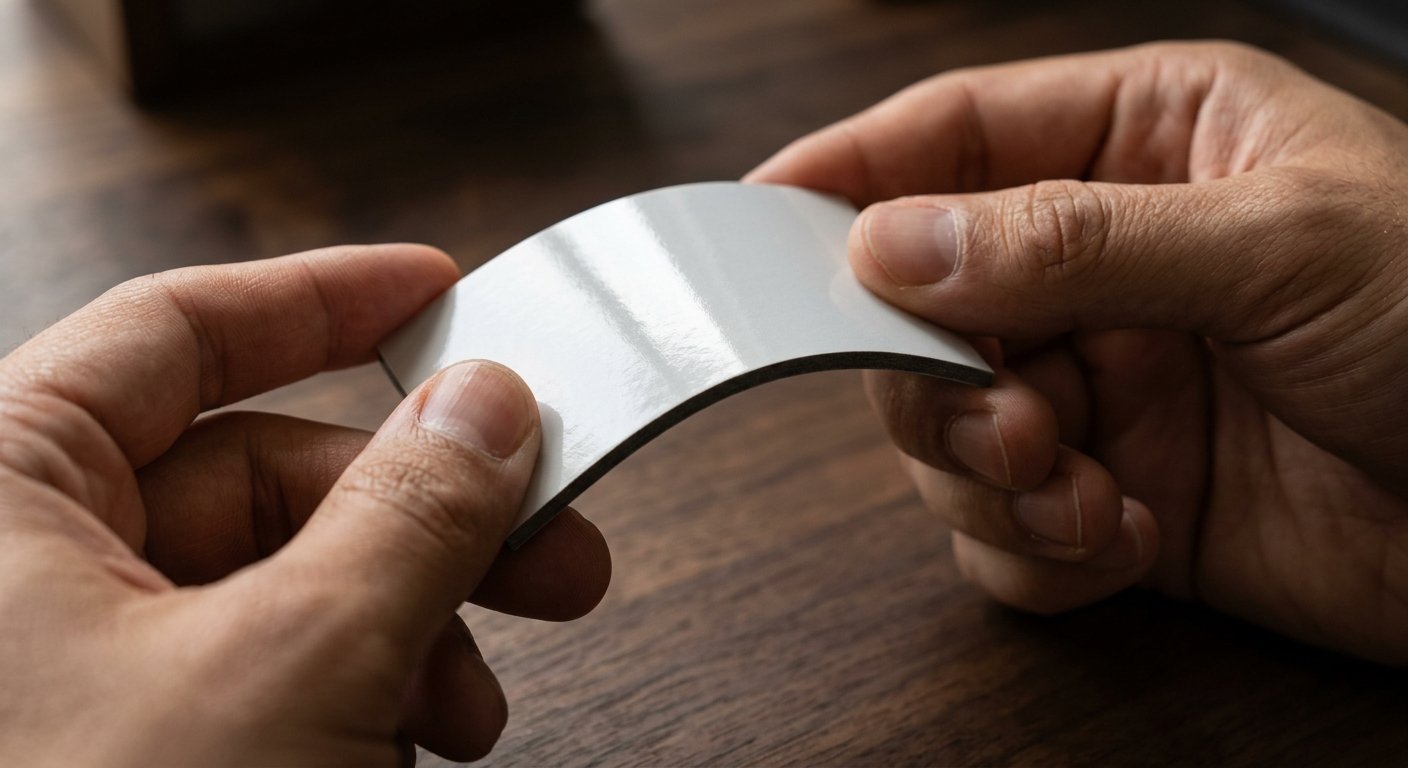
Before a prospect reads a single word, they feel your card. Thin, flimsy stock communicates uncertainty. Heavy, coated card stock communicates that you invest in your business — which tells a seller you’ll invest in marketing their home, too.
For realtor business cards, 14pt card stock with UV gloss coating is the professional standard. The UV coating adds a hard, protective finish that resists fingerprints, bending, and moisture — all the things that happen to a card rattling around in a purse or jacket pocket. Matte laminate finishes are another strong option if you prefer a more understated, luxury aesthetic; they also make the back writeable, which can be useful in networking situations where someone wants to jot a note.
If your brokerage brand uses dark colors or a full-bleed background image, request full-color printing on both sides. A card that’s rich on the front but plain white on the back looks unfinished — and wastes the most valuable real estate you have.
Rounded corners are a small upgrade that makes a tactile and visual difference. They feel modern, they protect the corners from dog-earing, and they photograph well when a prospect snaps a picture of your card to save your number. Small details like this signal intentionality, and intentionality builds trust.
Layout: Hierarchy First, Aesthetics Second

Most design mistakes on real estate business cards come from prioritizing the brokerage logo over the agent’s name and contact information. Your name should be the largest text element on the front panel. You are the brand. The brokerage affiliation is secondary context.
A clean front panel hierarchy looks like this:
- Your name — largest, most prominent element
- Your title or specialty — “Residential Specialist” or “Luxury Homes | Palm Beach County” (specific beats generic)
- Phone number — one number only; if you have a cell and an office line, pick the one you actually answer
- Email address — keep it professional; yourname@brokerage.com beats beachagent99@gmail.com
- Website or landing page URL — short, memorable, and ideally pointed at your listings page or a lead capture form
- Brokerage name and logo — present but subordinate
Resist the urge to cram in every social handle, a fax number (please, no fax number), and your office address. White space is not wasted space — it’s what makes the important information readable at a glance.
The Back Panel: The Detail Most Agents Overlook
Here’s the one detail that separates kept cards from trashed ones: what you put on the back. A blank reverse panel is a missed opportunity. A logo repeat is even worse — it communicates that you couldn’t think of a reason for someone to keep your card.
The back of a real estate business card should answer the question: Why would I hold onto this? A few approaches that work well:
A neighborhood market snapshot
Print a simple “What’s your home worth?” prompt with a QR code linking to your home valuation tool. Sellers keep this because it answers a question they’re already asking.
A buyer or seller checklist
A condensed “5 Questions to Ask Before You List” gives the card utility beyond your contact info. Useful things get kept.
A QR code to your current listings
Link directly to your active listings on your website or a curated IDX page. Buyers at open houses will use this immediately — which means they’re engaging with you before they leave the property.
A brief value proposition
“I sell homes in [Neighborhood] faster than the market average. Let’s talk.” A confident, specific claim is more persuasive than a generic tagline.
QR Codes: Only If They Go Somewhere Worth Going
QR codes on business cards are table stakes in 2026 — but a QR code that links to a slow-loading homepage, a broken page, or a generic brokerage profile does more harm than good. Before you print, test the destination on both iOS and Android. Ask yourself: if a prospect scanned this right now, would they be impressed or underwhelmed?
The best QR code destinations for real estate agents are pages that capture a lead or demonstrate value immediately: a home valuation tool, a neighborhood guide landing page, a short video introduction, or a filtered search of your active listings. According to the National Association of Realtors’ research, the vast majority of home buyers use the internet during their search — meeting them at that intersection, even through a physical card, is smart strategy.
Use a trackable short URL for your QR code (tools like Bitly or your CRM’s link tracker work well). This lets you measure how many scans you’re generating and from which events or interactions — making your business card a measurable marketing tool, not just a formality.
Variable Data Printing: One Card Doesn’t Have to Fit All
If you work multiple farm areas, serve both buyers and sellers, or operate under a team with multiple agents, variable data printing is worth understanding. It allows you to print a run of cards where certain fields — a neighborhood name, a specialty line, a QR code destination — change from card to card without requiring a full redesign or separate print run for each version.
For example, a hypothetical scenario: an agent farming two zip codes could carry one version of their card for each neighborhood, each with a QR code pointing to a hyper-local market report for that area. Prospects feel like they’re getting tailored expertise rather than a generic handout. That’s the kind of personalization that supports real estate print marketing without requiring a massive budget.
Shop Direct Mail’s full-service capabilities — strategy, design, list acquisition, printing, and mailing all under one roof — mean you can coordinate variable data cards alongside your farming postcards and just-listed campaigns without juggling multiple vendors. Consistency across your real estate marketing materials reinforces your brand every time a prospect sees your name.
Comparing Standard vs. Premium Card Options
| Feature | Standard Card | Premium Card |
|---|---|---|
| Card stock weight | 10pt or lighter | 14pt or heavier |
| Coating | None or basic gloss | UV gloss or matte laminate |
| Back panel | Blank or logo repeat | QR code, checklist, or value prop |
| Corners | Standard square | Rounded for modern feel |
| Personalization | One version for all | Variable data by farm or audience |
| Perceived professionalism | Forgettable | Memorable, worth keeping |
How Business Cards Fit Your Broader Marketing Strategy
A great business card doesn’t work in isolation. It’s a touchpoint in a larger ecosystem of real estate marketing that includes farming postcards, just-listed and just-sold mailers, and neighborhood prospecting campaigns. When someone receives one of your real estate postcards in the mail and later meets you at an open house, your card should feel like a natural extension of the same brand — same colors, same tone, same professional quality.
According to the USPS Business Mail overview, direct mail consistently outperforms digital channels in household reach and engagement rates — and a business card handed in person is arguably the most direct form of direct marketing there is. It’s physical, personal, and immediate. Pair it with a consistent mail campaign in the neighborhoods you’re farming, and you’re covering every point of contact where a potential client might encounter your name.
The goal isn’t just brand recognition — it’s to become the agent someone thinks of first when they’re ready to move. Your direct mail marketing builds frequency in their mailbox; your business card builds presence in their wallet. Together, they’re far more powerful than either alone.
Frequently Asked Questions
What card stock weight is best for real estate business cards?
14pt card stock is the professional standard for realtor business cards. It’s thick enough to feel substantial without being unwieldy, and it holds UV gloss or matte laminate coatings well. Anything lighter than 12pt will bend easily and signal budget printing to prospects who notice quality materials.
Should I put a photo on my real estate business card?
A professional headshot can work well, especially if you do a lot of in-person networking and want people to connect your face to your name later. The key is that the photo must be high-resolution and current — a blurry or outdated photo does more harm than no photo at all. If you use a photo, make sure it doesn’t crowd out your contact information.
What should a QR code on a real estate business card link to?
The best destinations are pages that immediately demonstrate your value or capture a lead: a home valuation tool, a neighborhood market report landing page, a short video bio, or a filtered view of your active listings. Always test the link before printing, and use a trackable URL so you can measure how many scans you generate over time.
How many business cards should a real estate agent order at once?
Most active agents benefit from ordering 500 to 1,000 cards at a time. Larger runs reduce the per-card cost, but only order what you’ll realistically distribute within 6–12 months — especially if you’re in a market where your listings, phone number, or branding might change. If you’re using variable data printing for multiple farm areas, plan separate quantities per version.
Can I use my real estate business card as part of a direct mail campaign?
Business cards are typically handed in person rather than mailed, but they integrate powerfully with direct mail campaigns. For example, including a card inside a neighborhood brochure or a just-listed mailer adds a personal touch. Your card and your mail pieces should share consistent branding so prospects who see your postcard and later meet you in person immediately make the connection.
Ready to Print Cards Worth Keeping?
Shop Direct Mail handles strategy, design, printing, and mailing under one roof — so your business cards, farming postcards, and neighborhood mailers all work together as a cohesive campaign.

About Shop Direct Mail Marketing
Shop Direct Mail is a full-service direct mail marketing partner for real estate agents, contractors, and local service businesses nationwide. We provide end-to-end strategy, design, list acquisition, printing, and mailing services that help small and medium-sized businesses cut through digital clutter with tangible, measurable campaigns. Our focus is on ROI-driven tactics like real estate farming, EDDM saturation, just-listed/just-sold postcards, and neighborhood prospecting that generate leads and customers business owners can track. Visit shopdirectmail.com →