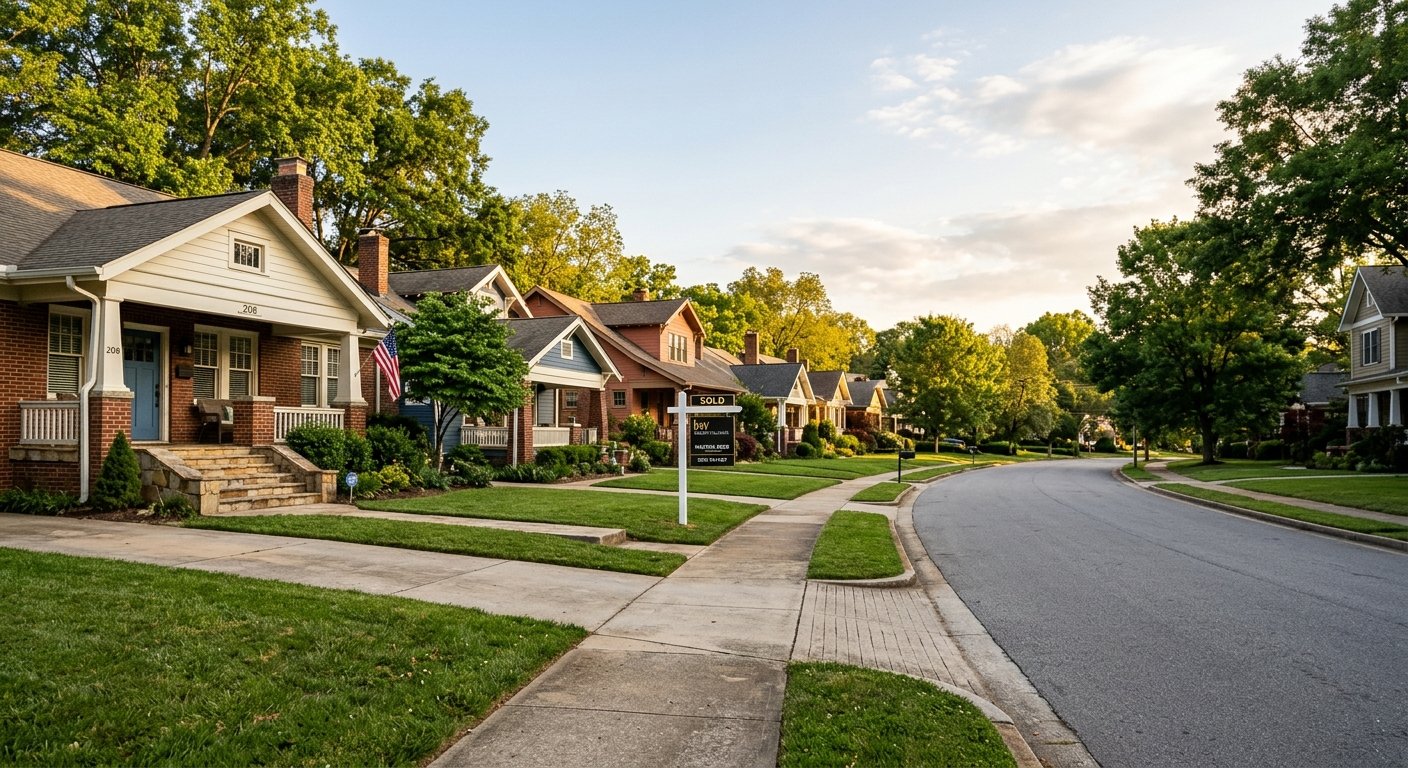
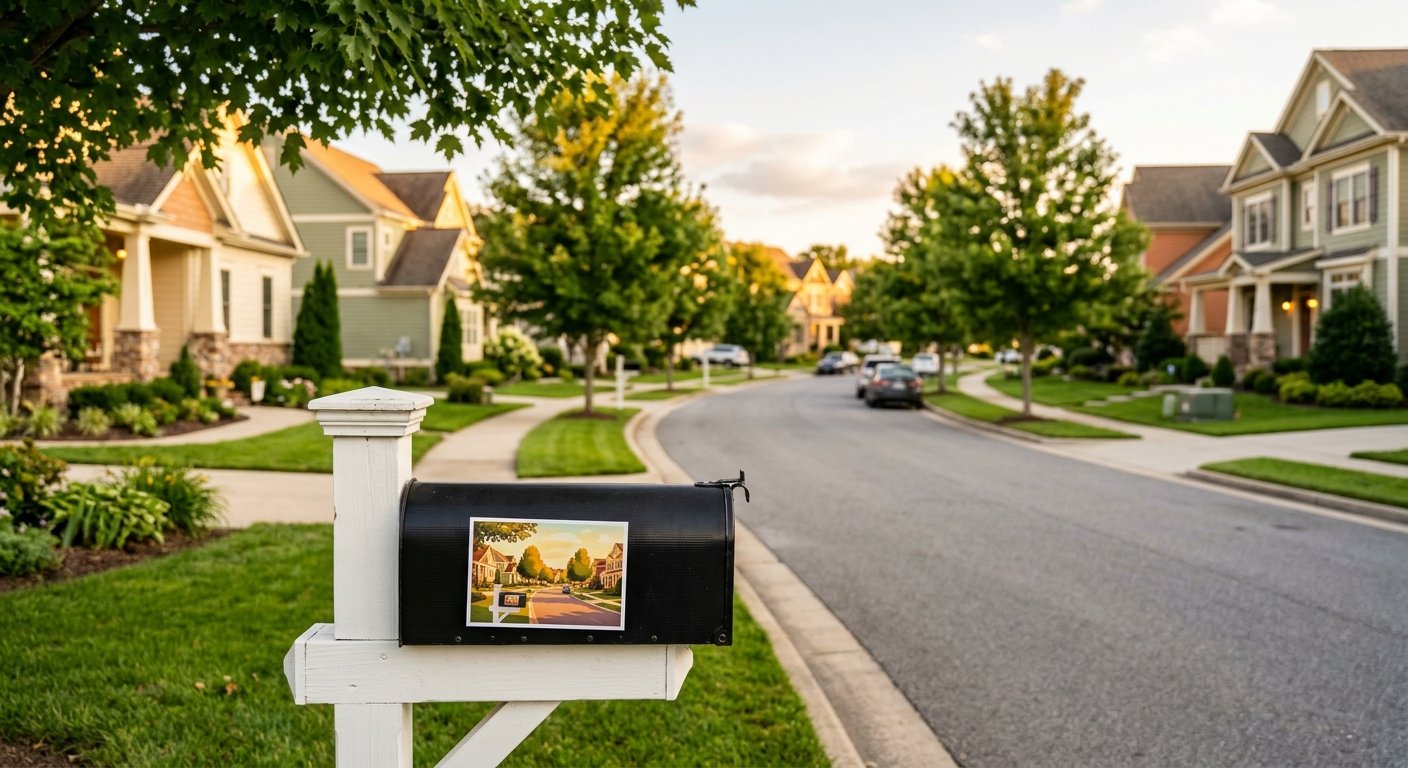
Real estate farming with postcards works by mailing a defined geographic area repeatedly over 6–12 months, building name recognition that converts to listings when homeowners are ready to sell. Choose a neighborhood of 400–600 homes, mail at least once a month, track responses with QR codes or unique URLs, and give the campaign time. Consistency is the entire strategy.
- Choose a farm area with 400–600 homes where you have little or no direct agent competition.
- Mail at minimum every 30 days — inconsistency is the fastest way to lose ground you’ve already paid for.
- Rotate messaging: just-listed, just-sold, market updates, and seasonal offers all serve different psychological triggers.
- Track every campaign with a QR code, unique URL, or call-tracking number so you can prove ROI over time.
- Real estate postcards on 14pt premium card stock with UV gloss feel professional and get kept — cheap materials undermine the brand you’re trying to build.
Why Geographic Farming Still Works in 2026
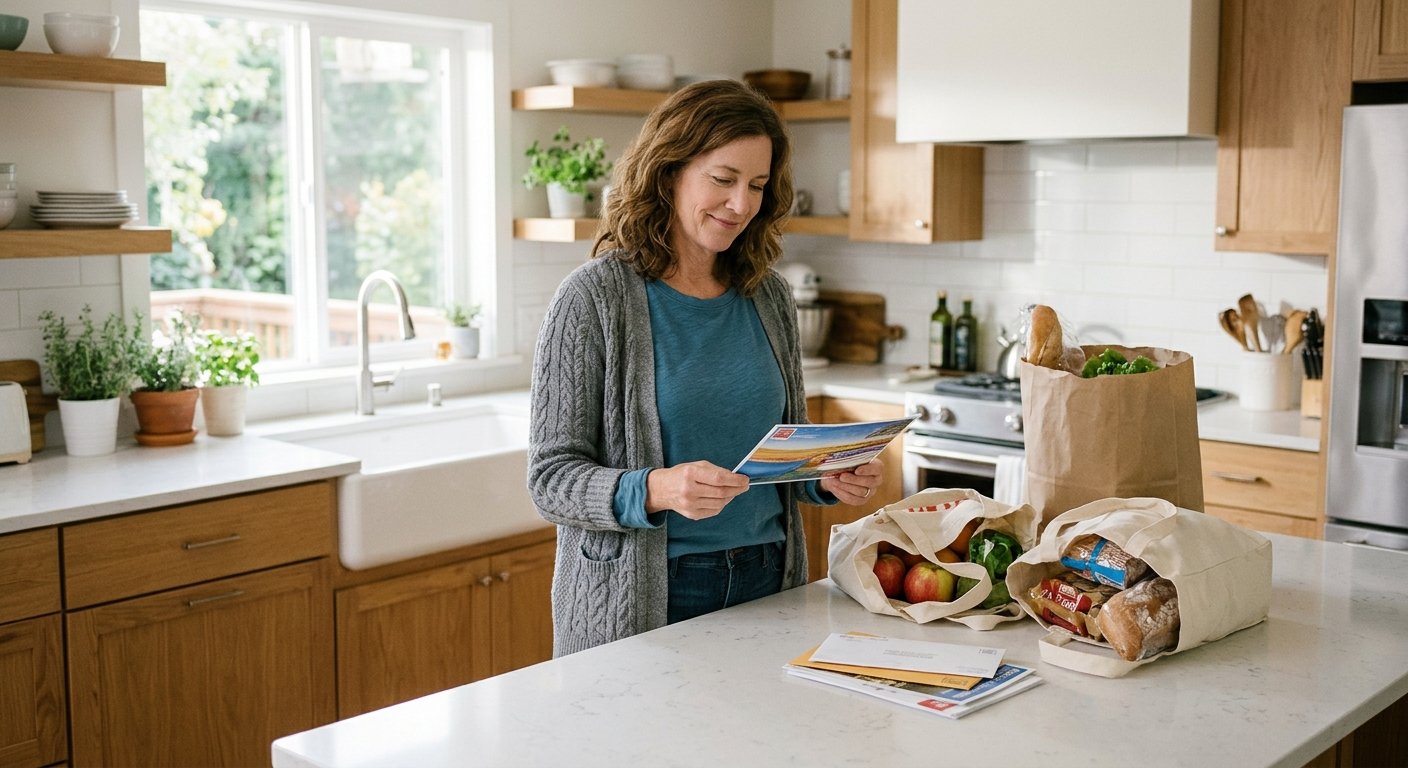
A decade of rising digital ad costs has quietly made direct mail more competitive, not less. Homeowners scroll past dozens of social ads daily, but a full-color postcard sitting on a kitchen counter keeps working after every click has been forgotten. The USPS reports that direct mail consistently achieves higher household engagement than many digital channels, particularly for locally relevant offers.
For real estate agents, geographic farming postcards have an additional advantage: exclusivity. You’re not competing with ten agents bidding on the same keyword. You own the mailbox in that neighborhood, and every piece you drop reinforces that ownership. Done right, it creates the perception that you are the neighborhood agent — before a single conversation ever happens.
Owning the mailbox in one neighborhood is worth more than ranking on page two everywhere else.
Step 1: Choose the Right Farm Area

The most common mistake agents make is farming too large an area with too small a budget, or picking a neighborhood already dominated by a competitor with deep roots. Neither situation ends well.
Size your farm correctly
A neighborhood of 400–600 homes is workable for most solo agents. Large enough to produce listings, small enough to mail consistently without breaking the budget. Teams can scale to 1,000+ homes.
Check turnover rate
Look for neighborhoods with an annual turnover rate of 5–7% or higher. A 500-home area with 6% turnover produces roughly 25–30 potential listings per year — a realistic pipeline worth farming.
Assess the competition
Pull the last 12 months of MLS data. If one agent has 60%+ of the listings, that farm is taken. Look for neighborhoods where transactions are spread across multiple agents — you have room to claim market share.
Build your mailing list
A clean, targeted mailing list is the foundation of neighborhood farming. You need verified homeowner addresses — not just residents. List acquisition through a full-service provider like Shop Direct Mail ensures you’re mailing actual property owners, not renters who have zero intent to sell.
Skip the generic neighborhood list and request an owner-occupied filter. Absentee owners and investors require different messaging and different timing — mixing them into your primary farm dilutes your response rates.
Step 2: Design Postcards That Get Read

Your postcard has roughly two seconds to earn attention before it goes to the counter or the trash. That’s not a knock on homeowners — it’s just how print works. Design accordingly.
The most effective real estate postcards lead with one clear message, not five. A just-sold postcard should show the property, the sale price (if local norms allow), and your name with a clear way to contact you. A market update card leads with a compelling local stat — like average days on market — and invites the reader to request a free home valuation. Keep body copy short. Let the design do the work.
On materials: 14pt premium card stock with UV gloss coating on 6.5″×9″ or larger formats feel noticeably different from generic mailers. Homeowners who receive your postcard repeatedly form a subconscious association between the quality of the piece and the quality of your service. Don’t undercut that perception with thin stock or dull finishes.
Step 3: Build a Messaging Cadence That Converts
Frequency without variety becomes wallpaper. Vary your message across the calendar so each piece feels relevant, not repetitive.
| Month | Message Type | Primary Goal |
|---|---|---|
| Month 1 | Introduction / Who I Am | Build name recognition |
| Month 2 | Just-Sold (recent area sale) | Demonstrate activity and results |
| Month 3 | Market Update (local stats) | Position as neighborhood expert |
| Month 4 | Free Home Valuation Offer | Generate direct responses |
| Month 5 | Just-Listed (active listing nearby) | Show demand in the area |
| Month 6 | Seasonal / Community Content | Stay top of mind without selling |
Repeat the cycle with fresh numbers and updated listings. By month 9–12, homeowners in your farm area will recognize your name before they even flip the card over. That familiarity is the asset you’re building. It doesn’t appear overnight, but it compounds.
The National Association of Realtors consistently finds that sellers most often list with agents they’ve interacted with before or were referred to by someone who had. Consistent postcard farming creates that prior touchpoint at scale — even when no conversation has yet taken place.
Step 4: Set a Realistic Mailing Frequency
Once a month is the minimum. Every 30 days keeps you in rotation without fatiguing the audience. Agents who can sustain twice-monthly mailings in their first 90 days often accelerate brand recognition significantly — the early phase is when memory is being formed, not when it’s already established.
The worst thing you can do is mail for three months, get one listing, and stop. The agent who mails consistently for 12 months and gets four listings did not outwork the agent who quit — they just outlasted them. Budget for a full year before evaluating whether to expand, maintain, or adjust the farm.
As a hypothetical example: if a 500-home farm costs approximately $0.50–$0.75 per piece all-in (design, print, and postage), a monthly campaign runs roughly $250–$375 per month. One listing commission typically covers 12–18 months of that investment. The math only works if you stay consistent long enough for the campaign to mature.
Step 5: Track Results Like a Business, Not a Guess
Every campaign that can’t be measured is a cost, not an investment. Tracking your real estate farming postcards requires intentional setup before the first piece mails — not an afterthought when you’re wondering where the call came from.
- QR codes: Link to a dedicated landing page — ideally a home valuation tool or neighborhood market report. Every scan is a trackable interaction.
- Unique URLs: A short vanity URL (yourname-farmneighborhood.com) tells you exactly which campaign generated traffic.
- Call-tracking numbers: Assign a unique number to each postcard design so inbound calls are attributed correctly.
- USPS Informed Delivery receipts: Confirm your mail was delivered and document reach for your records.
At Shop Direct Mail, strategy, design, list acquisition, printing, and mailing happen under one roof — which means your tracking infrastructure is built into the campaign from the start, not bolted on afterward. Explore the full approach on our real estate marketing services page.
Review your tracking data every 60–90 days, not every week. Postcard campaigns build momentum gradually. Micro-analyzing results after two mailings leads to premature changes that reset the brand-building process.
Frequently Asked Questions
How long before real estate farming postcards produce results?
Most agents see meaningful inbound responses — calls, form submissions, requests for valuations — between months 4 and 9. The first three months are largely about building recognition. Listing conversions that originated from a farming postcard typically emerge at the 9–12 month mark for agents who mail consistently. Treat the first year as brand infrastructure, not a lead faucet.
How many homes should be in a real estate farm?
A farm of 400–600 homes is the sweet spot for a solo agent on a consistent monthly budget. It produces enough transactions annually to justify the investment while staying affordable. Teams can sustain larger farms — 1,000 to 2,500 homes — because the per-listing revenue math scales with team capacity.
What size postcard works best for geographic farming?
Standard 6.5″×9″ and 6″×11″ postcards are the most popular for farming campaigns. They’re large enough for impactful visuals and key messaging, qualify for USPS First-Class or standard postage rates, and stand out in a standard mailbox without being awkward to handle. EDDM-eligible sizes (6.25″×9″ minimum) work well for saturation routes with no list required.
Do I need a mailing list or can I use EDDM for farming?
Both work, but for different goals. EDDM (Every Door Direct Mail) saturates every address on a carrier route — great for broad awareness when you don’t need to filter by homeowner status. A targeted mailing list lets you mail only verified property owners, filter by home value or years of ownership, and personalize by name. Serious farming campaigns typically use list-based targeting for precision. Learn more on our direct mail marketing page.
How do I know if my postcard farming campaign is working?
Track QR code scans, unique URL visits, and call-tracking inbound volume tied to each campaign. Ask every inbound lead how they heard of you and log the answers. Over 12 months, compare your listing count and market share in the farm area to your baseline when you started. Rising recognition, inbound calls, and eventually listings are the signal that the campaign is compounding as intended.
Ready to Dominate Your Farm Neighborhood?
Shop Direct Mail handles strategy, design, list acquisition, printing, and mailing — so you can focus on the conversations, not the logistics.

About Shop Direct Mail Marketing
Shop Direct Mail is a full-service direct mail marketing partner for real estate agents, contractors, and local service businesses nationwide. We provide end-to-end strategy, design, list acquisition, printing, and mailing services that help small and medium-sized businesses cut through digital clutter with tangible, measurable campaigns. Our focus is on ROI-driven tactics like real estate farming, EDDM saturation, just-listed/just-sold postcards, and neighborhood prospecting that generate leads and customers business owners can track. Visit shopdirectmail.com →