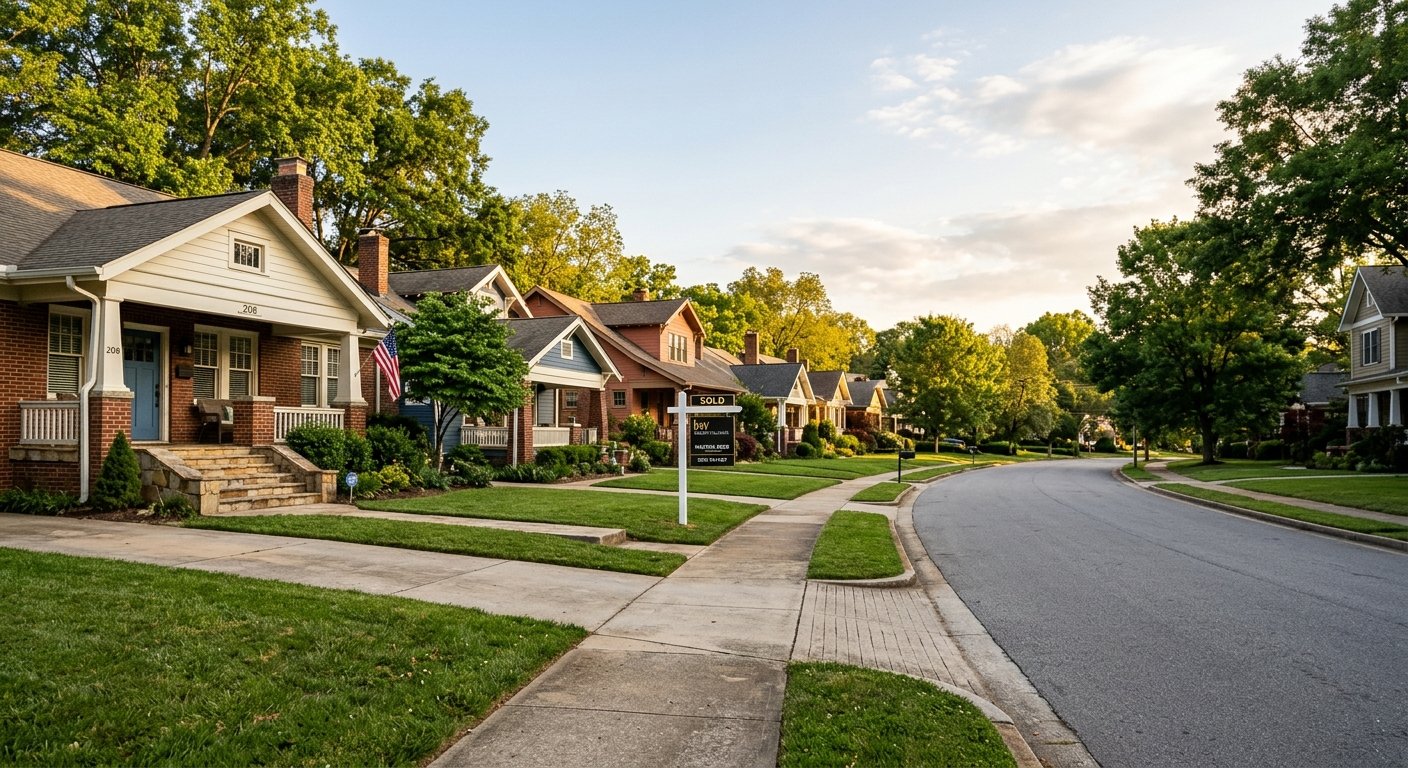
Just sold postcards are one of the most effective tools a real estate agent can use to build neighborhood authority, attract seller leads, and maintain a consistent farming presence. By mailing to homeowners near every closed transaction, you signal active market knowledge, create social proof, and stay top of mind — all in a single tangible piece that digital ads cannot replicate.
- Mail just sold postcards within 5–7 days of closing to capture peak neighborhood curiosity.
- Target a tight radius — typically 200–500 homes around the sold property — for the highest relevance.
- Consistency over 6–12 months builds the name recognition that converts passive neighbors into seller leads.
- Track every campaign with a unique URL, QR code, or call-tracking number so you know what’s working.
- Pair just sold cards with just listed drops to create a full-cycle farming presence throughout the year.
Why Just Sold Postcards Work in Real Estate Farming
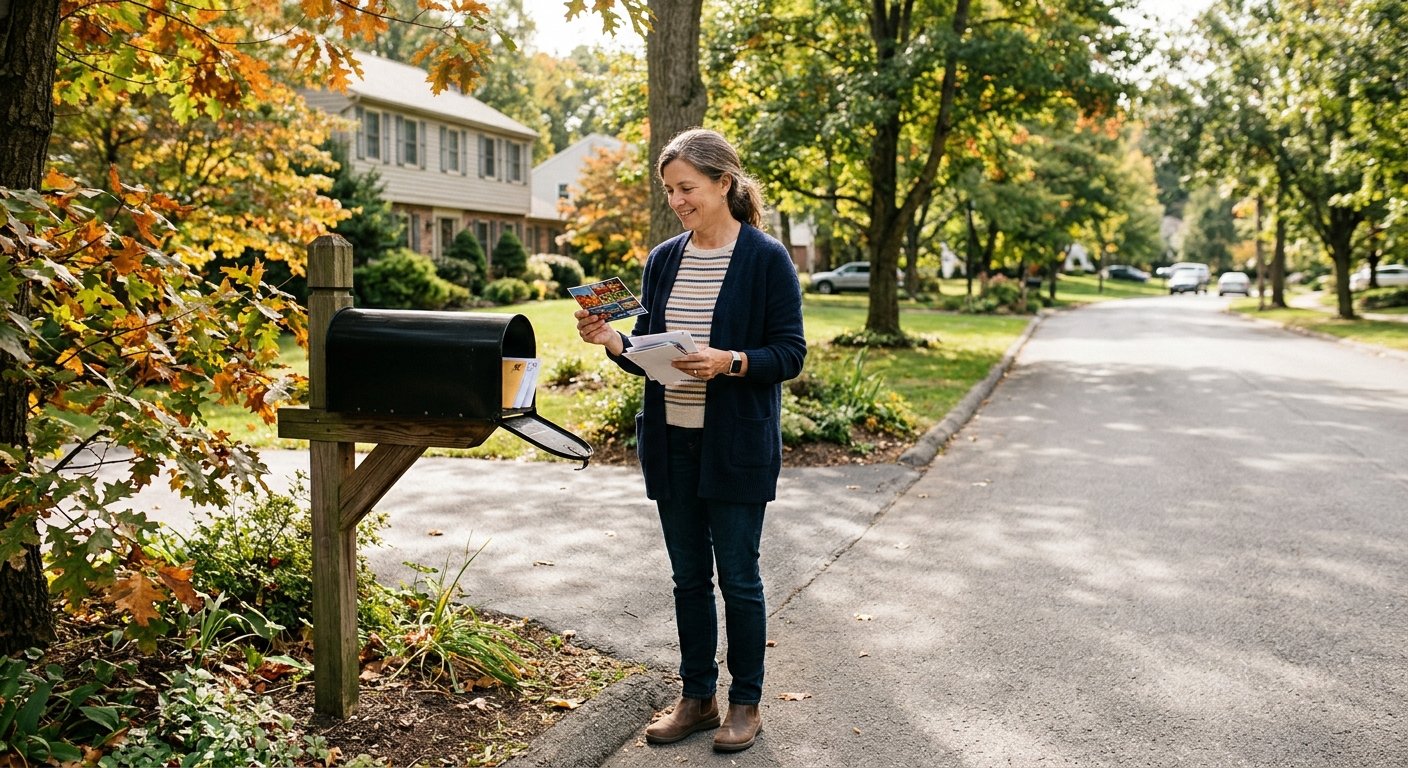
Homeowners are naturally curious about what’s happening on their street. When a neighbor sells, questions surface immediately: What did it sell for? How fast did it close? Is now a good time to sell mine? A well-timed just sold postcard answers those questions before the homeowner even searches online — and it puts your name and face at the center of that answer.
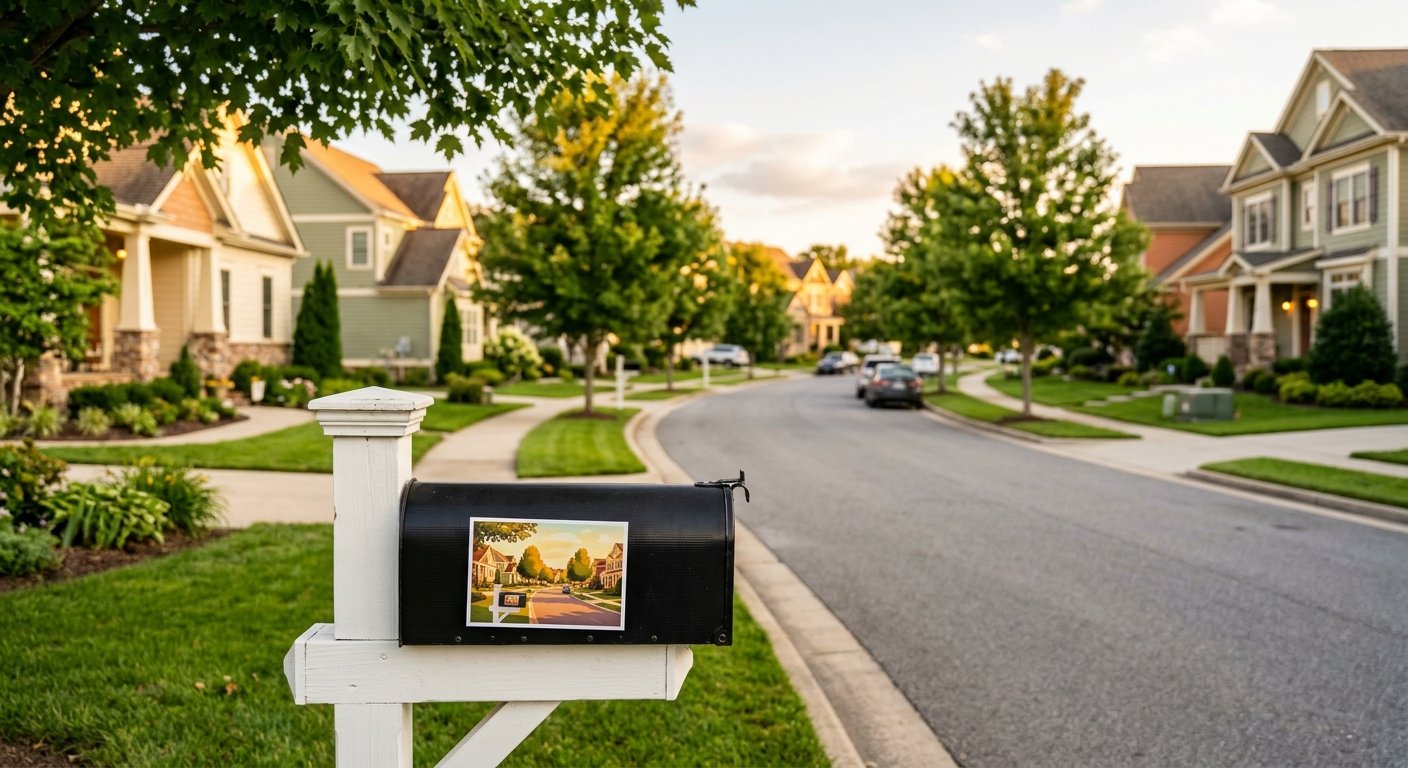
That dynamic is what makes postcard marketing particularly powerful for geographic prospecting. You’re not interrupting someone mid-scroll. You’re arriving in a physical mailbox at a moment of genuine relevance. According to the U.S. Postal Service, direct mail consistently earns higher household engagement than digital display advertising — and for hyper-local real estate messages, that engagement gap widens further.
A just sold postcard doesn’t market your services — it proves them, right in the neighborhood where the homeowner lives.
Step-by-Step: Building a Farming Campaign Around Just Sold Cards

Define Your Farm Area Before You Need It
Choose a neighborhood or subdivision with 300–600 homes and a realistic annual turnover rate. The tighter and more focused your farm, the faster your name recognition builds. Don’t wait for a closing to define your zone — map it before your first deal closes there so you’re ready to mail within days of signing.
Mail Within 5–7 Days of Closing
Speed is everything. Neighbors talk, buyers share news, and the For Sale sign comes down fast. If your postcard arrives two weeks after closing, the moment has passed. Work with a full-service mail partner who can turn design, print, and delivery around quickly so the card lands while the sale is still news.
Design a Card That Leads With the Sale
The headline should be the result: the street name, the sale, and the implied message that you made it happen. Use a clean property photo if available. Feature your headshot, contact info, and a short CTA — something like “Thinking about your home’s value? Let’s talk.” Keep it scannable. A homeowner should absorb the key message in under five seconds.
Build Your Mailing List by Address, Not Guesswork
Pull a targeted list of residential addresses within your defined farm radius. A list acquisition service can filter by property type, owner-occupancy, and carrier route so you’re mailing to the right neighbors — not vacant lots or commercial addresses. Precision here protects your budget and improves relevance.
Add a Tracking Mechanism to Every Drop
Include a QR code that points to a neighborhood home-value landing page, a unique URL you can monitor, or a dedicated tracking phone number. This turns a physical postcard into a measurable lead-generation tool. Without tracking, you’re spending money without knowing what’s working.
Keep Mailing — Even Between Transactions
This is where most agents stop and where the best agents pull ahead. Between closed deals, fill the calendar with market update cards, neighborhood sold reports, or seasonal messages. The goal is eight to twelve touches per year. Real estate farming is a long game; name recognition builds with repetition.
What to Include on a Just Sold Postcard

The design choices you make directly affect whether a homeowner keeps the card or recycles it. Here’s what consistently performs well on real estate postcards:
- A clear “Just Sold” headline — the neighborhood name or street increases relevance instantly.
- A property photo or illustrated home graphic — visual proof anchors the claim.
- Your headshot and brokerage logo — people hire agents they recognize, not brands they’ve never seen.
- A brief value statement — something like “Sold in 12 days with multiple offers” (if true and verifiable) tells a story without overselling.
- A low-friction CTA — a QR code to a home-value estimator works better than “Call me” for most homeowners who prefer to self-research first.
- Your contact information — name, email, website, and phone in a clean, readable format.
Print on 14pt premium card stock with UV gloss coating. A heavier, glossy card signals professionalism before the homeowner reads a single word — and it survives the mailbox in far better shape than thin, matte paper. This is a detail that separates agents who get kept from agents who get recycled.
How Just Sold Cards Fit Into a Full Farming Strategy
Just sold postcards are the anchor, but a complete neighborhood farming strategy layers additional touches throughout the year. Think of your farm as a relationship, not a transaction. The agent who mails once after a closing will be forgotten. The agent who shows up consistently — with just listed cards, market reports, and seasonal outreach — becomes the default name neighbors think of when it’s time to sell.
A strong annual farming calendar might look like this: just listed card when a listing goes active, just sold card within a week of closing, a mid-year neighborhood market update, and a fall or year-end “what’s your home worth” mailer. That’s four to six natural touchpoints baked into your existing business activity — no extra budget required beyond the printing and mailing cost.
USPS Every Door Direct Mail (EDDM) lets you saturate an entire carrier route at a lower per-piece postage rate without needing a named mailing list. It’s ideal for blanket neighborhood awareness. For just sold campaigns, a targeted residential list — filtered to owner-occupants within a specific radius — tends to perform better because relevance is higher. Shop Direct Mail handles both, depending on your strategy.
For a deeper look at the full spectrum of print marketing options available to agents, the real estate print marketing resource covers everything from door hangers to brochures in one place.
Common Objections — Answered
“Isn’t direct mail expensive?” Postcard marketing is often more cost-efficient than you’d expect when you factor in cost per impression in a defined geographic area. Hypothetical example: mailing 400 homes at roughly $0.50–$0.75 per piece all-in (design, print, postage) runs $200–$300 per drop — a fraction of what many agents spend on online leads that go cold immediately.
“How do I know if it’s working?” Track it. Every card Shop Direct Mail produces can include a QR code, a unique URL, or a call-tracking number. You’ll know which mailing prompted the inquiry. For USPS EDDM mailings, you can also request delivery confirmation through USPS Informed Delivery, which provides scan receipts showing when mail reached each carrier route.
“I only close a few deals a year in this neighborhood.” That’s exactly why supplementary touchpoints matter. Pair just sold cards with just listed drops, market snapshots, and seasonal mailers. You don’t need to close every deal in the neighborhood to farm it — you need to be the name that comes to mind when someone is ready to sell. Learn more about building that presence through direct mail marketing strategy built around your goals.
According to the National Association of Realtors, the vast majority of home sellers say they would use their agent again or recommend them — but most don’t, because agents fail to stay in touch. Consistent direct mail addresses exactly that gap.
Frequently Asked Questions
How many homes should I mail just sold postcards to?
A radius of 200–500 homes around the sold property is a practical starting point. The exact number depends on your neighborhood density and budget. Tighter farms with consistent mailing outperform larger, sporadic campaigns every time.
How soon after closing should I send a just sold postcard?
Aim for within 5–7 days of closing. The sale is fresh news in the neighborhood during this window, and your postcard arriving quickly reinforces that you’re the active, connected agent in the area. Delays beyond two weeks significantly reduce the impact.
What size postcard works best for real estate farming?
Oversized postcards — 6×9 or larger — consistently stand out in the mailbox and give you more room to feature a property photo, your branding, and a clear CTA. For EDDM campaigns, USPS requires a minimum size of 6.25″×9″ to qualify for carrier route saturation rates.
Should I include the sale price on the postcard?
It depends on your local MLS rules and brokerage policy. If you can include the sold price, it adds credibility and satisfies the most common neighbor question. If not, “Recently Sold” with the street or neighborhood name still carries strong relevance without disclosing restricted data.
How long does it take for real estate farming to produce leads?
Most agents begin seeing consistent inbound inquiries after 6–12 months of regular mailing. Farming is a compounding strategy — each touchpoint reinforces the previous one. Agents who mail for 90 days and stop rarely see results; those who commit for a full year typically build a recognizable presence in their target neighborhood.
Ready to Launch Your Just Sold Campaign?
Shop Direct Mail handles strategy, design, list acquisition, printing, and mailing — so you can focus on closings while we keep your name in front of the neighbors most likely to call next.

About Shop Direct Mail Marketing
Shop Direct Mail is a full-service direct mail marketing partner for real estate agents, contractors, and local service businesses nationwide. We provide end-to-end strategy, design, list acquisition, printing, and mailing services that help small and medium-sized businesses cut through digital clutter with tangible, measurable campaigns. Our focus is on ROI-driven tactics like real estate farming, EDDM saturation, just-listed/just-sold postcards, and neighborhood prospecting that generate leads and customers business owners can track. Visit shopdirectmail.com →