Most real estate agents need between 7 and 12 consistent mailings to a geographic farm before homeowners reliably recognize their name, trust their expertise, and reach out about a listing appointment. That number isn’t magic — it reflects how human memory works. Repetition builds familiarity, familiarity builds trust, and trust wins listings. The agents who quit after three mailers never find out they were halfway there.
- Consistent, repeated contact — not a single impressive mailer — is what converts a farm into listings.
- A realistic farming cadence is 6–12 mailings per year, spaced deliberately to stay top-of-mind through every season.
- Tracking tools (QR codes, unique URLs, call-tracking numbers) let you measure which touches move homeowners to act.
- Neighborhood farming works best when you pair postcard marketing with a clear value proposition — not just your headshot.
- Patience plus consistency is the competitive advantage most agents underestimate.
Why Frequency Is the Whole Game in Geographic Farming
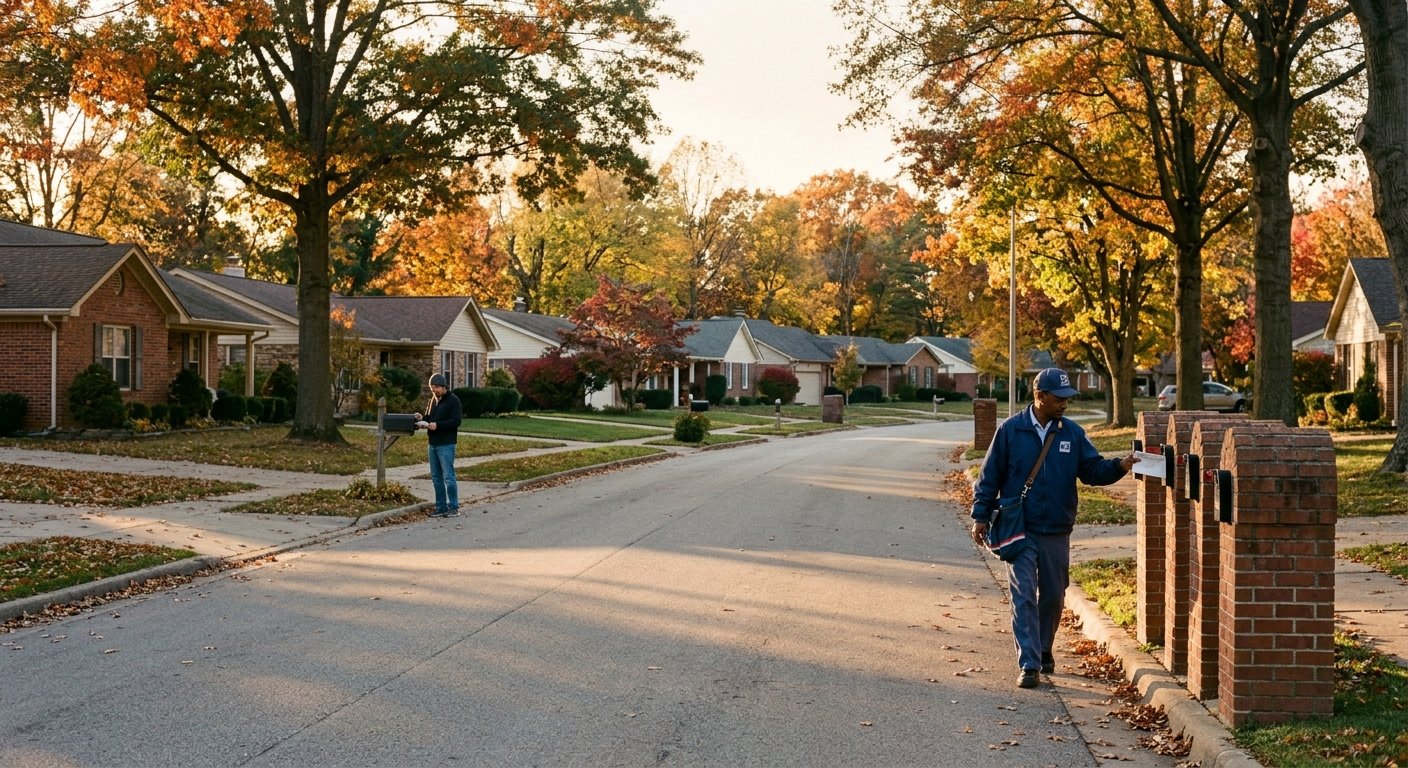
Geographic farming is a long-term brand-building strategy, not a lead-generation switch you flip. When you commit to a specific neighborhood — say, 400 homes in a subdivision — you’re staking a claim. But homeowners in that farm probably received mail from three other agents last month and ignored all of it. You don’t win by being first. You win by being last — meaning you’re still showing up when they’re finally ready to sell.
The concept behind this isn’t unique to real estate. Marketing researchers have long studied the relationship between ad exposure and brand recall. The old “Rule of Seven” — the idea that a prospect needs to encounter a brand roughly seven times before they take action — has been debated and updated over decades, but its core insight holds: one impression rarely converts, and consistent impressions compound. For direct mail, where you’re competing with digital noise rather than more mail, repetition is especially powerful.
According to the U.S. Postal Service, direct mail consistently achieves higher household reach and engagement than digital display advertising — particularly for local, geographically targeted campaigns. When your postcard lands in a physical mailbox, it doesn’t disappear behind an algorithm. It gets seen, touched, and often kept on a refrigerator or counter for days.
Choose a farm you can afford to mail consistently for at least 12 months before evaluating results. A farm of 300–500 homes is typically more sustainable for a solo agent than 1,000 homes mailed sporadically.
The Realistic Farming Timeline
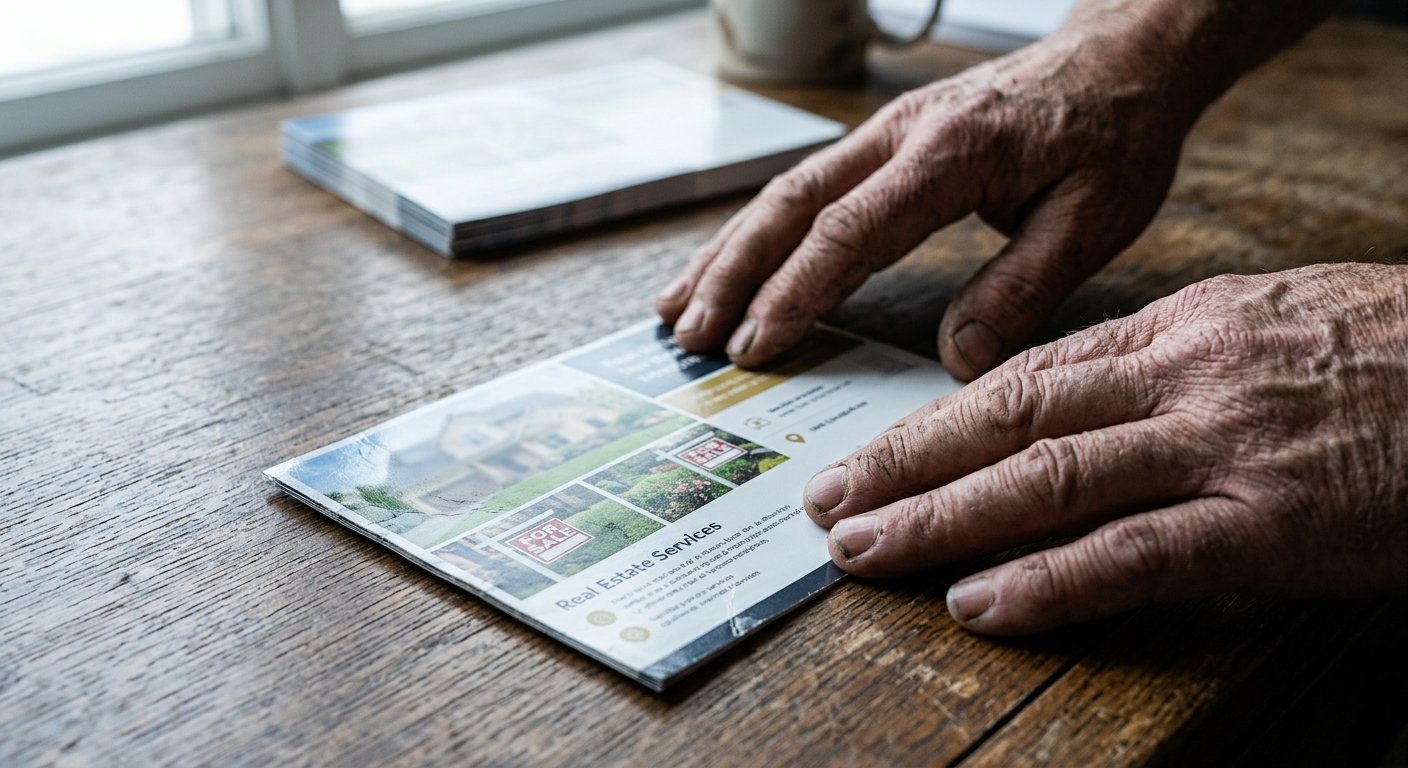
Here’s what agents who succeed with geographic farming actually experience — and it’s worth setting expectations clearly before you budget:
Months 1–3: Planting Season
Homeowners begin seeing your name but have no context for who you are. Recognition is minimal. This phase feels thankless. Keep mailing anyway.
Months 4–6: Familiarity Builds
Residents have now received 4–6 pieces. They may recognize your face or brokerage before they can explain why. Some will scan your QR code or visit your landing page out of curiosity.
Months 7–9: Trust Signals Emerge
You start to become “that agent who mails us.” If you’ve included sold data, market stats, or neighborhood-specific content, homeowners associate you with local expertise. CMA requests and inquiries often begin here.
Months 10–12: Listings Follow Consistency
Agents who’ve maintained their cadence through month 12 often report their first listing appointment, referral, or buyer lead from the farm. This is when the investment pays back — and compounds into future listings.
Note: the above is a hypothetical framework based on common farming timelines, not a guaranteed result. Every neighborhood and market is different. What doesn’t change is that agents who stop mailing before month 6 almost universally see zero return.
Building Your Mailing Cadence: What to Send and When

A strong cadence isn’t just about frequency — it’s about giving homeowners a reason to look forward to your mail. If every postcard says “Call me to sell your home!” you’ll be ignored by month two. If each piece delivers genuine value, you’ll be remembered.
Here’s a practical annual cadence framework for real estate farming postcards:
- January: New Year neighborhood market update — recent sales, average days on market, price trends
- February/March: Just Listed or Just Sold postcard if you have activity; otherwise a “Spring Market Preview” piece
- April: Home value offer — invite homeowners to request a free, no-obligation CMA
- June: Mid-year neighborhood sales recap with your contact info and social proof (listings closed)
- August: Back-to-school community connection — lighter touch, keeps your name visible
- October: Fall market update — buyers are still active, sellers who list now beat spring inventory
- November/December: Holiday card or year-in-review piece with neighborhood stats
That’s roughly 7–8 touches per year. Add a just-listed or just-sold card every time you close a transaction in or near the farm, and you’ll naturally exceed 10 touches without it feeling forced. Each additional transaction card reinforces market authority — which is exactly what homeowners want to see when choosing an agent.
For USPS Every Door Direct Mail (EDDM) campaigns, pieces must meet minimum size requirements — commonly 6.25″×9″, 6.5″×11″, or 6.5″×12″. Larger formats have higher perceived value and are harder to miss in a mailbox stack. Check the USPS EDDM page for current size and postage specifications, as rates are updated periodically.
What Makes a Farming Postcard Actually Work
Frequency is the engine. Content is the fuel. Here’s what separates farming postcards that generate calls from ones that go straight into recycling:
- A specific neighborhood hook: Reference the actual subdivision name, local school, or recent sale address. “Your neighbor at 142 Maple just sold for $485,000” outperforms “Homes are selling fast in your area.”
- One clear call-to-action: A QR code linking to a home valuation page, a unique URL you can track, or a direct offer (free CMA). Don’t give them five options — give them one easy next step.
- Professional print quality: 14pt premium card stock with UV gloss coating communicates professionalism before the homeowner reads a word. Thin, dull postcards signal a cut-rate agent. Quality materials matter.
- Your photo, consistently: Humans recognize faces. Use the same professional headshot across every mailing so recognition builds over time.
- Tracking built in: Use a call-tracking number, unique QR code, or dedicated landing page URL for your farm. Without tracking, you’re guessing. With it, you know which mailer triggered which inquiry.
Frequency is the engine. Content is the fuel. Without both, the campaign stalls.
The Cost vs. Commitment Calculation
Agents often ask whether geographic farming is “worth it” before they’ve fully committed. The honest answer: it depends on how long you stay consistent and how competitive your farm is. Here’s a simplified hypothetical to frame the investment:
Hypothetical example: Say you mail a farm of 400 homes, 10 times per year, at an approximate all-in cost of $0.75 per piece (design, print, postage, mailing). That’s roughly $3,000 per year. If you close one listing from that farm with a median commission on a $400,000 sale, the ROI math becomes straightforward quickly. Most agents who stick with farming report their first farm listing within 9–18 months. One transaction typically covers multiple years of mailing costs.
The bigger risk isn’t the cost — it’s quitting too early. Agents who cancel after 4–5 mailings essentially donate their brand awareness to the next agent who picks up the farm.
At Shop Direct Mail, we handle strategy, design, list acquisition, printing, and mailing under one roof — which means you’re not coordinating a designer, a printer, and a mail house separately. You focus on the conversations; we handle the consistency. Explore our full real estate print marketing services or dive into our direct mail marketing approach to see how campaigns are built.
Frequently Asked Questions
How many postcards do I need to send before I get a listing from farming?
Most agents see their first tangible response — a CMA request, a call, or a referral — after 7 to 12 consistent mailings over 9 to 18 months. There’s no universal guarantee, but agents who maintain a steady cadence for at least a full year dramatically improve their odds compared to those who stop early.
How large should my real estate farm be?
For solo agents, 300–500 homes is a manageable starting farm that allows consistent mailing without overextending the budget. Teams can scale to 1,000+ homes, but only if they can commit to 8–12 mailings per year. A smaller, well-mailed farm outperforms a large, inconsistently mailed one every time.
What’s the best type of postcard for real estate farming?
Just-listed and just-sold postcards are the most effective because they demonstrate real activity in the neighborhood. Market update postcards and home valuation offers also perform well. The key is rotating content types so each mailing feels fresh while your name and face remain consistent across all of them.
How do I track whether my farming postcards are working?
Use a dedicated call-tracking number, a unique QR code linking to a specific landing page, or a custom URL (like yourdomain.com/oakwoodfarm) assigned only to that campaign. When someone calls or visits, you know exactly which mailer prompted the action. This tracking infrastructure turns every mailing into measurable data rather than a guessing game.
Can I use EDDM for real estate farming instead of a targeted list?
USPS Every Door Direct Mail works well for saturating an entire carrier route affordably, but it doesn’t allow you to target by homeowner status, home value, or length of residence. A targeted mailing list lets you exclude renters, focus on likely sellers (5+ years of ownership), and personalize your messaging. Many agents use EDDM for broad awareness and targeted lists for precision farming — both approaches have their place.
Ready to Build a Farm That Actually Produces Listings?
Tell us your target neighborhood and goals — we’ll build a consistent, trackable mailing cadence designed to make you the go-to agent in your farm.

About Shop Direct Mail Marketing
Shop Direct Mail is a full-service direct mail marketing partner for real estate agents, contractors, and local service businesses nationwide. We provide end-to-end strategy, design, list acquisition, printing, and mailing services that help small and medium-sized businesses cut through digital clutter with tangible, measurable campaigns. Our focus is on ROI-driven tactics like real estate farming, EDDM saturation, just-listed/just-sold postcards, and neighborhood prospecting that generate leads and customers business owners can track. Visit shopdirectmail.com →