Door hanger marketing converts at rates that surprise most contractors the first time they run a campaign. According to the Data & Marketing Association, direct mail response rates—including door-to-door formats—consistently outperform digital display ads, often by a factor of five or more. For a roofer, HVAC company, or landscaper trying to fill a service calendar in a specific zip code, that’s not a statistic to ignore.
This guide covers everything you need to run a contractor door hanger campaign that actually produces calls: design fundamentals, distribution strategies, tracking methods, and how to decide whether door hangers or EDDM postcards make more sense for your situation.
Why Door Hangers Still Work for Contractors
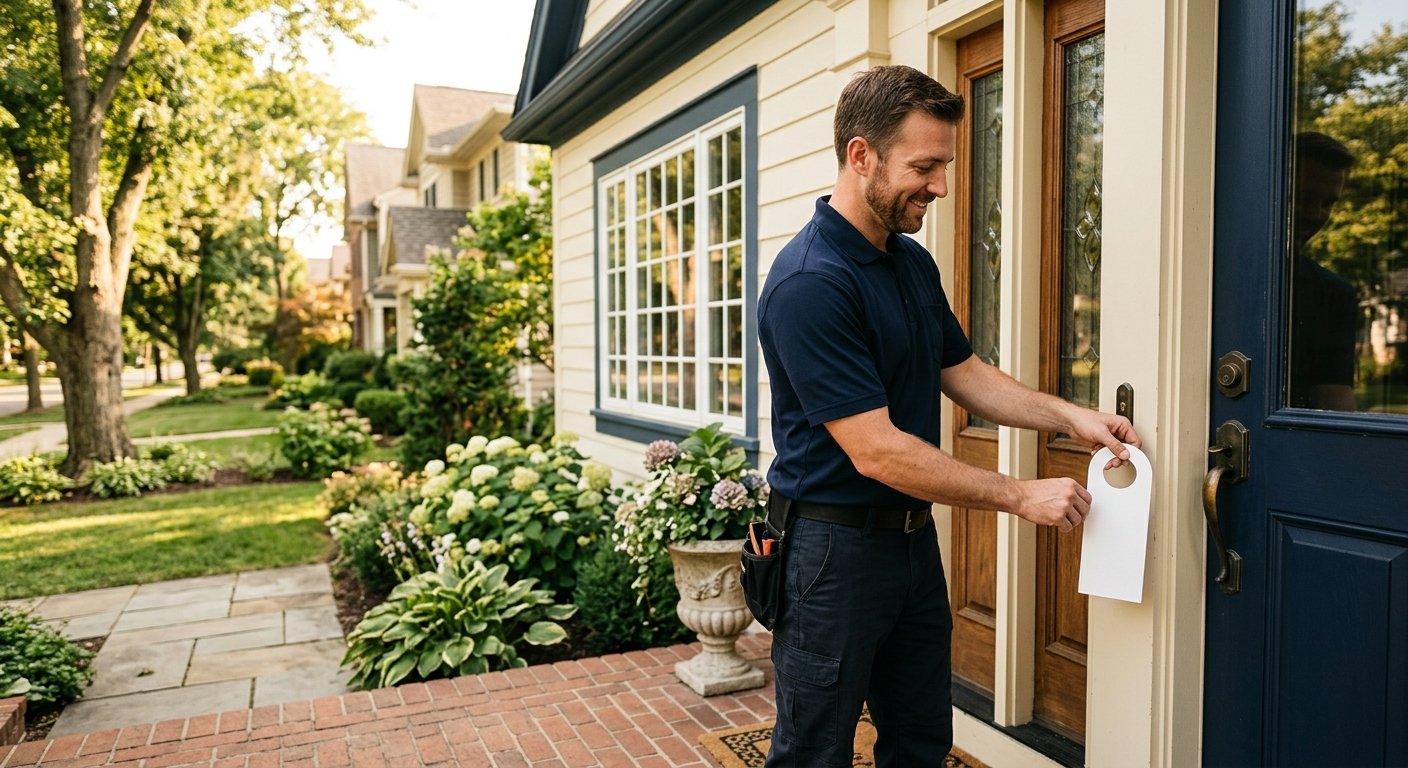
Door hangers have a built-in advantage: they’re unavoidable. Unlike email (which disappears into spam) or digital ads (which get scrolled past in milliseconds), a door hanger physically occupies the space between a homeowner and their front door. They pick it up. They look at it. Even if they toss it, your brand registered.
For contractors focused on service area marketing, that physical presence is the whole point. You’re not trying to reach everyone in a metro—you’re trying to dominate a handful of neighborhoods where your trucks already roll. Door hangers let you saturate exactly those streets.
Realistic response rates for cold door hanger distribution typically land between 0.5% and 2%. That sounds modest until you do the math. Drop 2,000 door hangers in a neighborhood where the average HVAC job is worth $3,500, and a 1% response rate means 20 calls—with realistic close rates turning into serious revenue. The cost per piece is low enough that even a single job pays for the campaign.
Designing a Door Hanger That Gets Calls
Most contractor door hangers fail because they’re designed like a business card that got bigger. Here’s what actually works.
Lead With One Clear Offer
Don’t list every service you offer. Pick one compelling reason for a homeowner to call right now. A seasonal special, a free inspection, a limited-time discount on a high-demand service—these are the hooks that drive action. “Full HVAC Tune-Up — $79 This Month Only” beats “HVAC, Plumbing, Electrical & More” every time.
Front Panel: Attention and Offer
The front of your door hanger has about three seconds to earn a second look. Prioritize:
- Bold headline — service + benefit, not just your company name
- Offer or hook — specific, time-sensitive, easy to understand
- Phone number — large enough to read at arm’s length
- Brand colors and logo — consistent with your truck, uniforms, and other materials
Back Panel: Trust and Details
The back panel closes the deal for homeowners who flip it over. Use this space for:
- License number, insurance confirmation, and any certifications (EPA, NATE, GAF, etc.)
- 3–5 Google review excerpts with star ratings
- A QR code linking to your booking page or offer landing page
- Secondary contact info and service area confirmation (“Proudly serving [neighborhood] since ___”)
Size and Print Specs That Matter
Standard door hanger sizes run 4.25″×11″ or 4.5″×11.5″ with a die-cut hole or slot at the top. Use 100lb or heavier card stock—thin door hangers feel cheap and often tear at the hanger cutout. Full-bleed printing on both sides maximizes impact. If you’re ordering through a full-service provider like Shop Direct Mail, the design team will ensure your files hit the right bleed, safe zones, and resolution specs so nothing gets cut off at the printer.
Color Psychology for Trade Contractors
Your industry has visual conventions that homeowners recognize instinctively. HVAC companies lean into blues and cool tones (clean, refreshing, temperature). Roofing and remodeling use bold reds, charcoals, and earth tones (strength, reliability). Landscaping gets greens and earth tones for obvious reasons. Match your door hanger palette to your brand—but make sure there’s enough contrast that the headline pops from ten feet away on a porch post.
Distribution Strategies That Maximize ROI
Targeted Neighborhood Drops
The strongest door hanger campaigns start with a specific geographic thesis. Ask yourself: where are my best customers already coming from, and what neighborhoods look just like those streets? Age of housing stock, median income, and homeownership rates all predict service demand. A plumbing company targeting homes built before 1985 will find their ideal customers in specific zip codes and subdivisions—not spread randomly across a city.
This is where list acquisition matters. A good direct mail partner can help you identify carrier routes and addresses that match your ideal customer profile before you print a single piece.
The “Storm Chasing” Play for Roofers
Few contractor marketing moves are as high-ROI as dropping door hangers in hail or wind-damaged neighborhoods within 48–72 hours of a storm. Homeowners in those streets are already thinking about their roof. They haven’t called anyone yet. You showing up first—literally at their door—with a free inspection offer puts you at the front of a very short consideration window. Speed matters more than perfection here; get the hangers out, then follow up with a postcard mailer one week later to reinforce the message.
Door Hangers + EDDM: A Combined Approach
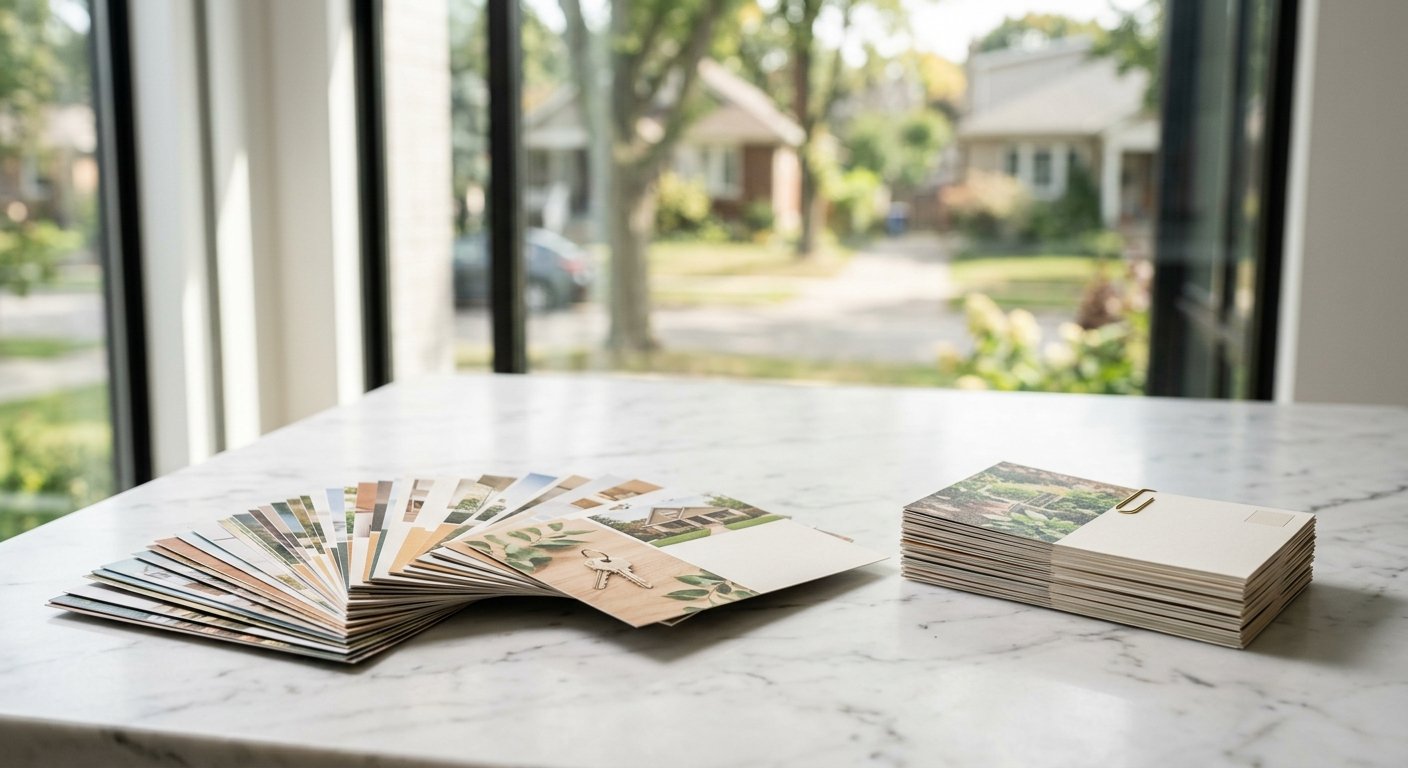
Door hangers and Every Door Direct Mail (EDDM) work well together. EDDM reaches every household on a carrier route through USPS delivery at approximately $0.20–$0.25 per piece (retail rate, approximate—rates shift periodically, so confirm current pricing at USPS.com). Door hangers hit the same streets at street-level, with a personal touch that a mailbox piece can’t replicate.
A common winning sequence for contractors: send an EDDM postcard to a carrier route, then follow up with door hanger drops on the same streets two weeks later. Homeowners who saw your postcard recognize your brand when the door hanger appears. Frequency builds familiarity, and familiarity builds calls.
How Many Homes Should You Hit?
For a service radius campaign, most contractors see meaningful results starting at 1,000–2,500 pieces per distribution. Fewer than that and you’re not building the neighborhood saturation that makes people feel like you’re “everywhere.” If your service ticket value is high (roofing, remodeling, HVAC installs), even a smaller 500-home drop in a premium neighborhood can pencil out if one job closes.
Tracking Your Door Hanger Campaign
The most common objection to print marketing is tracking. Here’s how contractors close that gap:
- Call-tracking numbers — Use a unique phone number on your door hanger that forwards to your main line. Any call from that number is attributable to the campaign.
- Unique landing page or QR code — A QR code linking to an offer-specific page lets you count scans and form fills.
- Promo codes — “Mention code DH26 for 10% off” is low-tech but effective. Train your office staff to ask every caller where they heard about you.
- Ask at the appointment — Simple and often overlooked. Technicians can ask at the door; customers almost always remember where they found you.
None of these methods are perfect, but combined they give you a clear picture of campaign performance. When you know what a door hanger campaign cost and how many jobs it generated, you can calculate cost-per-lead and decide whether to scale it up.
Frequently Asked Questions
How much does it cost to print and distribute contractor door hangers?
Printing costs vary based on quantity, paper stock, and design complexity. Generally, full-color door hangers run between $0.10 and $0.30 per piece for printing at volume. Distribution costs depend on whether you’re hiring walkers, using a professional service, or distributing yourself. A full-service provider like Shop Direct Mail can bundle design, print, and list targeting into a single workflow, which typically saves contractors significant time and reduces coordination errors.
Are door hangers legal to distribute in residential neighborhoods?
In most jurisdictions, yes—door hangers placed on door handles or gates (not in mailboxes) are legal without a postal permit. However, some HOA communities, gated neighborhoods, or municipalities have local ordinances restricting solicitation. It’s worth checking local rules before a large drop, particularly in planned communities.
How often should contractors distribute door hangers?
Frequency depends on your service category. For seasonal services (HVAC tune-ups, lawn care, pest control), quarterly drops timed to seasonal demand work well. For year-round services like plumbing or remodeling, a consistent monthly or bi-monthly drop in your target service area builds brand recognition over time. Most contractors see compounding returns after three or more touches in the same neighborhood.
Should I use door hangers or postcards for contractor marketing?
Both have merit, and they work best together. Door hangers are ideal for hyper-local saturation in specific streets or neighborhoods, especially for high-urgency services. Contractor postcards via EDDM or targeted mailing lists reach every household on a route through USPS, with lower per-piece cost at scale. For brand-building and repeat exposure, a combined strategy outperforms either channel alone.
What’s the best offer to put on a contractor door hanger?
The strongest offers are specific, time-limited, and low-risk for the homeowner. Free inspections, seasonal tune-up specials, and first-time customer discounts consistently drive response. Vague offers like “Call Us for a Quote” underperform because they don’t give the homeowner a reason to act now. The more clearly you can articulate value in a single sentence, the better your response rate typically is.
Start Your Next Door Hanger Campaign
A well-designed, well-distributed door hanger campaign is one of the most direct ways to put your contracting business in front of homeowners who need exactly what you offer—on their street, at their door, in their hands.
At Shop Direct Mail, we handle strategy, design, printing, and list targeting under one roof, so you’re not coordinating between three vendors to get one campaign out the door. Whether you’re running a targeted neighborhood drop or pairing door hangers with an EDDM saturation campaign, we’ll help you build a program that’s trackable, repeatable, and built around your service area.
Ready to get started? Explore our contractor marketing services or reach out to talk through your next campaign. Your next job might be just a door hanger away.