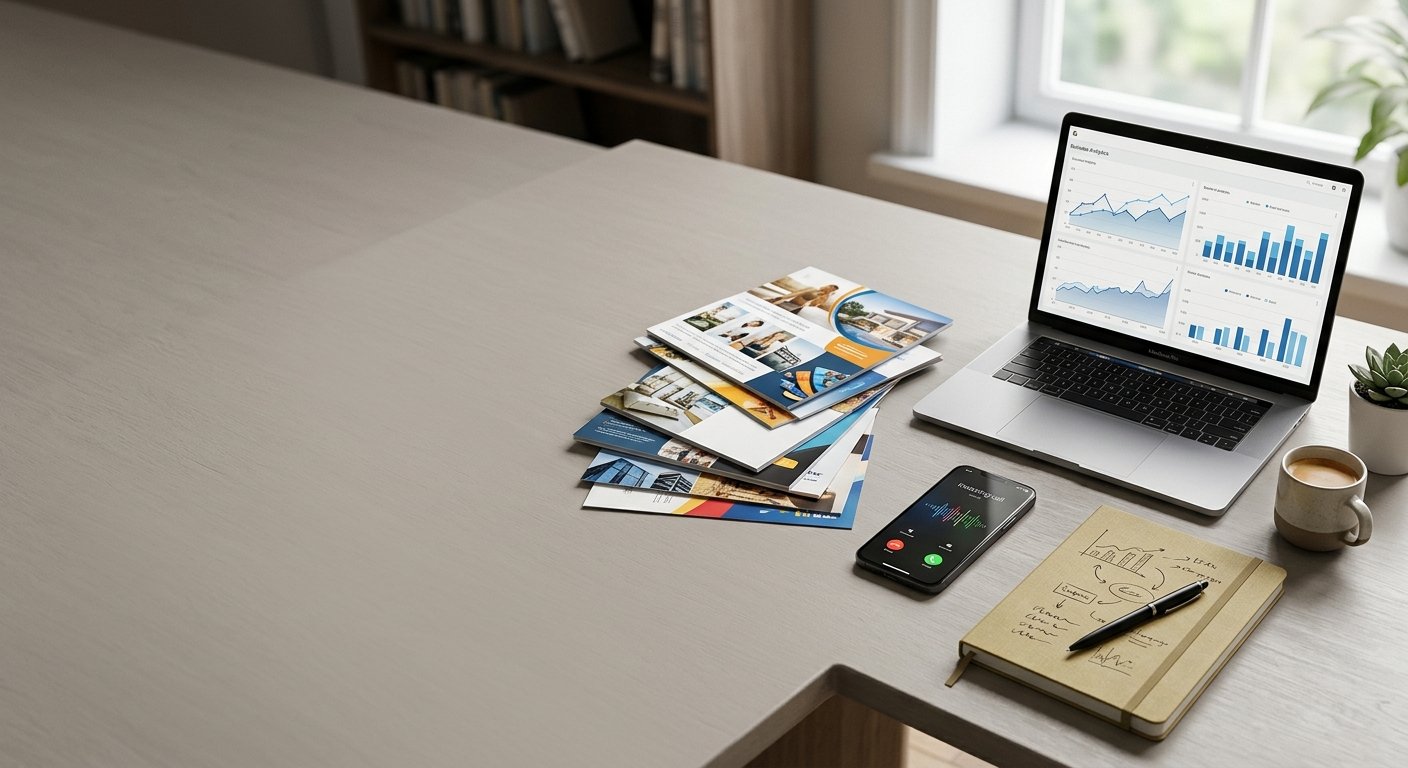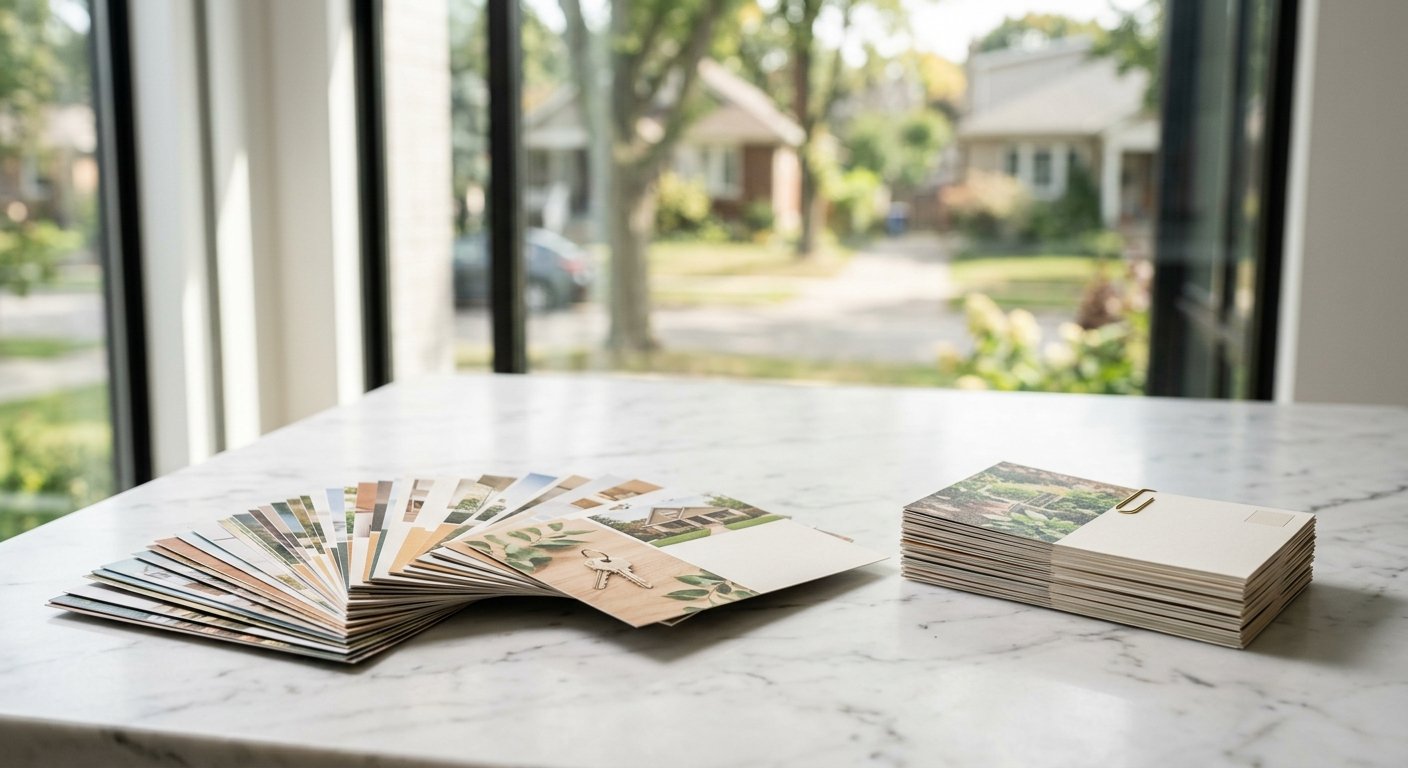
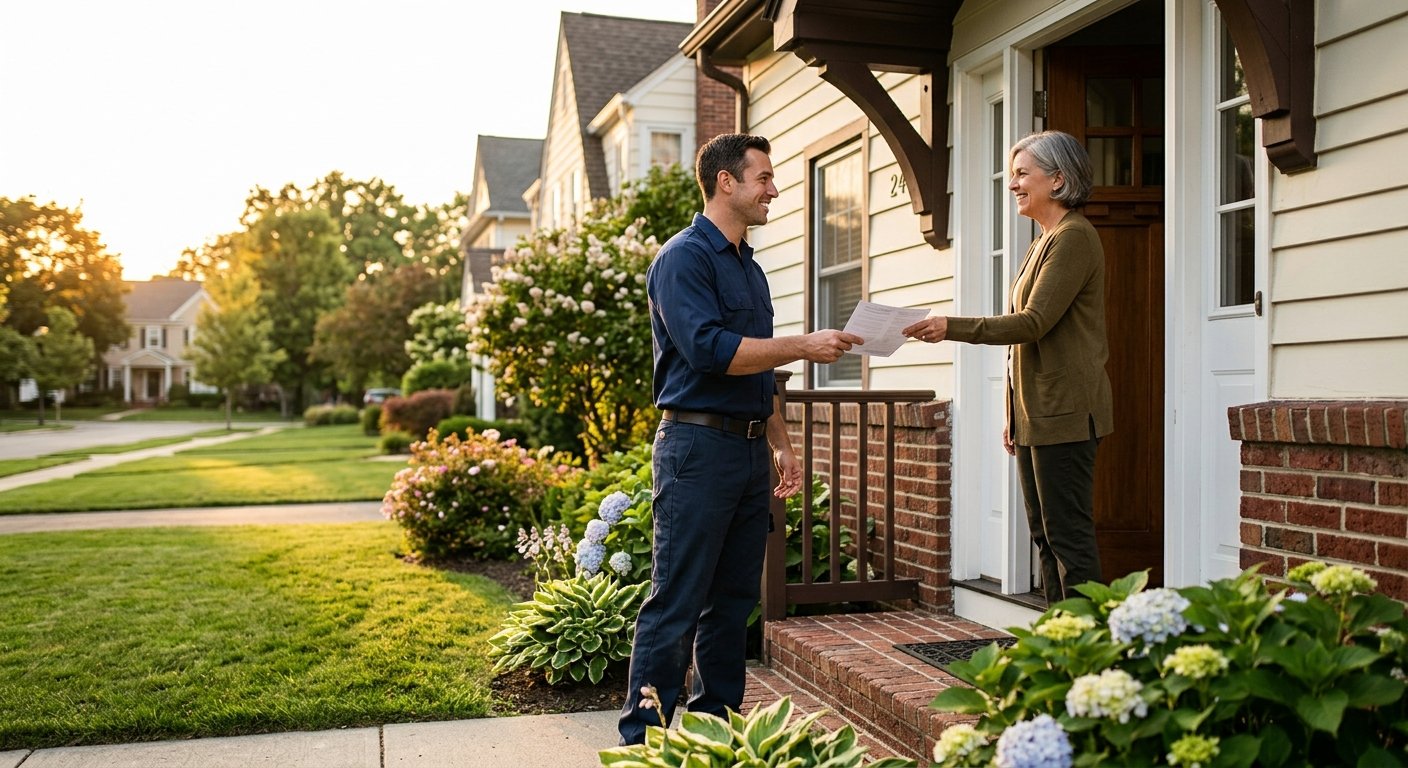
Contractor flyers work when they pair a specific offer with a precisely targeted delivery area — and stop relying on hope. The most effective flyers reach homeowners who already have a reason to need your service, communicate one clear benefit, and give readers a frictionless next step. Done right, physical flyers remain one of the most cost-efficient tools in a contractor’s local lead generation toolkit.
- Target by neighborhood context first — storm damage, seasonal timing, and new construction activity drive response rates up.
- One service, one offer, one call to action: flyers that try to say everything convert nothing.
- USPS Every Door Direct Mail (EDDM) lets contractors saturate entire carrier routes; EDDM Retail postage is currently $0.26 per piece (USPS).
- QR codes, unique phone numbers, and promo codes make flyer ROI measurable — not just hopeful.
- Consistency matters: a single drop rarely builds momentum; 2–3 touches to the same route multiplies response.
Why Physical Flyers Still Drive Real Business
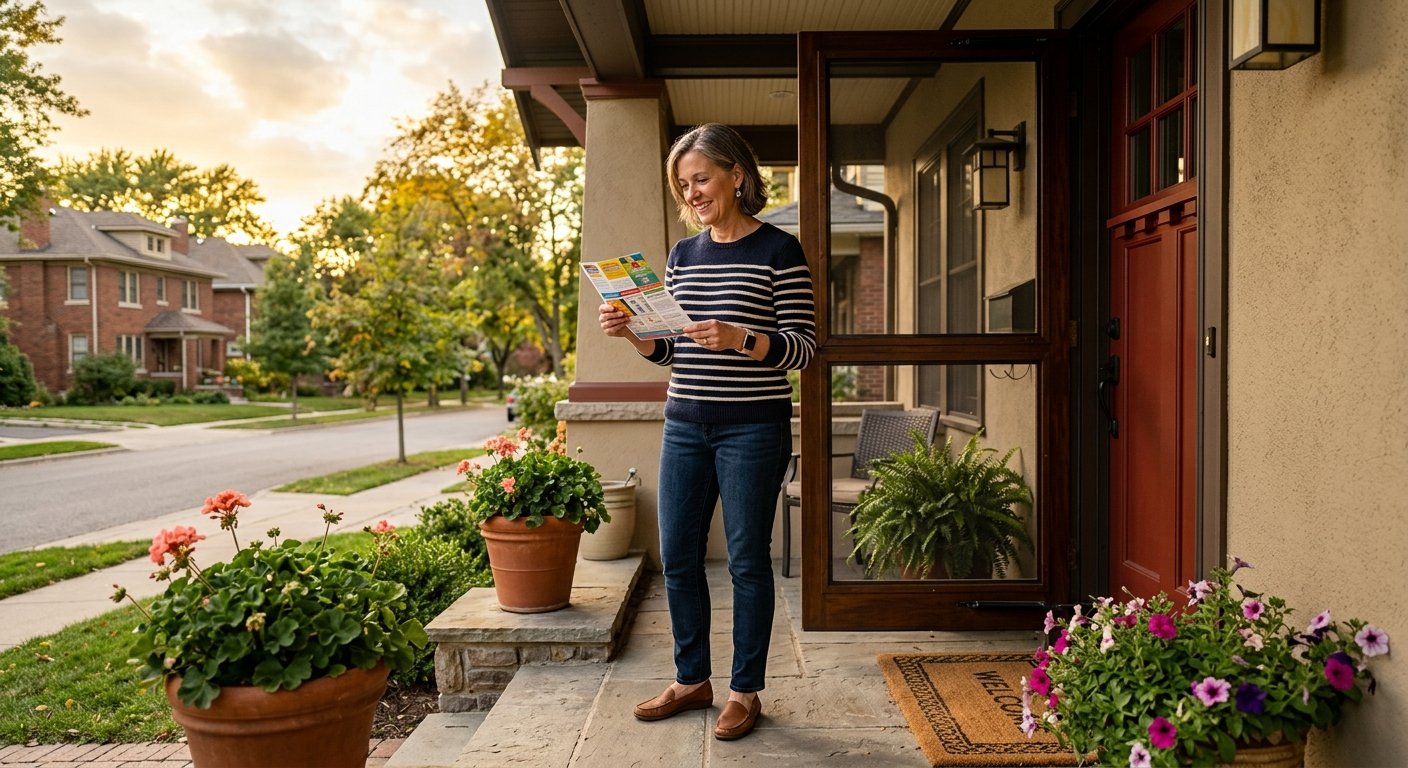
The average American household receives far less physical mail than it did a decade ago, which means a well-designed flyer has less competition for attention than ever. According to the United States Postal Service, direct mail achieves significantly higher open and engagement rates than email for household-level outreach — a fact that surprises contractors who have been told digital is the only game in town.
That doesn’t mean flyers work automatically. A generic “We do plumbing, call us” card dropped on every door in your city is a fast way to burn a budget. What generates actual calls is a flyer designed around a homeowner’s current situation — a roof that just took hail damage, an AC unit limping through its fourth summer, a backyard in desperate need of landscaping before a family event.
Time your flyer drops to lag about two weeks behind local weather events or seasonal transitions. A roofing flyer mailed three weeks after a hailstorm hits while homeowners are actively researching — not while they’re still in shock. HVAC maintenance offers land best in early spring or early fall before the season peaks.
The Anatomy of a Flyer That Converts

Most contractor flyers fail at the design stage, long before they reach a mailbox. The layout decisions you make — or skip — determine whether a homeowner reads your offer in three seconds or drops it in the recycling bin.
Headline: Lead With the Outcome, Not Your Name
Your company name matters, but it isn’t a headline. Lead with the result the homeowner gets: “Stop Paying to Heat Your Attic” outperforms “Rodriguez HVAC Services” every time. Your brand goes below the headline once you’ve earned the reader’s attention.
Offer: Make It Specific and Time-Limited
Vague offers create vague responses. “Free second opinion on any HVAC estimate” or “$75 off a full gutter cleaning scheduled before October 31” gives the homeowner a concrete reason to act now. Generic discounts like “10% off all services” are easy to ignore because they don’t expire.
Visuals: Before-and-After Beats Stock Photography
A real photo of a roof you replaced in the neighborhood, a cleaned driveway, or a finished basement remodel does more credibility work than any stock image. Homeowners are buying confidence, not aesthetics.
Call to Action: One Door, Not Five
Pick one primary next step: scan this QR code, call this number, or text “QUOTE” to this number. When you give five options, readers choose none. If you include a QR code — and you should — make sure it points to a landing page specific to the offer, not your general homepage.
Define the target situation
Identify the specific homeowner problem your service solves right now — storm damage, seasonal need, or neighborhood context.
Write the headline around the outcome
Lead with what the homeowner gains or avoids, not your company name or service list.
Build one specific, time-limited offer
Attach a deadline or a limited-availability condition so the homeowner has a reason to act this week.
Choose a single tracking mechanism
QR code, unique call-tracking number, or promo code — pick one and use it on every piece so you know what’s working.
Select and saturate your delivery area
Use USPS EDDM carrier routes to blanket the neighborhoods most likely to need your service, then repeat the drop 2–3 times.
EDDM: The Smartest Delivery Tool for Contractors
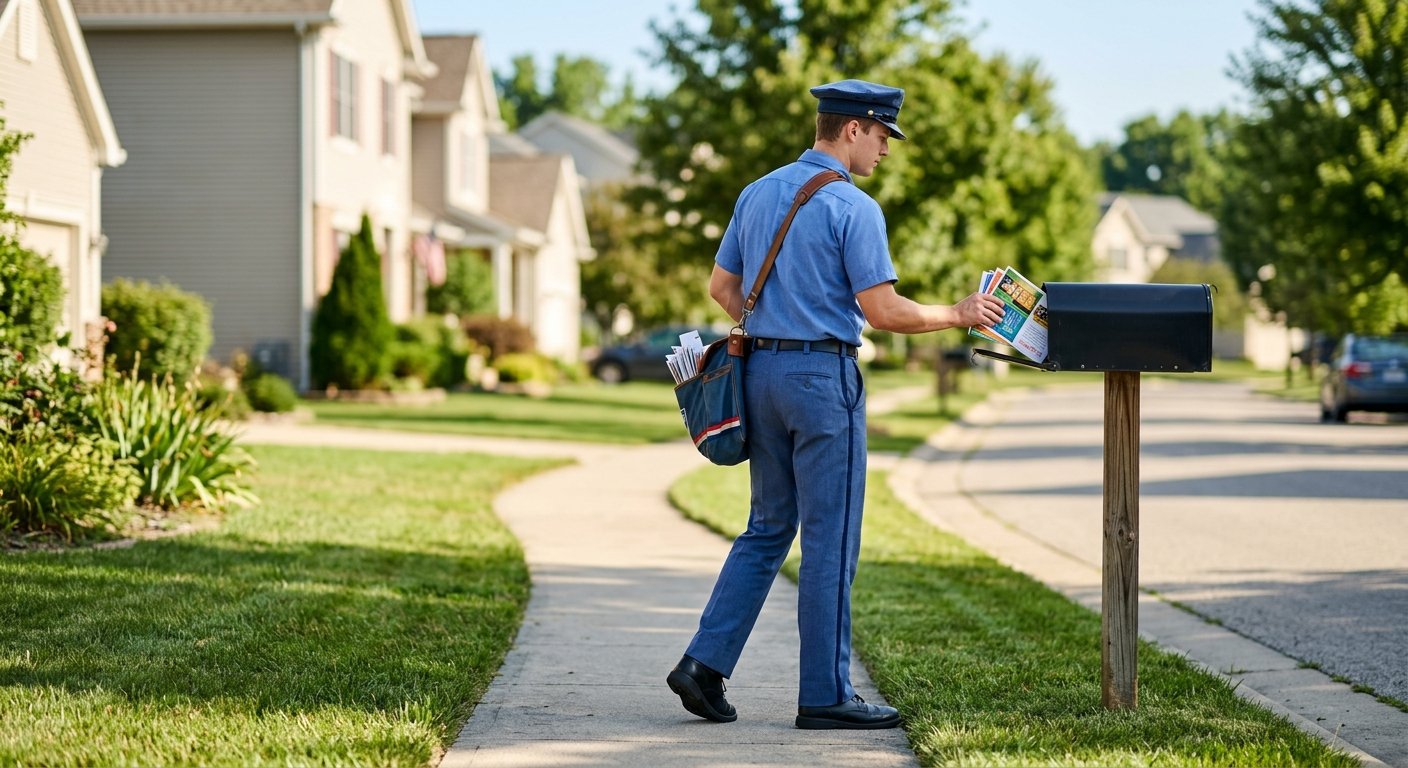
Every Door Direct Mail is the USPS program that lets businesses mail to every household on selected carrier routes without purchasing a list. For contractors focused on service area marketing, EDDM removes one of the biggest friction points: you don’t need names or addresses. You pick the routes, USPS delivers to every door.
EDDM Retail postage is currently $0.26 per piece, according to USPS, so a 1,000-piece drop saturating a neighborhood costs $260 in postage. Add printing, and you have a campaign that puts your offer in front of every homeowner on those streets. If one job is worth more than the campaign costs, a single conversion pays for the drop.
EDDM pieces must meet USPS size requirements — common formats include 6.25″ × 9″, 6.5″ × 11″, and 6.5″ × 12″. Larger formats get noticed. The USPS EDDM program page outlines the current specifications and retail eligibility rules in full.
At Shop Direct Mail, we handle EDDM as a fully managed service — route selection, design, printing, and drop-off under one roof. You don’t have to coordinate three vendors or navigate postal paperwork on your own. Our contractor marketing services are built specifically for trades businesses that need fast turnaround and trackable results.
A single job conversion from a well-targeted neighborhood drop often covers the full campaign spend several times over.
Targeting: Where Your Flyer Lands Matters as Much as What It Says
The best-written flyer mailed to the wrong neighborhood is still wasted money. For contractors, local lead generation is about context — pairing your service with the neighborhoods most likely to need it right now.
| Contractor Type | Best Targeting Trigger | Delivery Method |
|---|---|---|
| Roofing | Post-storm ZIP codes, older housing stock | EDDM carrier route saturation |
| HVAC | Pre-season (spring/fall), neighborhoods with older homes | EDDM or purchased homeowner list |
| Landscaping | Warm-season onset, new construction move-ins | EDDM or door hanger drops |
| Remodeling | Neighborhoods with rising home values, permit activity | Purchased list by home age/value |
| Pest Control | Spring and early summer, wooded or humid areas | EDDM carrier route saturation |
When broader targeting isn’t specific enough, a purchased homeowner list lets you filter by home age, square footage, estimated home value, or length of residency. Length of residency helps you find owners whose homes are reaching the age where HVAC replacement, remodeling, or roof work comes up — the kind of data-driven targeting that makes direct mail printing services genuinely strategic rather than just logistical.
The Small Business Administration consistently identifies direct, local outreach as among the highest-ROI activities for small service businesses — particularly in sectors where trust and community recognition drive purchasing decisions. Contractor flyers that show real work and real local results build that recognition at scale.
Tracking Your Results Without Guessing
One of the most common objections contractors raise about flyer campaigns is “I can’t tell if it’s working.” That’s a tracking problem, not a direct mail problem. Three simple mechanisms eliminate the guesswork:
- Unique call-tracking numbers: Use a number that appears only on your flyers. Any call to that number came from the mailer — no ambiguity.
- QR codes with UTM parameters: A QR code that links to a tagged landing page shows you exactly how many people scanned, what they did next, and whether they converted.
- Promo codes: “Mention code ROOF26 for a free inspection” ties conversions directly to the campaign even if the homeowner calls your main line.
Combine any of these with your USPS mailing receipt — which documents how many pieces were delivered — and you have a complete picture of reach, response, and conversion. That’s the kind of accountability that makes contractor marketing defensible to any business owner watching their spend.
For contractors who also want to expand into postcard-based neighborhood prospecting, our real estate postcards section shows how the same design and targeting principles apply across local service campaigns. And if you want to see the full landscape of local business marketing through direct mail, our real estate marketing hub covers complementary strategies worth adapting for trades businesses.
Frequently Asked Questions
How many flyers do I need to mail to get leads?
Response depends on targeting quality, offer relevance, and frequency. Put a tracking number, QR code or promo code on your first drop so you learn your own response rate, and plan to mail the same route 2–3 times.
What size should a contractor flyer be?
For EDDM saturation, USPS-compliant sizes include 6.25″ × 9″, 6.5″ × 11″, and 6.5″ × 12″. Larger formats are harder to miss and tend to outperform smaller cards. If you’re doing door hanger drops rather than USPS delivery, standard 4.25″ × 11″ door hangers are the industry norm.
How do I know which neighborhoods to target?
Start with where your best current customers live, then expand outward. For event-driven services like roofing or storm restoration, target ZIP codes that experienced the weather event. For maintenance services, filter by home age, home value, and length of residency to find the households statistically most likely to need your service.
Is one flyer drop enough to see results?
Rarely. Plan on two or three drops to the same route within a 60–90 day window. Repetition builds name recognition — homeowners who ignored the first piece often respond to the third because it’s when they finally need the service.
Can I design and mail flyers without managing multiple vendors?
Yes. A full-service direct mail provider handles strategy, design, list acquisition, printing, and mailing in one workflow. This saves time, reduces coordination errors, and typically speeds up campaign launch by days or weeks compared to managing each step separately.
Ready to put your offer in front of the right neighborhood?
Tell us your service area, your target season, and your goal — we’ll build a flyer campaign designed to convert, not just deliver.

About Shop Direct Mail Marketing
Shop Direct Mail is a full-service direct mail marketing partner for real estate agents, contractors, and local service businesses nationwide. We provide end-to-end strategy, design, list acquisition, printing, and mailing services that help small and medium-sized businesses cut through digital clutter with tangible, measurable campaigns. Our focus is on ROI-driven tactics like real estate farming, EDDM saturation, just-listed/just-sold postcards, and neighborhood prospecting that generate leads and customers business owners can track. Visit shopdirectmail.com →