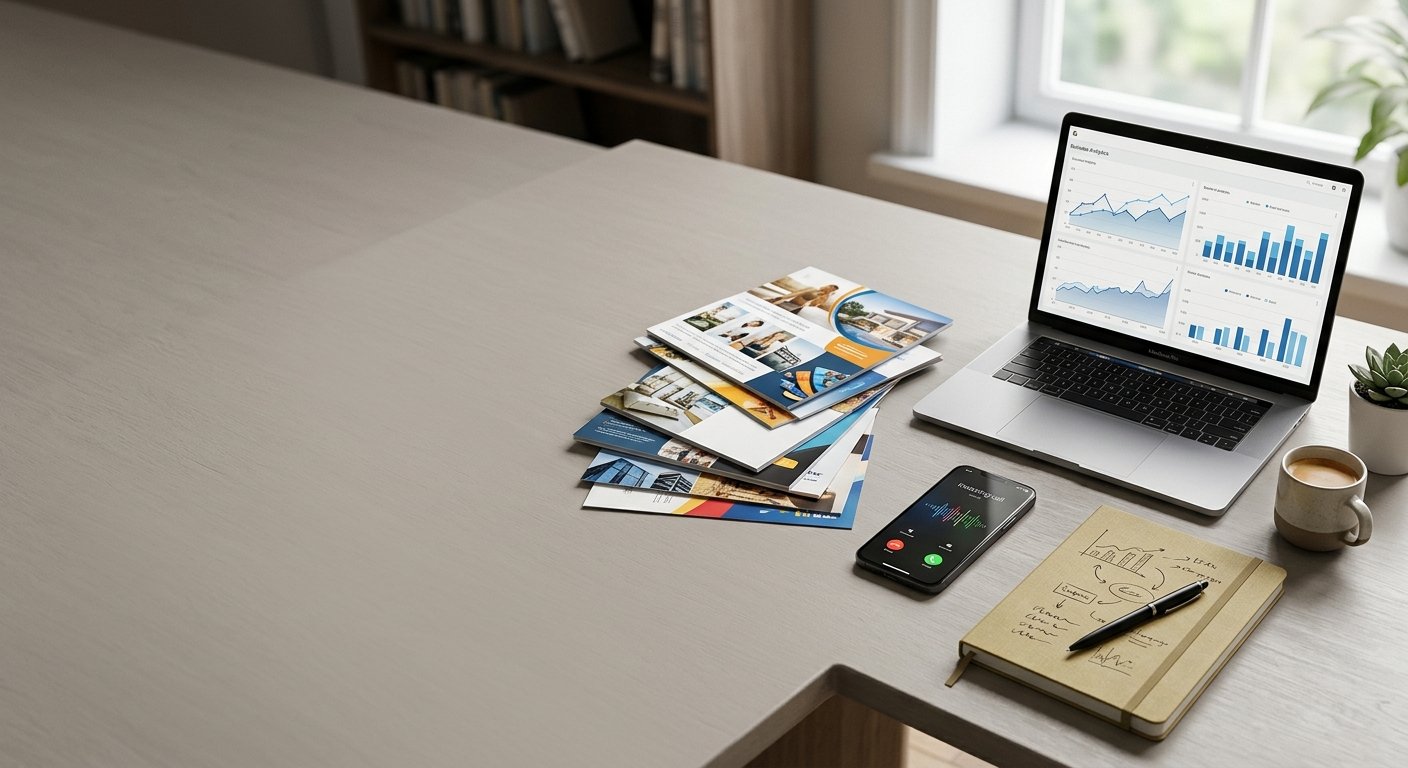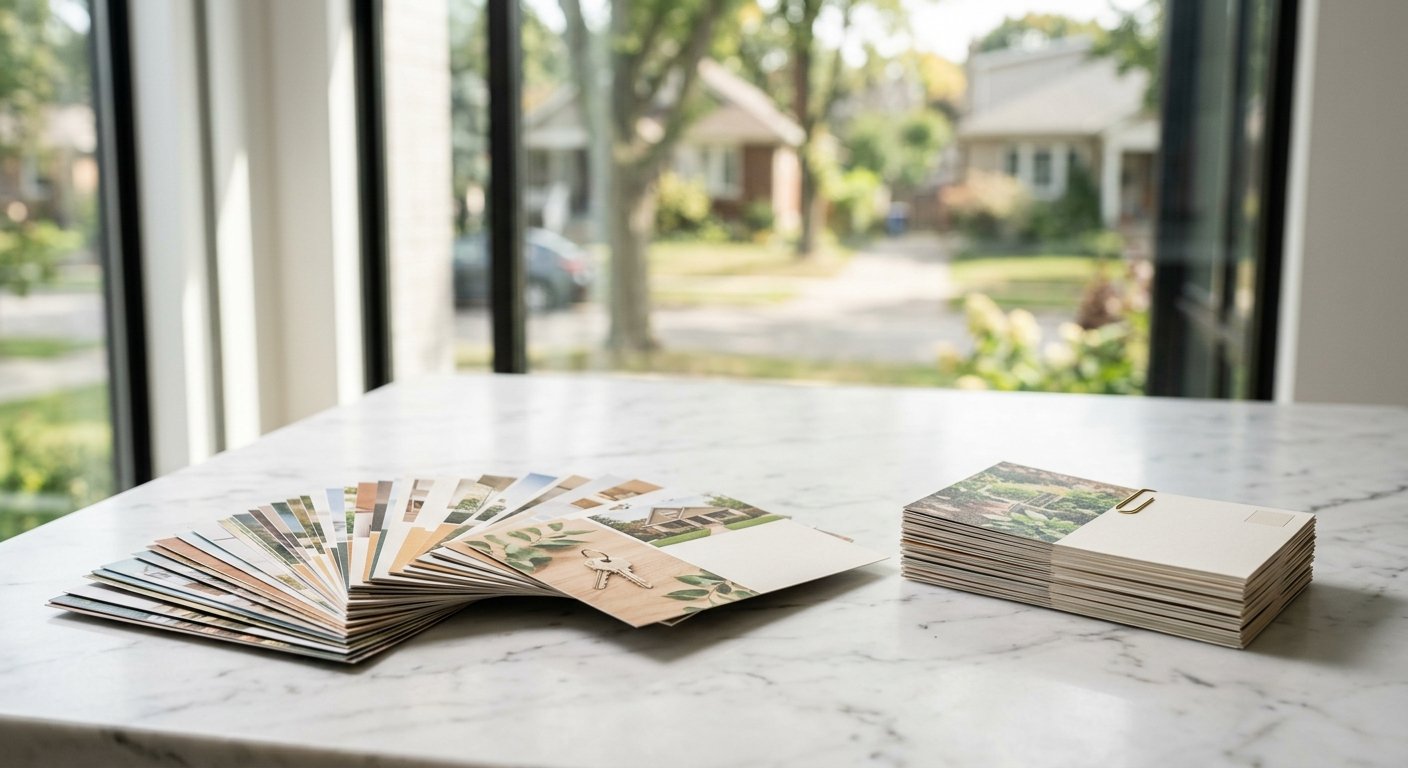

A converting postcard does five things well: it stops the reader in one second, communicates the offer in five, drives a single clear action, looks credible, and reaches the right address. Get those five elements right and direct mail postcards routinely outperform digital display ads on response rate — get them wrong and even a perfect mailing list won’t save the campaign.
- A dominant headline and a single offer are the two highest-leverage design decisions you can make.
- White space and visual hierarchy aren’t aesthetic choices — they’re conversion mechanics.
- Every postcard needs one trackable response path: a QR code, unique URL, or dedicated phone number.
- Real estate agents, contractors, and local service businesses each need slightly different design approaches — one template doesn’t fit all.
- Full-service production (design through mailing) reduces errors and compresses timelines significantly.
Why Design Is a Business Decision, Not an Art Project
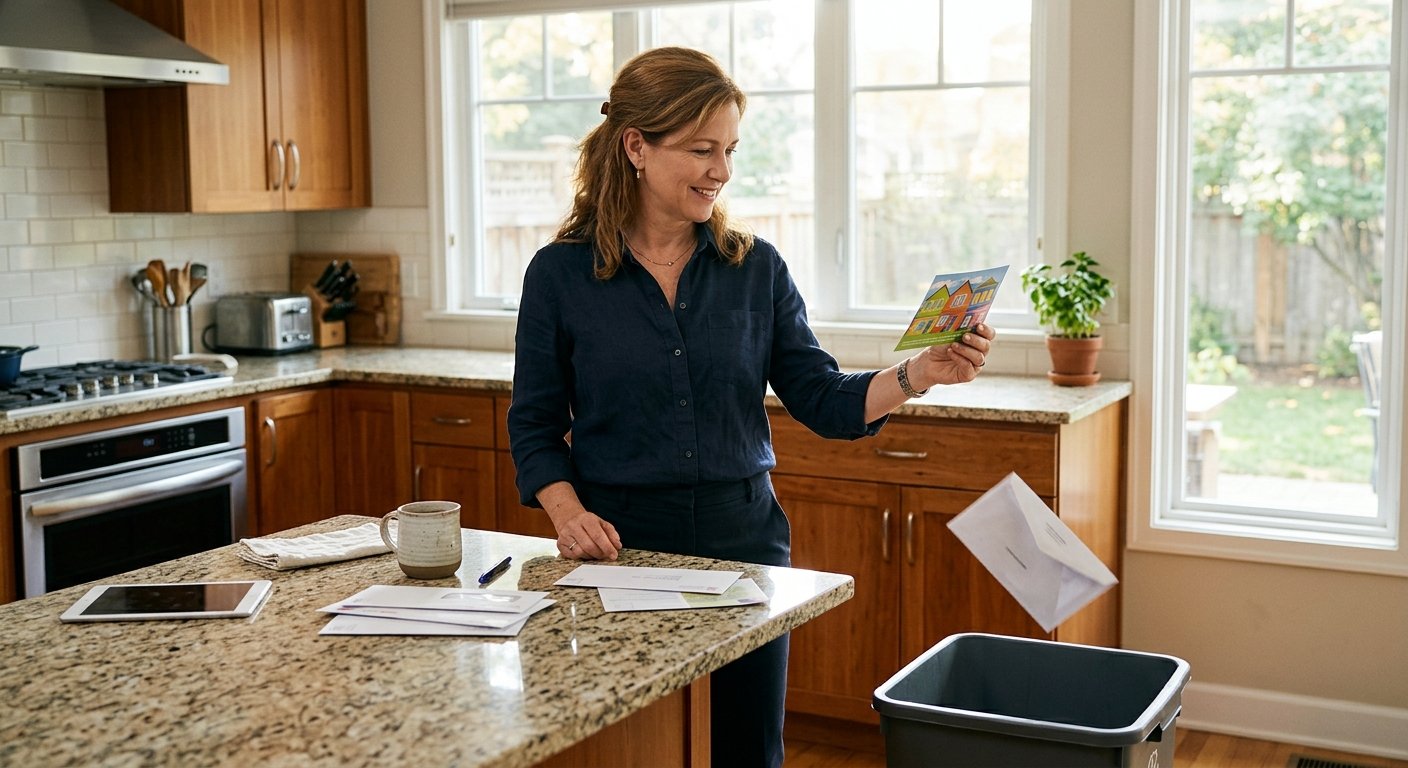
Most small business owners think of postcard design as picking colors and dropping in a logo. In practice, design is the difference between a piece that gets read and one that goes straight into the recycling bin. According to the U.S. Postal Service, direct mail has a median household response rate that consistently outpaces digital channels — but that number assumes the piece actually gets opened and engaged with. Design is what earns those three seconds of attention.
Think about the last piece of mail that made you stop. It probably had a clear image, a bold headline that answered an implied question (“What’s my home worth?” or “Got a leak?”), and an obvious next step. Nothing accidental there — every element was a deliberate choice.
Design is what earns those three seconds of attention — and three seconds is all you get.
The Anatomy of a High-Converting Postcard

1. A Headline That Does All the Work
Your headline is not your company name. It is the answer to the reader’s unspoken question: “Why should I care about this piece of mail right now?” For a real estate agent, that might be “3 Homes Sold on Your Street This Month.” For a roofer running a storm-response campaign, it’s “Hail Hit Your Neighborhood — Free Damage Inspection.” For an HVAC company, it’s “Beat the Summer Rush — AC Tune-Up Before the Heat Hits.”
The strongest headlines are specific, benefit-forward, and short enough to absorb in under two seconds. Avoid vague phrasing like “Your Trusted Local Partner” — that tells the reader nothing about what action to take today.
2. A Single, Dominant Visual
Cluttered postcards fail. Readers don’t decode — they skip. One strong image (a sold home, a before/after roof repair, a smiling staff member) anchors attention and supports the headline. Professional photography always outperforms stock images, but a well-chosen stock image is still far better than four competing visuals fighting for space.
For real estate postcards specifically, a photo of an actual sold property in the target neighborhood consistently outperforms generic lifestyle imagery. It’s proof, not promise — and proof converts better.
3. An Offer That Respects the Reader’s Time
If the recipient can’t identify your offer in five seconds, you’ve lost them. The offer doesn’t have to be a discount — it can be a free consultation, a market report, a seasonal inspection, or a neighborhood home value estimate. What matters is that it’s concrete and low-friction. “Call for pricing” is not an offer. “Get your free roof inspection by November 30” is.
4. One Call to Action
Multiple calls to action dilute each other. Pick one: visit this URL, scan this QR code, or call this number. Then make it impossible to miss — high contrast, generous size, positioned where the eye naturally lands (typically bottom-right or centered below the offer). For direct mail design, constraint is a feature, not a limitation.
5. A Trackable Response Path
This is where postcard marketing becomes measurable. Use a unique phone number via call tracking, a campaign-specific landing page URL, a QR code linking to a dedicated page, or a promo code. These tools let you tie responses directly to the mailing — not to vague “brand awareness.” When you can prove which mailer generated which lead, you can optimize and scale.
Define your one offer
Every design decision flows from the offer. Lock this in before a single layout decision is made.
Write the headline first
The headline and offer should be written before design begins — they determine layout hierarchy.
Choose your dominant visual
One image that supports the headline. Everything else on the card is secondary.
Set up tracking before you print
Create your unique URL, QR destination, or call-tracking number before the card goes to print — not after.
Review at thumbnail size
Shrink the proof to 10% of its real size. If you can still read the headline and CTA, the hierarchy works.
Design Differences by Audience
Real Estate Agents and Teams
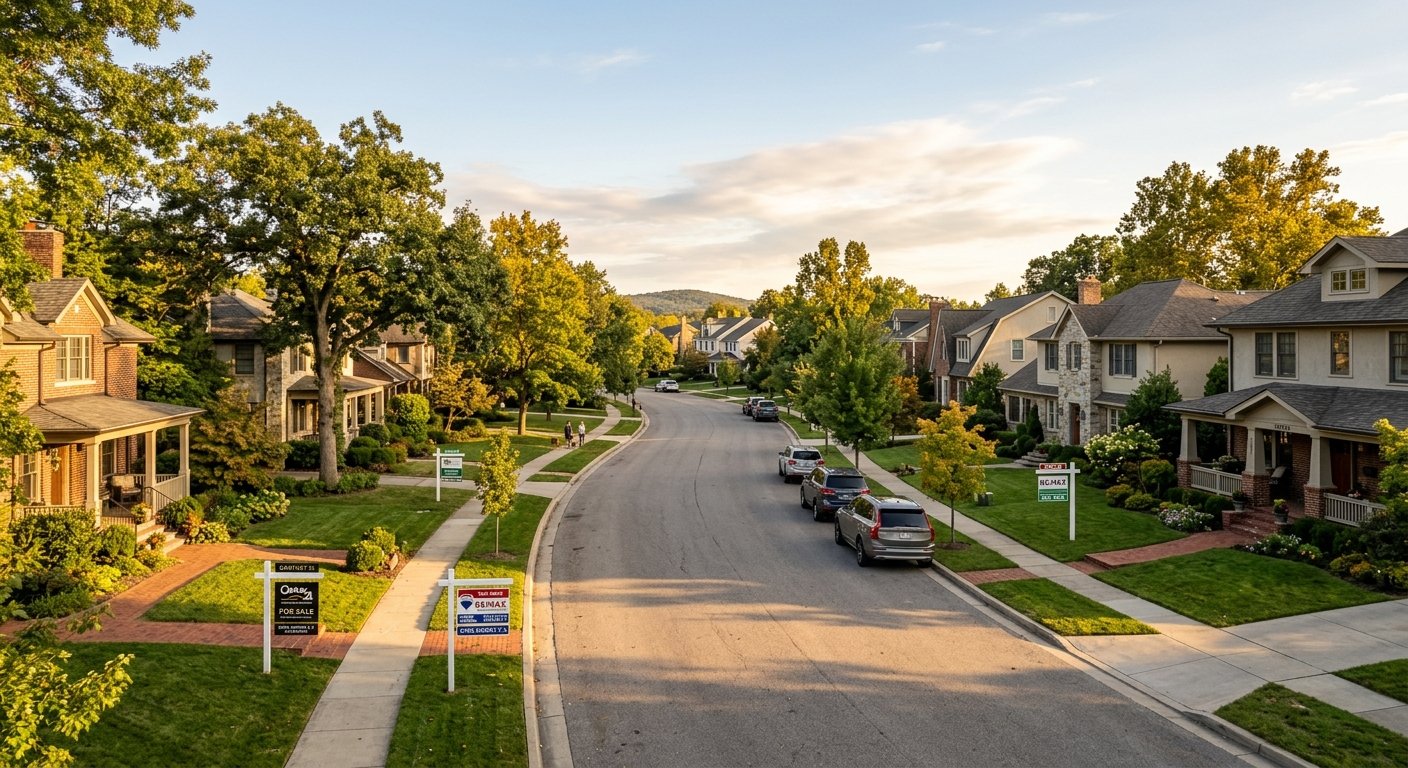
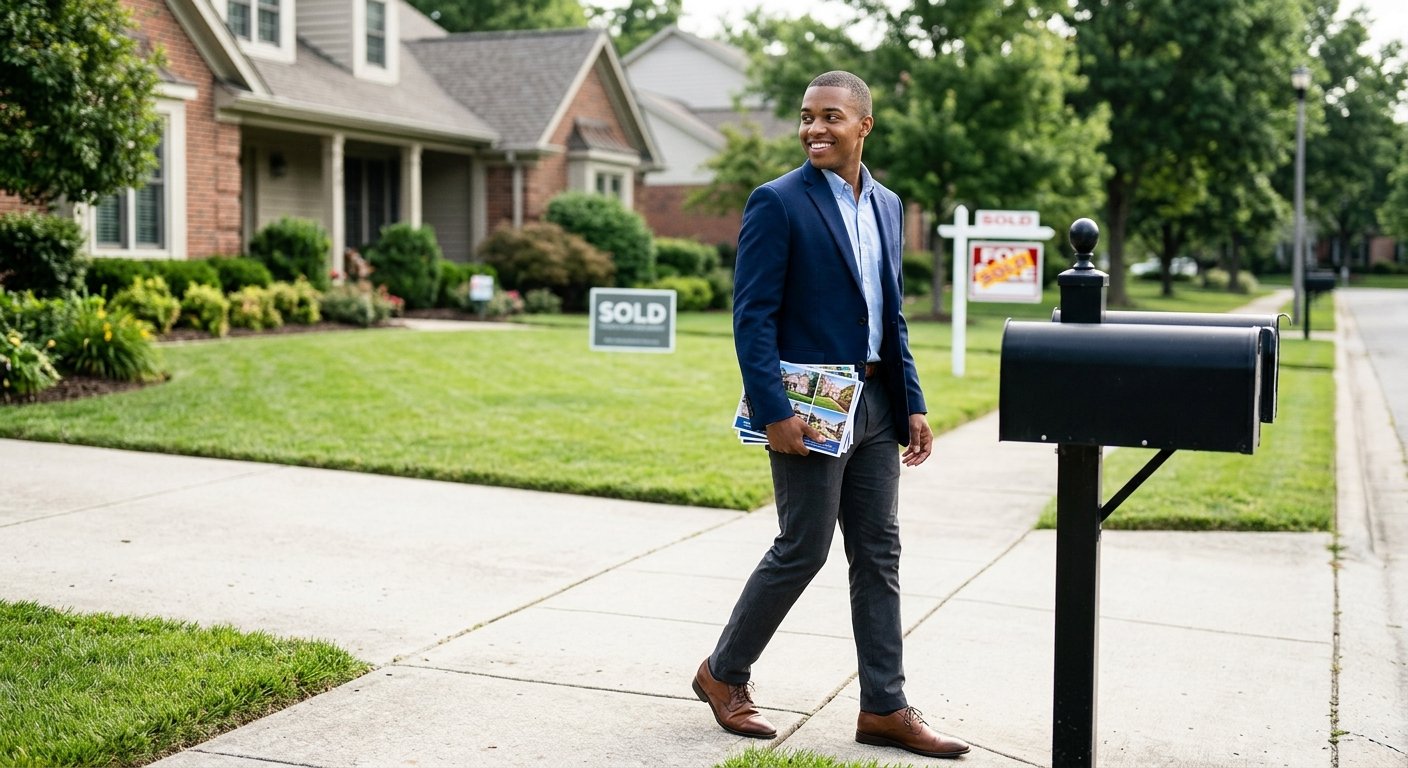
For real estate postcards, personal branding matters more than in most other industries. Your face, your sold properties, and your local market authority are the offer. Just-listed and just-sold cards should lead with the property and price, not your headshot. Farming cards should build recognition over time — consistent colors, fonts, and messaging across 6–12 mailings is what creates the “I’ve seen you everywhere” effect that converts cold neighborhoods into warm leads.
Contractors
Contractor postcards need to solve a specific, timely problem. A roofing company mailing into a hail-affected zip code should use bold, urgent language and imagery that signals damage assessment. An HVAC company mailing a pre-summer tune-up special should lead with cost savings and a clear deadline. The EDDM (Every Door Direct Mail) format works especially well for contractors because it saturates entire carrier routes without requiring a purchased list — ideal for neighborhood-saturation campaigns after a storm or before a seasonal push.
EDDM pieces must meet USPS size minimums — the most common formats are 6.25″ × 9″, 6.5″ × 11″, and 6.5″ × 12″. Larger cards get more face time in the mailbox and are harder to discard quickly, which matters when you’re competing with utility bills and Amazon notices.
Local Service Businesses
For healthcare practices, fitness studios, mortgage professionals, and retail shops, trust signals do heavy lifting in the design. Credentials, reviews (referenced without exact numbers you can’t source), and recognizable brand imagery build credibility fast. These audiences often respond well to a two-sided card: benefits and social proof on the front, offer and contact details on the back.
| Design Priority | Real Estate Agents | Contractors | Local Services |
|---|---|---|---|
| Lead visual | Property photo or agent headshot | Before/after job photo | Staff or location photo |
| Primary offer | Market data or free CMA | Free inspection or seasonal special | First-visit discount or consultation |
| Urgency driver | Market conditions or listing date | Season or storm event | Expiration date on offer |
| Best format | 4×6 to 6×9 postcard | EDDM oversized flat | 6×9 or bifold mailer |
Common Design Mistakes That Kill Response
Too much text is the most frequent problem — and the most fixable. If your postcard requires reading, it won’t get read. Cut copy until it hurts, then cut a little more. Related: never use a font smaller than 10pt for body copy, and make sure there’s sufficient contrast between text and background colors. A dark blue headline on a dark image is invisible.
The second most common mistake is forgetting the back of the card. The address side is prime real estate — many recipients flip the card before they decide whether to engage with the front. A teaser line, your logo, and your CTA on the back can meaningfully lift response.
Crowding the indicia area (the postage block on EDDM pieces) with design elements is a USPS compliance issue that can get your entire mailing delayed or rejected. Always design with a clear, unobstructed indicia zone from the start.
The Data & Marketing Association consistently finds that personalization and relevance are among the top drivers of direct mail response — not production quality alone. A beautifully printed card mailed to the wrong audience will always underperform a simpler card mailed to a perfectly targeted list. Design and list work together; neither substitutes for the other.
At Shop Direct Mail, we handle strategy, design, list acquisition, printing, and mailing under one roof precisely because we’ve seen what happens when those pieces get coordinated separately — mismatched timelines, spec errors, and campaigns that arrive two weeks after the seasonal window closes. A full-service approach isn’t a luxury; it’s a quality control mechanism. Learn more about our full approach at direct mail marketing services.
Frequently Asked Questions
What size postcard converts best for direct mail?
For most campaigns, a 6×9 postcard hits the sweet spot between visibility and postage efficiency. EDDM campaigns for contractors and local services typically use oversized formats (6.5″×11″ or 6.5″×12″) because they stand out in the mailbox and don’t require a purchased list. Real estate agents often use 4×6 for high-frequency farming and 6×9 for just-listed or just-sold announcements.
How many times do I need to mail before I see results?
There’s no single answer, but consistency matters enormously. Real estate farming campaigns typically need 6–12 months of regular mailings before a neighborhood begins to associate your name with the market. Contractor and service campaigns tied to a specific event (a storm, a season) can generate responses from a single well-designed mailing, but follow-up drops typically improve conversion.
How do I track whether my postcard campaign is working?
Use one dedicated response path per campaign: a unique phone number with call tracking, a campaign-specific landing page, a QR code linked to a tracked URL, or a promo code at checkout. These tools let you isolate responses that came from the mailing. USPS also provides delivery confirmation through Informed Delivery, which lets you see when pieces were delivered.
Should my postcard design change every mailing, or stay consistent?
For farming and brand-building campaigns, consistency in colors, fonts, and layout builds recognition over time — this is the “I see you everywhere” effect that drives inbound calls. Offers and headlines should rotate to stay relevant, but the visual identity should remain stable. For event-driven campaigns (storm response, seasonal promotions), you have more latitude to change creative between drops.
Can I use a template, or does my postcard need custom design?
Templates work when they’re adapted thoughtfully — swapping in real photos, genuine offers, and accurate contact details. Generic templates used without customization tend to look like every other postcard in the mailbox, which defeats the purpose. At minimum, your headline, offer, and call to action should be written specifically for your target audience and campaign goal, even if the layout starts from a template.
Ready to design a postcard that actually converts?
Tell us about your campaign goal and we’ll help you build a direct mail piece — from strategy and design through printing and mailing — that’s built to generate trackable responses.

About Shop Direct Mail Marketing
Shop Direct Mail is a full-service direct mail marketing partner for real estate agents, contractors, and local service businesses nationwide. We provide end-to-end strategy, design, list acquisition, printing, and mailing services that help small and medium-sized businesses cut through digital clutter with tangible, measurable campaigns. Our focus is on ROI-driven tactics like real estate farming, EDDM saturation, just-listed/just-sold postcards, and neighborhood prospecting that generate leads and customers business owners can track. Visit shopdirectmail.com →