Meta Title: Every Door Direct Mail: The Complete 2026 Guide
Meta Description: Learn how EDDM works in 2026—carrier routes, retail rates, size requirements, costs, and tracking. A practical guide for real estate agents, contractors, and local businesses.
What if you could drop a full-color postcard into every home on a specific street—without buying a list, without knowing anyone’s name, and for roughly $0.20–$0.25 per piece in postage? That’s the core promise of Every Door Direct Mail (EDDM), and in 2026, it’s still one of the most cost-efficient saturation tools available to local businesses. This guide covers everything you need to use it intelligently—from carrier route selection to size requirements to ROI math your accountant will actually appreciate.
What Is Every Door Direct Mail (EDDM)?
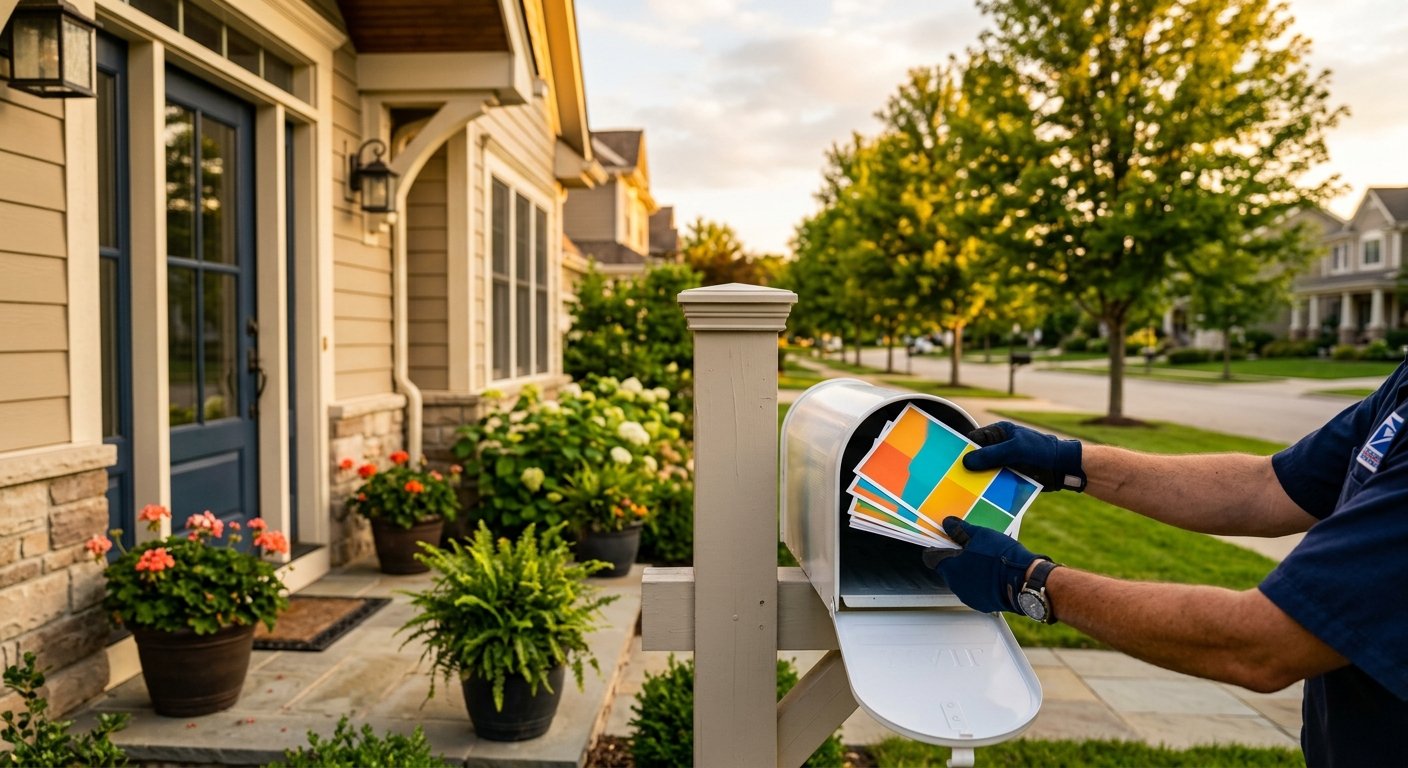
EDDM is a USPS program that lets businesses mail to every address on one or more postal carrier routes without needing a purchased mailing list. Instead of targeting by name, you target by geography—specific zip codes, neighborhoods, or carrier routes—making it ideal for any business where location is the primary qualifier.
There are two versions:
- EDDM Retail: You drop bundles at your local post office and pay retail postage rates (currently approximately $0.20–$0.25 per piece). Best for smaller, self-managed campaigns.
- EDDM BMEU (Business Mail Entry Unit): Handled through a bulk mail entry unit, typically by a full-service mail provider. Better for larger volumes and faster, more reliable delivery windows.
For most small and mid-sized businesses, EDDM Retail is the accessible starting point—but BMEU processing through a full-service partner like Shop Direct Mail gives you professional handling, tighter timelines, and campaign oversight without the trip to the post office.
Who Should Use EDDM?
EDDM is purpose-built for businesses where geography equals customer potential. If your ideal customer lives or works in a specific area, EDDM delivers reach at a fraction of the cost of a targeted name-and-address list mailing.
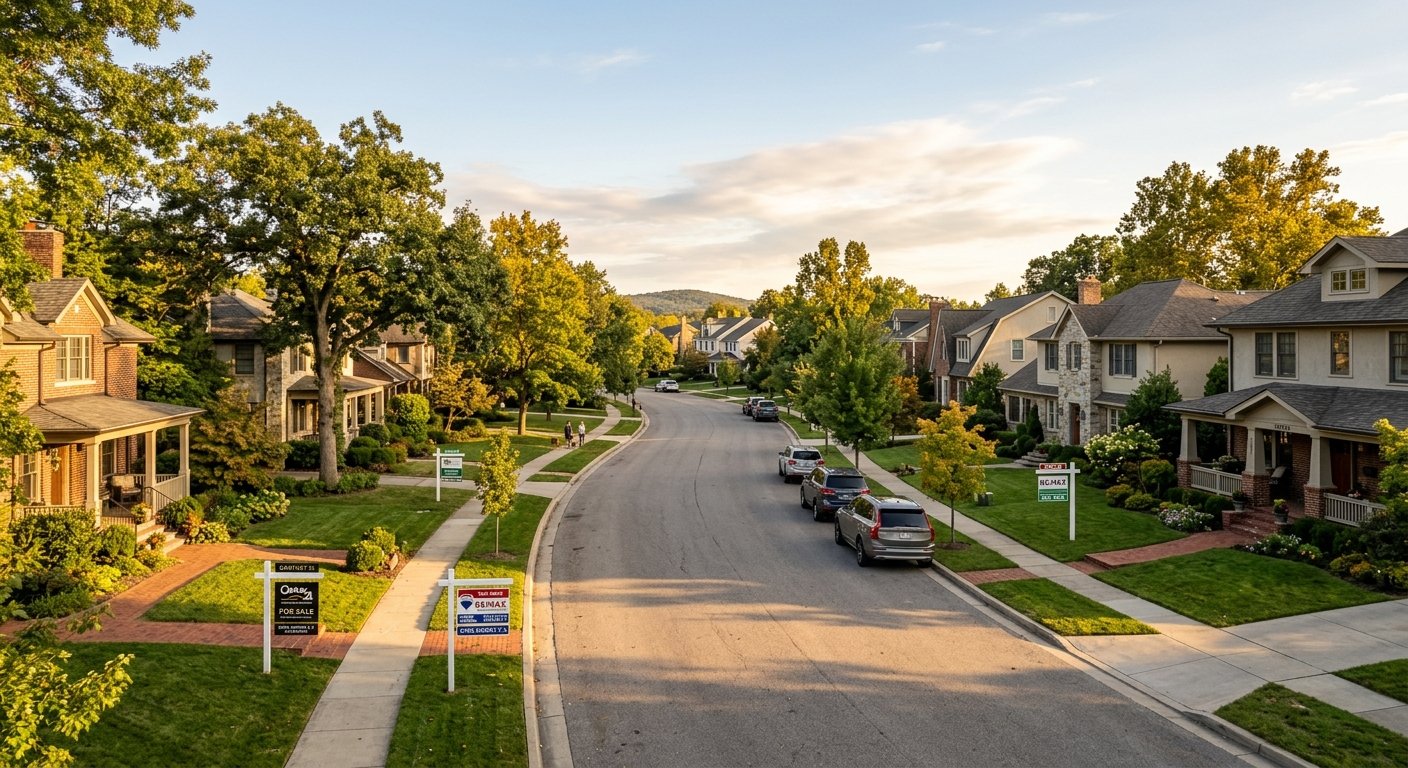
- Real estate agents: Farm a neighborhood, announce a just-listed property, or blanket a zip code with market update content. A 500-home carrier route hit monthly for 6–9 months builds name recognition that generates listing appointments.
- Contractors (HVAC, roofing, landscaping, pest control): An HVAC company mailing a pre-summer maintenance special to 2,000 homes on 4 carrier routes is a classic EDDM play—seasonal, targeted by geography, and easy to track with a unique phone number or QR code.
- Local service businesses: Restaurants, fitness studios, dental practices, and auto shops benefit from pure saturation. You’re not looking for a specific demographic; you’re looking for neighbors.
EDDM Size Requirements: What You Need to Know
The USPS has specific size rules for EDDM pieces. Get this wrong and your mail won’t qualify for EDDM rates. Here are the approved flat-size dimensions:
- Minimum: 6.125″ × 11.5″
- Maximum: 15″ × 12″ (with a max thickness of 0.75″ and max weight of 3.3 oz)
The most popular EDDM postcard sizes in 2026 are:
- 6.5″ × 9″ — compact, cost-effective, great for single-offer messaging
- 6.5″ × 11″ — the standard workhorse, strong shelf presence
- 6.5″ × 12″ — maximum visual impact, preferred by real estate agents and contractors who want premium feel
Each piece must include an EDDM indicia in the upper right corner and meet minimum paper weight requirements (typically 100 lb. gloss cover or heavier). Shop Direct Mail’s design team handles all of this—so you don’t have to Google postal regulations at 11pm before a print deadline.
Understanding Carrier Routes
A carrier route is the specific geographic path one letter carrier walks or drives daily. Each route typically covers 400–600 delivery points (homes and businesses). When you select carrier routes for EDDM, you’re essentially choosing which neighborhoods your piece lands in.
You can select routes using the USPS EDDM mapping tool, which shows route boundaries, delivery counts, and demographic filters like average household income and age. This free tool is a solid starting point—but interpreting it strategically (which routes have higher home values? which overlap with your best current customers?) is where a direct mail partner earns its keep.
How Many Routes Should You Mail?
It depends on your budget and your objective. A general rule of thumb:
- Awareness campaigns: 3–8 routes, 1,500–4,000 homes per drop
- Geographic farming (real estate): 1–3 tightly defined routes, mailed consistently for 6+ months
- Storm chasing or seasonal blitzes (contractors): As many routes as budget allows in a fast turnaround window
EDDM Cost: A Realistic Breakdown
Let’s run actual numbers. Here’s a sample EDDM campaign scenario:
- Mail piece: 6.5″ × 11″ full-color gloss postcard
- Quantity: 2,500 homes (approximately 5 carrier routes)
- Postage (EDDM Retail): ~$0.20–$0.25/piece = $500–$625
- Printing: Varies by provider and quantity; typically $0.08–$0.15/piece at volume
- Design: One-time or included in full-service packages
- Total all-in estimate: Roughly $750–$1,100 for 2,500 pieces
Now the ROI math: If you’re a contractor and a single job nets $1,500 in profit, you need one response from 2,500 households to break even. EDDM campaigns in saturation contexts typically see response rates of 0.5%–2%—meaning 12–50 responses from that same mailing. The math favors the patient, consistent mailer.
For real estate agents, one listing at a median commission more than covers a year of consistent farming. The key word is consistent—one mailing rarely moves the needle. Six to twelve months of presence does.
How to Track EDDM Results
The most common objection to direct mail is “I can’t track it.” That’s simply not true in 2026. Here are the tools that work:
- Call tracking numbers: Use a unique phone number on your EDDM piece. Any call to that number is a direct mail lead. Services like CallRail make this inexpensive and easy.
- QR codes: Link to a dedicated landing page. Track visits and conversions in Google Analytics.
- Promo codes: “Mention code MAIL10 for $10 off” creates clean attribution even when customers call or walk in.
- Unique URLs: Use a short URL that redirects to your main site so you can isolate traffic by campaign.
- USPS Informed Delivery: Some EDDM campaigns can be paired with USPS Informed Delivery to extend reach digitally.
At Shop Direct Mail, we build tracking into every campaign from day one—because a mailing you can’t measure is a budget you can’t justify.
EDDM vs. Targeted Direct Mail: Which Is Right for You?
EDDM wins on cost and reach when geography is your primary targeting criterion. A targeted list mailing wins when you need to filter by demographic, homeownership, income, or behavioral criteria—like mailing only to homeowners over 55 in a specific zip code.
Many businesses use both. An agent might run EDDM saturation for broad awareness across a farming zone, then layer in targeted just-sold postcards to homeowner lists in adjacent blocks. That combination—saturation plus precision—is often the most effective long-term strategy.
For more on targeted approaches, see our real estate postcards page, or explore our full direct mail marketing services to see how EDDM fits into a broader campaign.
Frequently Asked Questions
What is the minimum size for an EDDM postcard?
USPS requires EDDM flat pieces to be at least 6.125″ × 11.5″. The most commonly used sizes are 6.5″ × 9″, 6.5″ × 11″, and 6.5″ × 12″. Pieces smaller than the minimum do not qualify for EDDM postage rates.
How much does EDDM cost per piece in 2026?
EDDM Retail postage is currently approximately $0.20–$0.25 per piece. Total costs including printing and design typically range from $0.35–$0.60 per piece at common campaign volumes, making it one of the most affordable saturation mailing options available.
How do I choose the right carrier routes for my EDDM campaign?
Start with the free USPS EDDM online mapping tool to view route boundaries and delivery counts. Filter by household demographics where available. Then prioritize routes that align with your service radius and customer profile—or work with a direct mail partner who can interpret the data strategically.
Can I target only homes and skip businesses with EDDM?
Yes. The USPS EDDM tool allows you to filter routes to reach residential addresses only, skipping businesses, PO boxes, and other non-residential delivery points. This is useful for contractors and consumer-facing businesses that don’t need commercial reach.
How far in advance should I plan an EDDM campaign?
Plan for a minimum of 10–14 business days from final design approval to delivery when working with a full-service provider. Seasonal or storm-chasing campaigns can sometimes move faster, but quality printing and USPS processing time are fixed variables. Build in buffer time whenever delivery timing is critical.
Ready to Launch Your EDDM Campaign?
EDDM isn’t magic—it’s math, consistency, and good design working together. The businesses that win with it are the ones who commit to a target area, mail regularly, and track their results honestly. The Data & Marketing Association consistently shows direct mail response rates outperforming most digital channels for local audience reach, and EDDM makes that reach more affordable than ever.
Shop Direct Mail handles strategy, design, carrier route selection, printing, and USPS drop-off under one roof—so you can focus on the leads, not the logistics. Explore our Every Door Direct Mail services and get a custom quote for your next saturation campaign. Your neighborhood is waiting to hear from you.