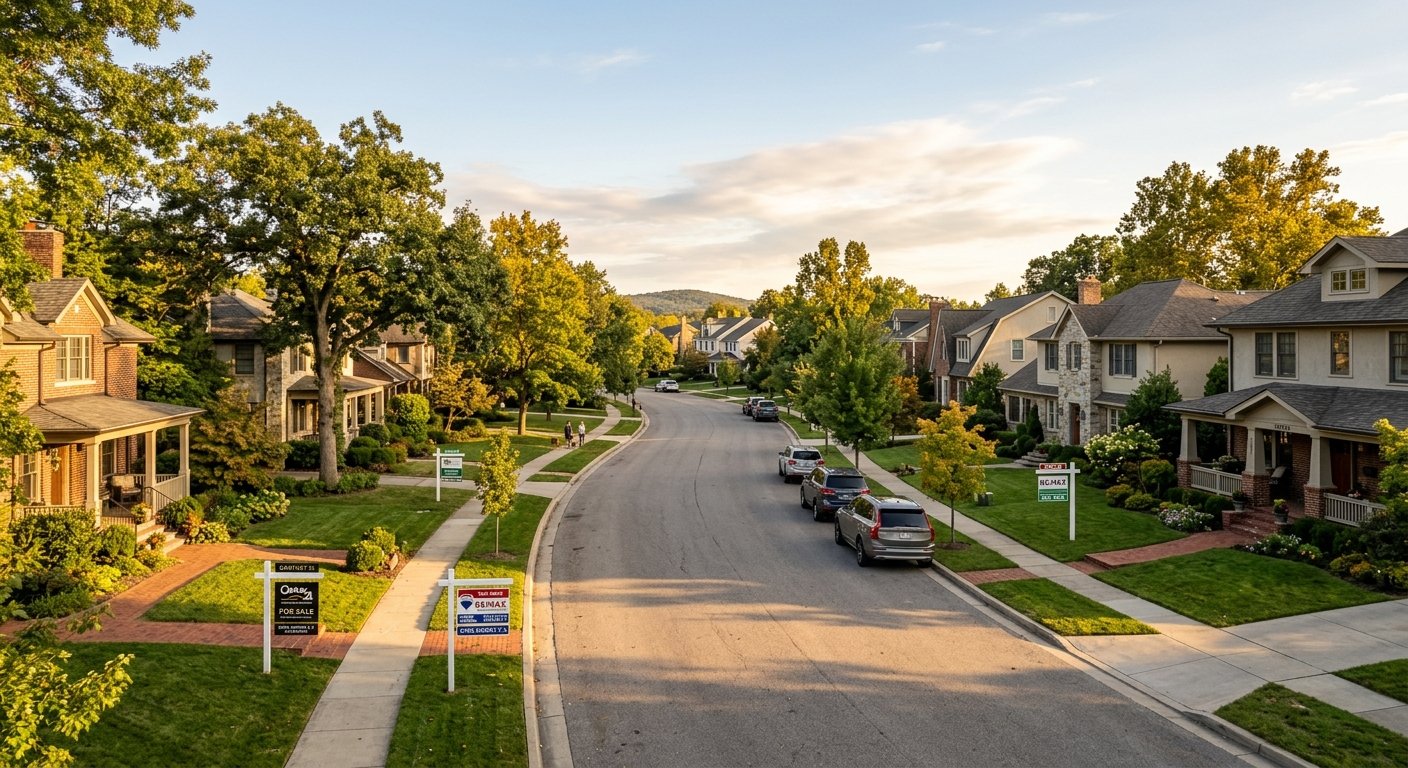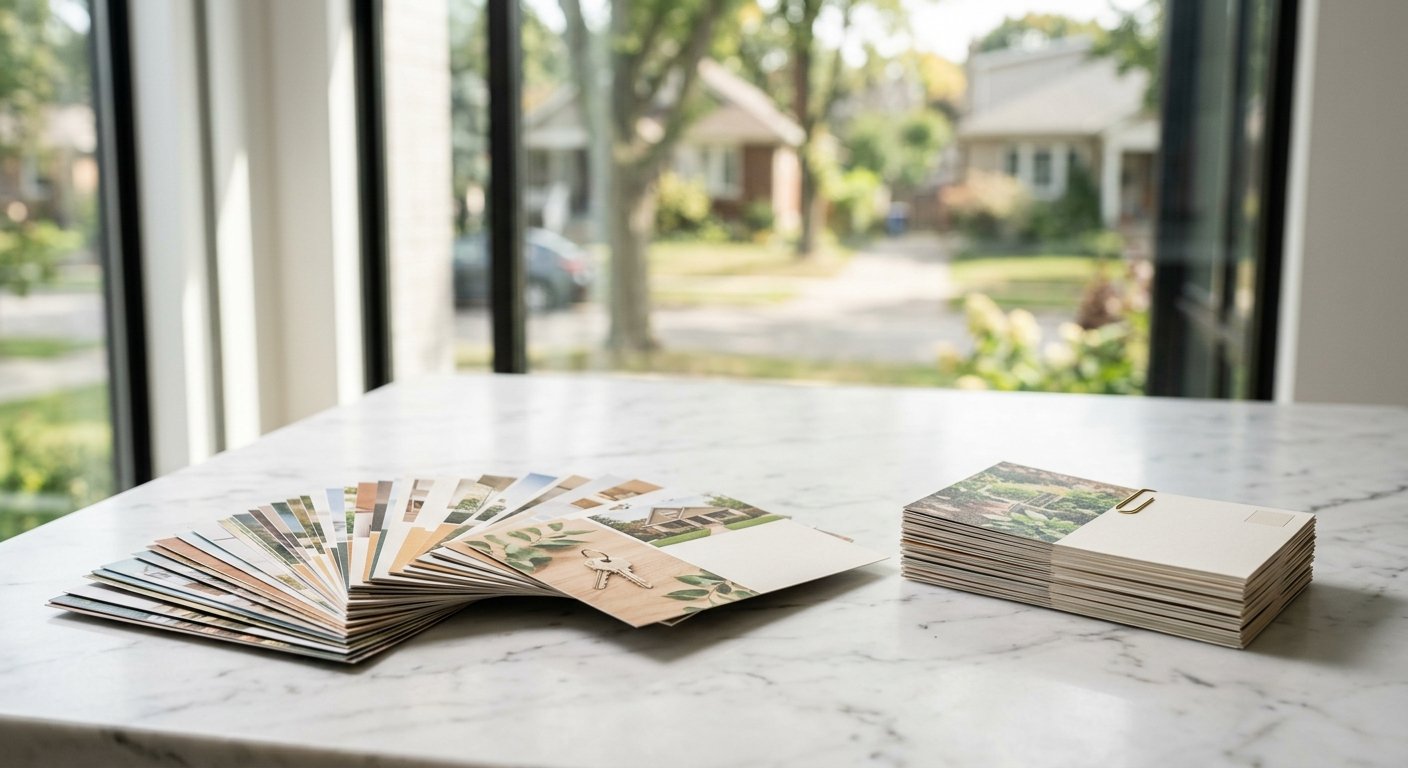

Yes — just sold postcards still work in 2026, and for real estate agents, they remain one of the highest-ROI prospecting tools available. A single closed deal in your farm area, mailed to 300–500 surrounding homes, can generate listing inquiries within weeks. The key is consistent delivery, smart list targeting, and a card that looks as professional as your closing does.
- Just sold postcards generate social proof at the neighborhood level — exactly where your next listing is most likely to come from.
- Response builds with repetition; repeat audiences and warm farm zones respond best.
- A 500-home farm mailed consistently for 6–9 months significantly outperforms a one-and-done blast.
- Tracking is straightforward: use a unique call-tracking number, QR code, or dedicated landing page URL on every card.
- Full-service providers like Shop Direct Mail handle design, list acquisition, printing, and mailing — so you spend time on clients, not logistics.
Why Agents Still Swear by Just Sold Mailers
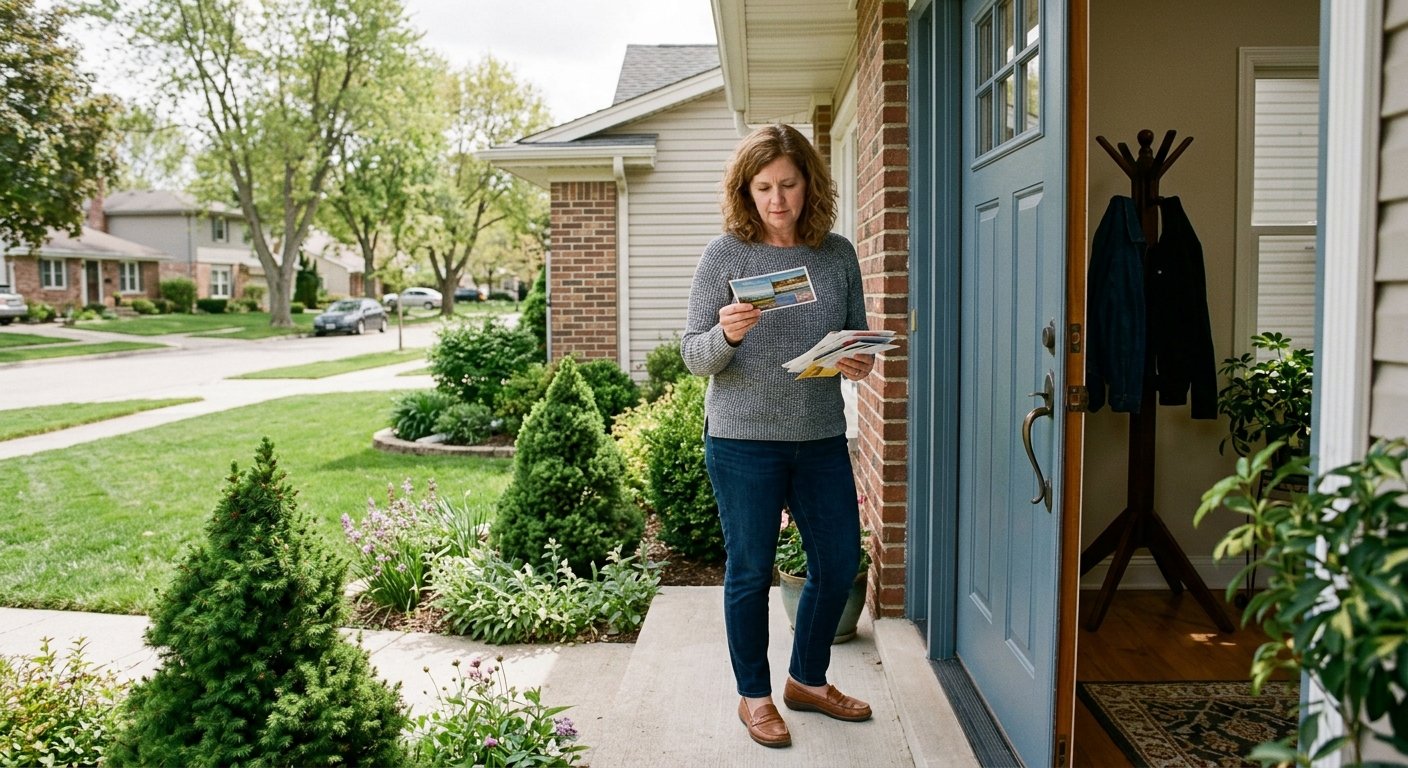
In a world saturated with digital ads, email blasts, and social media noise, a just sold postcard does something no algorithm can replicate: it lands in someone’s hand while they’re standing in their own home. That physical moment — neighbor sees a sold sign on a house down the street, then finds a professional postcard in their mailbox three days later — is one of the most powerful micro-moments in local real estate marketing.
According to the National Association of Realtors, a significant share of sellers choose their agent because of familiarity and perceived market activity in their neighborhood. Just sold postcards build exactly that: visible, repeated proof that you’re the agent getting results on their street.
The math is straightforward. If you close a home in a 400-home neighborhood and mail every surrounding household a just sold postcard, you’ve put your name in front of 400 potential sellers for roughly the cost of a few hours of digital ad spend — with a tangible piece they might stick on their fridge or pass to a neighbor.
Mail within 48–72 hours of closing while the “SOLD” sign is still fresh in neighbors’ minds. Timing your just sold postcard to coincide with visible street activity dramatically increases the emotional impact of the mailer.
How Just Sold Postcards Fit Into Real Estate Farming

Just sold postcards aren’t a standalone tactic — they’re the punctuation in a well-structured real estate farming strategy. Think of your farm as an ongoing conversation with a defined neighborhood. Market updates, just listed cards, and neighborhood sold reports keep you visible between closings. A just sold card is the exclamation point: proof that you deliver results.
A realistic farming timeline looks like this: 6 months of consistent mailings to see meaningful name recognition, 9 months before you start fielding unprompted listing calls, and 12+ months before you own the neighborhood’s mindshare the way the top agents in every market do. Agents who quit after two or three mailings are leaving the payoff on the table for a competitor who stays consistent.
Define Your Farm Zone
Select a neighborhood of 300–600 homes where you have or can build market activity. Smaller farms get saturated faster; larger farms stretch your budget thin.
Build Your Mailing List
Use a targeted list of homeowner addresses — not renters, not vacant lots. Shop Direct Mail’s list acquisition service pulls verified, deliverable homeowner records matched to your farm geography.
Design a Card That Commands Attention
Lead with the sold price, neighborhood name, and your headshot. Use bold photography of the property. A 6″×9″ or larger postcard stands out in a standard mail stack.
Mail Within 72 Hours of Closing
Speed is the competitive edge. A just sold card delivered a month after closing loses most of its social proof impact. Set up a standing order with your direct mail provider so the moment escrow closes, the card is already at the printer.
Track and Repeat
Use a unique phone number or QR code on each card. Log every inbound call or scan. After 3–4 mailings, you’ll have real data to optimize your message, your offer, and your list.
What Makes a Just Sold Postcard Actually Convert

Design matters more than most agents realize. A postcard cluttered with fine print, generic stock photography, and five different calls-to-action gets filed in the recycling bin. A card with a clean sold price headline, one striking property photo, your professional headshot, and a single clear next step — “Find out what your home is worth” — gets a second look.
Here are the elements that consistently drive response:
- Sold price prominently displayed. Neighbors are curious. The number is the hook.
- Neighborhood-specific headline. “Just Sold in Riverside Heights” beats “Just Sold” every time.
- One call-to-action. A unique phone number, a QR code linking to a home valuation tool, or a short vanity URL. Not all three.
- Professional headshot and brokerage branding. People do business with people they recognize.
- Days on market or multiple offers received. If the home sold fast or above list price, say so. That’s the proof point that motivates sellers to call.
Addressing the Real Objections Agents Have
“Isn’t print marketing dead?”
It’s the opposite problem — digital is oversaturated. The USPS Household Diary Study consistently shows that physical mail receives meaningful household engagement, with a significant share of recipients reading or scanning advertising mail the day it’s delivered. A postcard doesn’t need to be opened.
“How do I track whether it’s working?”
Simple: print a unique call-tracking number on each campaign (your direct mail provider can set this up). Add a QR code that links to a dedicated home valuation landing page. Use a promo code if you’re offering a free CMA. Every inbound lead tied to that card is a trackable conversion. No guesswork required.
“Isn’t this expensive for a small farm?”
Consider the ROI math with an example: if you mail 500 homes at $0.50–$0.75 per piece all-in (design, print, postage), that’s $250–$375 per mailing. A single listing in most markets generates thousands of dollars in commission. You need one response from one mailing to make the numbers work.
One listing from a 500-home farm can pay for an entire year of postcard marketing.
Just Sold vs. Just Listed: Which Performs Better?
| Factor | Just Sold Postcards | Just Listed Postcards |
|---|---|---|
| Primary goal | Generate seller leads | Generate buyer leads + seller interest |
| Social proof level | High — proves results | Moderate — shows activity |
| Best timing | Within 48–72 hrs of closing | Day of or day before listing goes live |
| Neighbor curiosity factor | Very high (sold price) | Moderate (listing price) |
| Long-term farm value | Builds “market expert” positioning | Builds “active agent” positioning |
The short answer: just sold postcards typically outperform just listed cards for generating seller leads, because they answer the question every homeowner secretly asks — “what would my house sell for?” A sold price on a comparable home is the most compelling data point you can put in a neighbor’s hand. Use both in rotation for maximum farm saturation.
Why Full-Service Matters When You’re Running a Real Business
Most agents have exactly zero extra hours to coordinate a graphic designer, a list broker, a print vendor, and the post office. That’s the core reason agents partner with Shop Direct Mail. We handle strategy, design, list acquisition, printing, and mailing under one roof — which means your just sold card hits the mail stream within days of closing, every time, without you managing four separate vendors.
Our direct mail marketing services are built around measurable campaigns, not pretty mailers. Every program we set up includes tracking recommendations, list hygiene protocols, and the kind of print specs that actually make your card look different than everyone else’s in the mailbox.
Frequently Asked Questions
How many homes should I mail for a just sold postcard campaign?
Most agents start with the 300–500 homes closest to the sold property. If you’re actively farming a defined neighborhood, mail the entire farm. The goal is density — neighbors who see both the sold sign and the postcard in the same week are far more likely to call than those who only receive the card.
How long does it take to see results from just sold postcards?
Some agents receive calls within days of delivery — especially if the sold price is notable or the home was well-known in the neighborhood. However, sustained listing lead flow typically builds after 6–9 months of consistent farming. Just sold cards are most powerful as part of a repeating campaign, not a one-time mailing.
What size postcard works best for real estate mailers?
Oversized postcards — 6″×9″ or larger — consistently outperform standard sizes in direct mail response rates because they command more mailbox real estate and allow larger property photography. For EDDM campaigns, USPS requires a minimum size of 6.25″×9″, so that’s a natural starting point for saturation mailings.
Can I use just sold postcards if I’m new to a farm area?
Absolutely. If you haven’t closed in the neighborhood yet, you can still mail market activity reports, neighborhood sold data (area-wide, not agent-specific), or home valuation offer cards to build name recognition while you pursue your first deal. The just sold card becomes a powerful tool the moment you have your first closing.
How do I track responses from postcard campaigns?
The most reliable methods are: a unique call-tracking phone number printed on the card, a QR code linking to a dedicated landing page or home valuation tool, and a custom promo code if you’re offering a free CMA. These methods let you attribute inbound leads directly to each mailing with no guesswork.
Ready to Turn Your Next Closing Into Listing Leads?
Shop Direct Mail handles everything — design, list targeting, printing, and mailing — so your just sold card hits mailboxes while the sold sign is still in the yard.

About Shop Direct Mail Marketing
Shop Direct Mail is a full-service direct mail marketing partner for real estate agents, contractors, and local service businesses nationwide. We provide end-to-end strategy, design, list acquisition, printing, and mailing services that help small and medium-sized businesses cut through digital clutter with tangible, measurable campaigns. Our focus is on ROI-driven tactics like real estate farming, EDDM saturation, just-listed/just-sold postcards, and neighborhood prospecting that generate leads and customers business owners can track. Visit shopdirectmail.com →