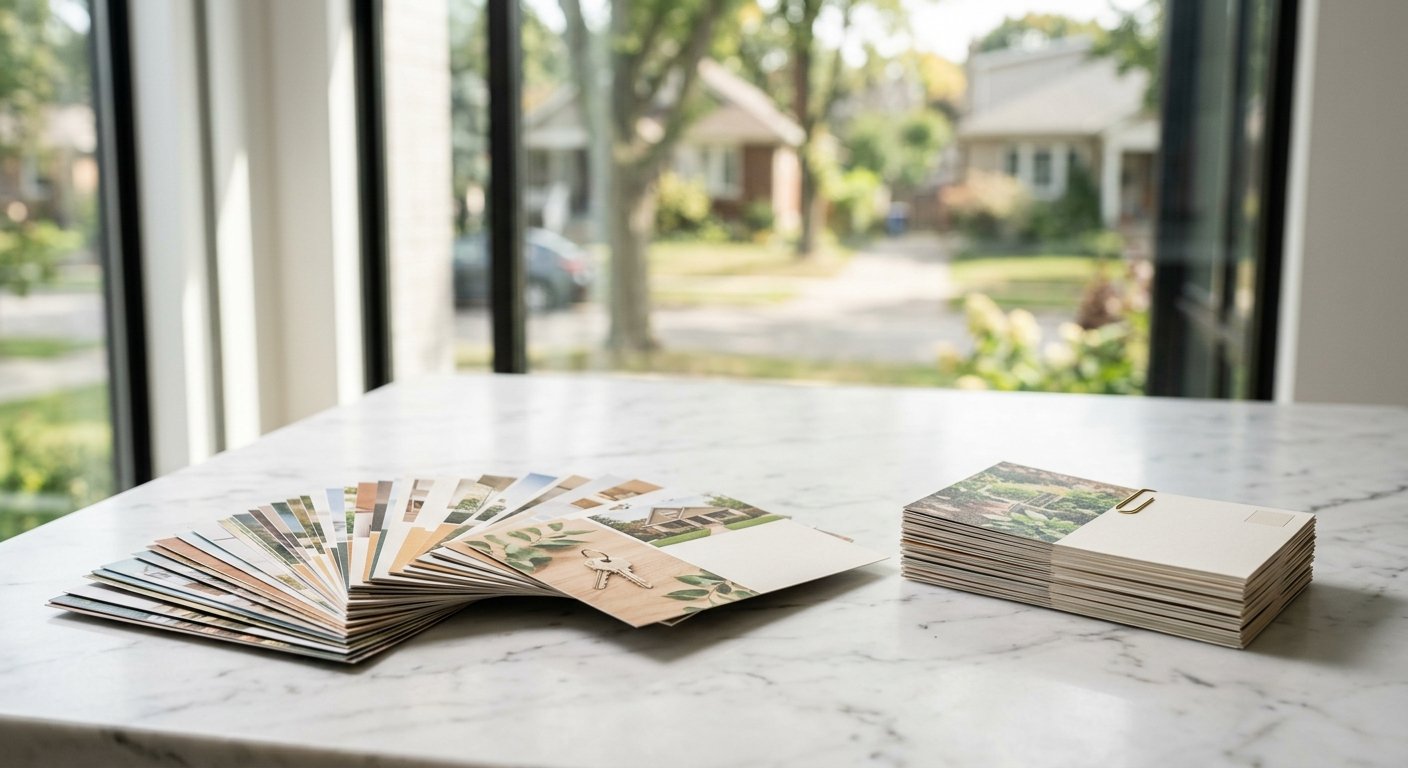
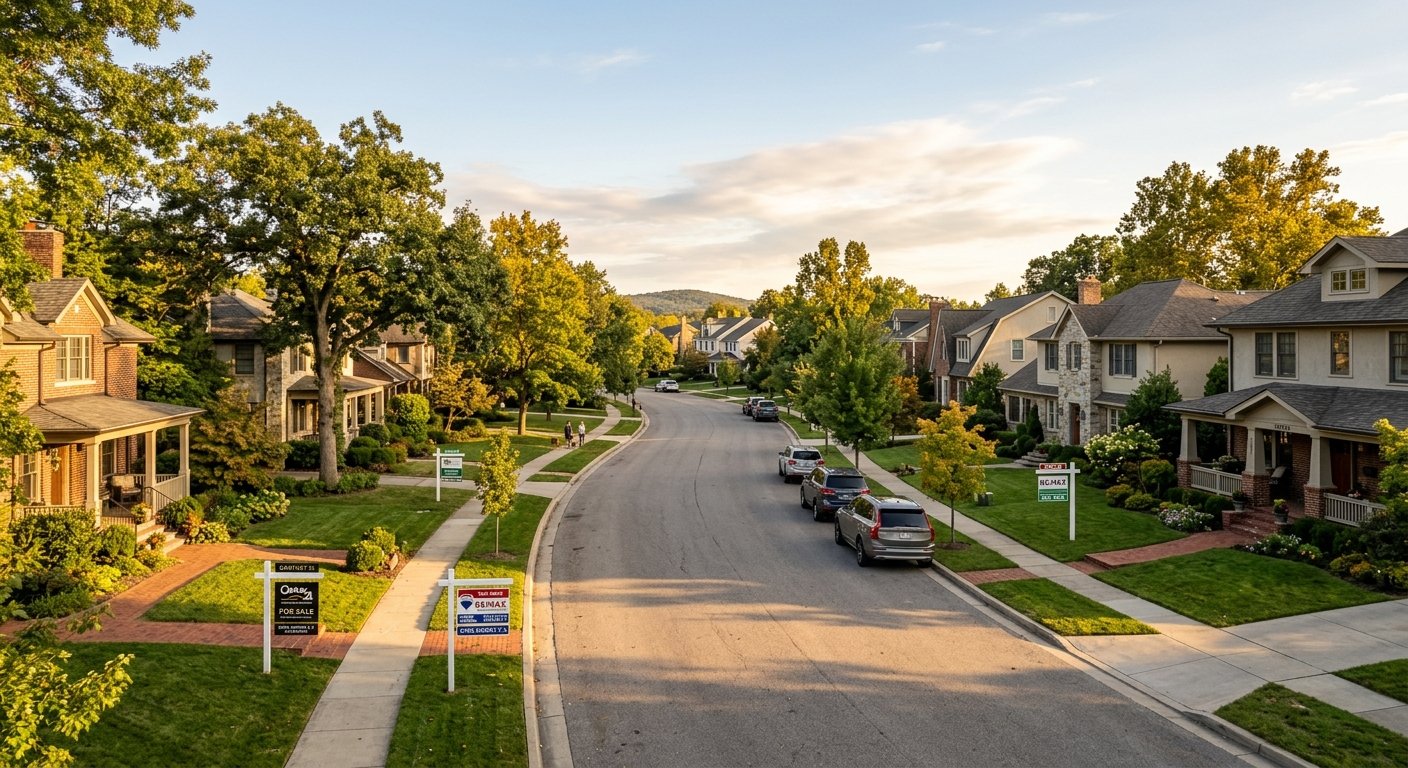
Choosing your farm area is the single most important decision in a real estate farming campaign. Pick the right neighborhood and consistent postcard mailings build name recognition, generate listing appointments, and compound over time. Pick the wrong one and you’ll spend months mailing into a market you can’t win. The right farm area balances turnover rate, competition, home values, and your existing relationships.
- Aim for a neighborhood with a turnover rate of at least 5–7% annually so enough homes sell each year to justify your investment.
- Check how many other agents are already farming the area before you commit — saturation kills ROI.
- Match your farm size to your budget: 300–500 homes is a realistic starting point for most solo agents.
- Consistency is everything — plan to mail at least 6–8 times per year for a minimum of 9–12 months before expecting consistent inbound leads.
- Full-service partners handle list acquisition, design, printing, and mailing so you can focus on follow-up, not logistics.
Why Your Farm Area Decision Matters More Than Your Postcard Design
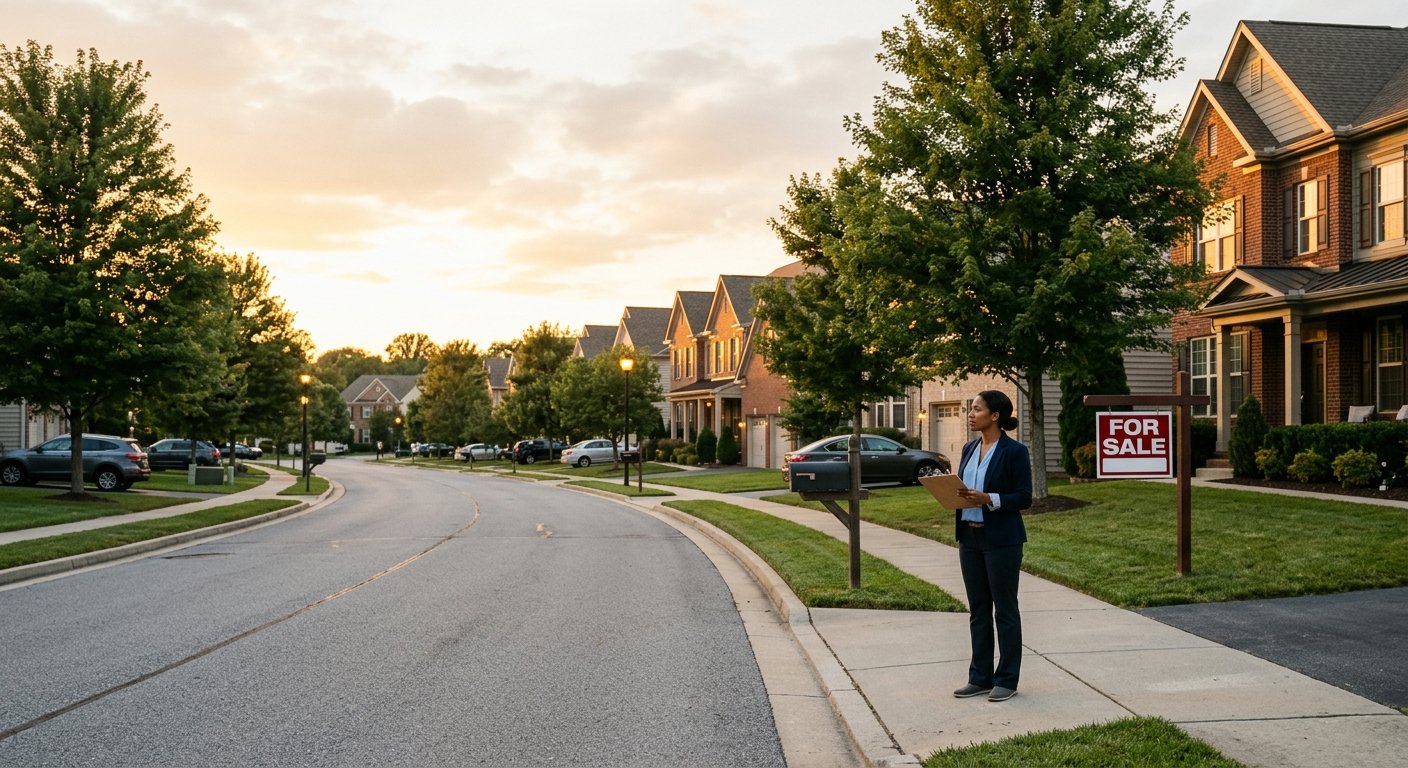
Most agents obsess over the color of their postcards or whether to use a glossy or matte finish. Those things matter — but not nearly as much as whether you’ve chosen a neighborhood where enough homes actually sell each year and where you have a realistic shot at owning the brand position.
Think of geographic farming like a franchise territory. You want to be the obvious, recognizable name in a defined area. That only works if the territory is the right size, the right type, and not already locked up by someone who’s been mailing there for three years with a 400-home list.
Pull 12 months of MLS sales data for any neighborhood you’re considering. Divide total sales by total homes to get the turnover rate. A 6% turnover on a 400-home farm means roughly 24 potential listings per year — a number worth farming for.
The Four Criteria for a Winning Farm Area

1. Turnover Rate
Turnover rate is the percentage of homes that sell in a given area within a 12-month period. According to the National Association of Realtors’ existing home sales data, national turnover has fluctuated significantly in recent years, which makes local MLS data even more important than national averages. A healthy farm typically has 5–8% annual turnover. Below 4% and you’re waiting too long between transactions; above 10% and the neighborhood may be in transition — worth understanding before you commit.
2. Competition Among Agents
How many agents already have a dominant presence in the area? Check recent sold listings in the MLS and count unique listing agents. If one or two agents hold 30–40% of the listings over the past 24 months, you’re looking at an entrenched competitor. That’s not impossible to unseat — but expect a longer runway and a more aggressive mailing frequency. A neighborhood with no clear dominant agent is a wide-open opportunity.
3. Average Sale Price vs. Your Marketing Budget
Your commission on a typical sale in the farm area needs to justify your cumulative mailing costs. A rough hypothetical: if you mail 400 homes eight times per year at approximately $0.60–$0.80 per piece (printing and postage combined), that’s roughly $1,920–$2,560 annually. One listing and closed sale in a neighborhood with a $450,000 median price generates a commission that returns the investment many times over. This math is approximate — your actual costs depend on postcard size, design, and current postage rates — but running it before you start keeps expectations realistic.
4. Your Existing Sphere and Name Recognition
Do you already know people in this neighborhood? Have you sold homes there recently? A just-sold postcard in a street where you closed a deal last quarter gives you instant credibility before you’ve mailed a single farming piece. Starting with a neighborhood connected to your existing sphere shortens the time it takes to convert recognition into calls.
How to Size Your Farm the Right Way

Farm size is a budget and capacity decision as much as a strategy decision. Mailing 1,000 homes twice a year is far less effective than mailing 400 homes eight times a year. Frequency and consistency are what build the familiarity that eventually gets your postcard off the refrigerator and onto the phone call.
Set a monthly mailing budget
Know what you can sustain for 12 months, not just what you can afford for one mailing. This is your ceiling for farm size.
Calculate homes per mailing
Divide your monthly budget by your estimated cost-per-piece (printing plus postage) to find how many homes you can reach per mailing.
Define the geographic boundary
Use carrier routes, subdivision lines, or natural boundaries (a main road, a park) to create a clean, mailable list. Carrier route mailing data is available through USPS and list providers — Shop Direct Mail handles this acquisition for you.
Pull a count and refine
Verify the home count matches your budget. If the neighborhood has 700 homes but you can only sustain 400, consider splitting the area or choosing a smaller subdivision.
Commit to at least 9 months
Real estate farming is a long game. Plan your campaign calendar before your first piece goes out so you don’t abandon the effort right when it’s starting to work.
EDDM vs. Targeted Mailing Lists for Neighborhood Farming
There are two main ways to reach homes in a defined area: USPS Every Door Direct Mail (EDDM) and a targeted mailing list. Each has a different use case for real estate farming.
EDDM lets you mail to every address on a carrier route without purchasing a list. It’s a cost-effective way to saturate a neighborhood quickly, and it works well when your farm aligns neatly with one or two carrier routes. USPS EDDM requires pieces to meet specific size minimums (at least 6.25″ × 9″) and uses a retail postage rate that’s typically lower than standard first-class postage. The tradeoff: you mail to every address — renters, businesses, and apartments included — so your list isn’t as clean as a targeted homeowner list.
A targeted mailing list, by contrast, lets you filter by homeownership status, length of residence, home value, and other demographics. This is the better tool for real estate postcards aimed at homeowners who are likely to sell. You reach fewer addresses but with far higher relevance. Shop Direct Mail acquires these lists directly so agents don’t have to navigate list brokers on their own.
| Factor | EDDM Saturation | Targeted Homeowner List |
|---|---|---|
| Cost per piece | Lower postage rate | Higher (standard or presort) |
| List precision | All addresses on route | Homeowners only, filtered |
| Setup complexity | Simpler | Requires list acquisition |
| Best for | Brand saturation, new farms | Seller prospecting, farming |
| Size requirement | Min. 6.25″ × 9″ | Standard postcard sizes |
What to Mail Once You’ve Picked Your Farm
The content of your neighborhood farming postcards should rotate so recipients don’t tune you out. A steady sequence might include market updates (recent sales in the neighborhood), just-listed and just-sold announcements, seasonal home tips, and a direct “thinking of selling?” offer. Varying the message keeps your name in front of homeowners without feeling repetitive.
Design matters here too. Consistent branding — same headshot, same color scheme, same logo placement — across every mailing trains homeowners to recognize you before they’ve read a single word. That recognition is exactly what you’re paying to build. Our real estate marketing services include design that keeps your brand consistent across every touch point in your campaign.
Consistent branding across every mailing trains homeowners to recognize you before they’ve read a single word.
Tracking Your Farming Campaign’s Performance
Direct mail is measurable — you just have to build the tracking in before you mail. Common methods include unique phone numbers (call-tracking lines tied to the campaign), QR codes that link to a neighborhood-specific landing page, or promo codes for a free home valuation. Each method ties inbound leads directly back to a specific mailing, letting you calculate cost per lead over time.
USPS also offers Informed Delivery, a free service that notifies recipients by email when their mail is arriving and shows a digital preview of the piece. For real estate agents, this means your postcard gets a second digital impression on the same day it hits the mailbox — at no additional cost.
Most agents start seeing meaningful inbound contact — calls, form fills, referrals from neighbors — between months 6 and 12 of a consistent farming campaign. Results vary based on market conditions, competition, and mailing frequency. There are no guarantees, but agents who stay consistent typically outperform those who test for one quarter and quit.
Frequently Asked Questions
How many homes should be in my real estate farm area?
Most solo agents start with 300–500 homes, which is a manageable size for consistent monthly or bi-monthly mailings without breaking a typical marketing budget. Teams with larger budgets often farm 500–1,000 homes. The key is choosing a size you can mail to at least six times per year without skipping months — frequency matters more than raw size.
How long does it take for geographic farming postcards to generate leads?
Expect a 6–12 month runway before farming generates consistent inbound leads. Name recognition builds gradually with each mailing. Agents who commit to a 12-month schedule and rotate their message types (market updates, just-sold, seasonal content) typically see traction faster than those who send the same postcard repeatedly and stop after a few months.
Should I use EDDM or a targeted list for neighborhood farming?
Use EDDM when your farm aligns with a carrier route and you want to saturate the area affordably, including renters and all residents. Use a targeted homeowner list when you want to reach only homeowners with a higher likelihood of selling. Many agents start with EDDM to build awareness, then switch to a filtered homeowner list once they’ve established some name recognition in the neighborhood.
How do I know if a neighborhood is already too competitive to farm?
Pull 24 months of MLS sold data for the neighborhood and count unique listing agents. If one or two agents consistently hold more than 30–35% of the listings, the market position is entrenched. That doesn’t mean you can’t break in, but you’ll need a longer commitment and a more differentiated message. Neighborhoods with no dominant agent are easier entry points.
What postcard sizes work best for real estate farming campaigns?
Larger formats consistently outperform standard-size cards for farming because they stand out in the mailbox. Common sizes include 6″ × 9″, 6.5″ × 9″, and 6.5″ × 11″. For EDDM campaigns, USPS requires a minimum size of 6.25″ × 9″. Bigger pieces cost slightly more to print and mail but typically generate better response because they’re harder to overlook in a stack of envelopes.
Ready to Launch Your Farming Campaign?
Shop Direct Mail handles everything — farm area strategy, list acquisition, postcard design, printing, and mailing — so you can focus on the appointments your postcards generate, not the logistics behind them.

About Shop Direct Mail Marketing
Shop Direct Mail is a full-service direct mail marketing partner for real estate agents, contractors, and local service businesses nationwide. We provide end-to-end strategy, design, list acquisition, printing, and mailing services that help small and medium-sized businesses cut through digital clutter with tangible, measurable campaigns. Our focus is on ROI-driven tactics like real estate farming, EDDM saturation, just-listed/just-sold postcards, and neighborhood prospecting that generate leads and customers business owners can track. Visit shopdirectmail.com →