Yes — real estate door hangers generate leads when deployed with the right message, the right neighborhood, and consistent follow-through. They work best as a hyper-local prospecting tool: dropped on homes near a recent listing or sale, used to anchor a farming campaign, or distributed during open houses to warm up neighbors. Like any print channel, results depend on strategy, not just showing up.
- Door hangers are one of the few real estate marketing materials that reach homeowners at their front door — no inbox to skip, no algorithm to beat.
- They work best as part of a repeated, neighborhood-level campaign rather than a single drop.
- Tracking is straightforward: use a unique phone number, QR code, or promo URL on every piece.
- EDDM and targeted door-to-door drops serve different goals — knowing the difference saves budget.
- Full-service partners handle design, printing, list acquisition, and distribution so agents can focus on appointments.
Why Door Hangers Still Work in 2026
Digital ad fatigue is real. The average consumer now encounters thousands of ad impressions per day across devices, and open rates for real estate email campaigns continue to slide. A door hanger hung directly on a prospect’s front door doesn’t compete with any of that — it exists in physical space, and it has to be touched before it’s discarded.
That tactile moment is the point. When a homeowner grabs a well-designed piece off their door handle after work, they’re not scrolling past it. Research from the United States Postal Service consistently shows that physical mail and print formats command more attention time than digital ads. Door hangers operate on the same psychology — they interrupt the routine at a moment when the homeowner is already present and engaged with their property.
For real estate agents, that moment is valuable. You’re marketing to people where they live — literally. The message “I just sold a home three doors down” lands very differently on paper at someone’s front door than it does in a Facebook sidebar.
Pair a door hanger drop with a just-sold postcard campaign in the same neighborhood within the same week. The combined impression — at the mailbox and at the door — significantly increases name recognition without requiring a massive budget increase.
When Door Hangers Generate the Most Leads
Just-Listed and Just-Sold Drops
The highest-converting use case for door hanger marketing in real estate is the circle prospecting drop. When you close a sale or list a home, the 50–200 nearest neighbors are your warmest audience. They’re curious about what their own home might be worth, and you have proof in hand. A door hanger with the property photo, sale price (or “ask me what it sold for”), and a clear call-to-action turns that curiosity into a conversation.
Time matters here. Dropping within 48–72 hours of a listing going live or a sale closing keeps the momentum. Neighbors talk, and your door hanger arriving while the “For Sale” sign is still fresh reinforces your presence as the agent who gets results in the neighborhood.
Geographic Farming Campaigns
Real estate farming is a long game, and door hangers are one of the best tools for planting seeds between postcard mailings. A solid real estate marketing strategy typically layers multiple touchpoints — postcards, door hangers, market reports — across a defined neighborhood over 6–12 months. Door hangers add a personal touch that postcards can’t quite replicate because they arrive at the door, not the mailbox.
When agents commit to a farm of 300–500 homes and touch it consistently, door hangers serve as the mid-cycle reminder between monthly or quarterly mailings. They reinforce brand recognition and keep your name top of mind when a neighbor finally decides to list.
Open House Traffic Drivers
Dropping door hangers on the 50–100 nearest homes the morning of an open house serves two purposes: it drives foot traffic from curious neighbors and it plants your name with homeowners who may be thinking about selling. A short, punchy message — “Your neighbor’s home is open today, 1–4 PM. Curious what yours is worth? Scan here.” — with a QR code that links to a home valuation tool is an easy conversion path.
Define your drop zone
Identify the 50–200 homes closest to your listing, sale, or open house. Prioritize similar home types and price points.
Design for the door handle moment
Lead with one clear message — not four offers. Use your headshot, a property photo if relevant, and a single call-to-action (QR code, phone, or URL).
Time the drop strategically
For just-listed or just-sold drops, aim for within 48–72 hours. For farming, establish a recurring schedule — monthly or quarterly beats sporadic.
Track every piece
Assign a unique QR code or call-tracking number to the campaign. You need to know which drops are driving conversations.
Follow up the farming cycle
Don’t let the door hanger be the only touch. Follow it with a postcard, a market update, or a targeted mailer within 2–3 weeks.
Door Hangers vs. EDDM: Choosing the Right Tool
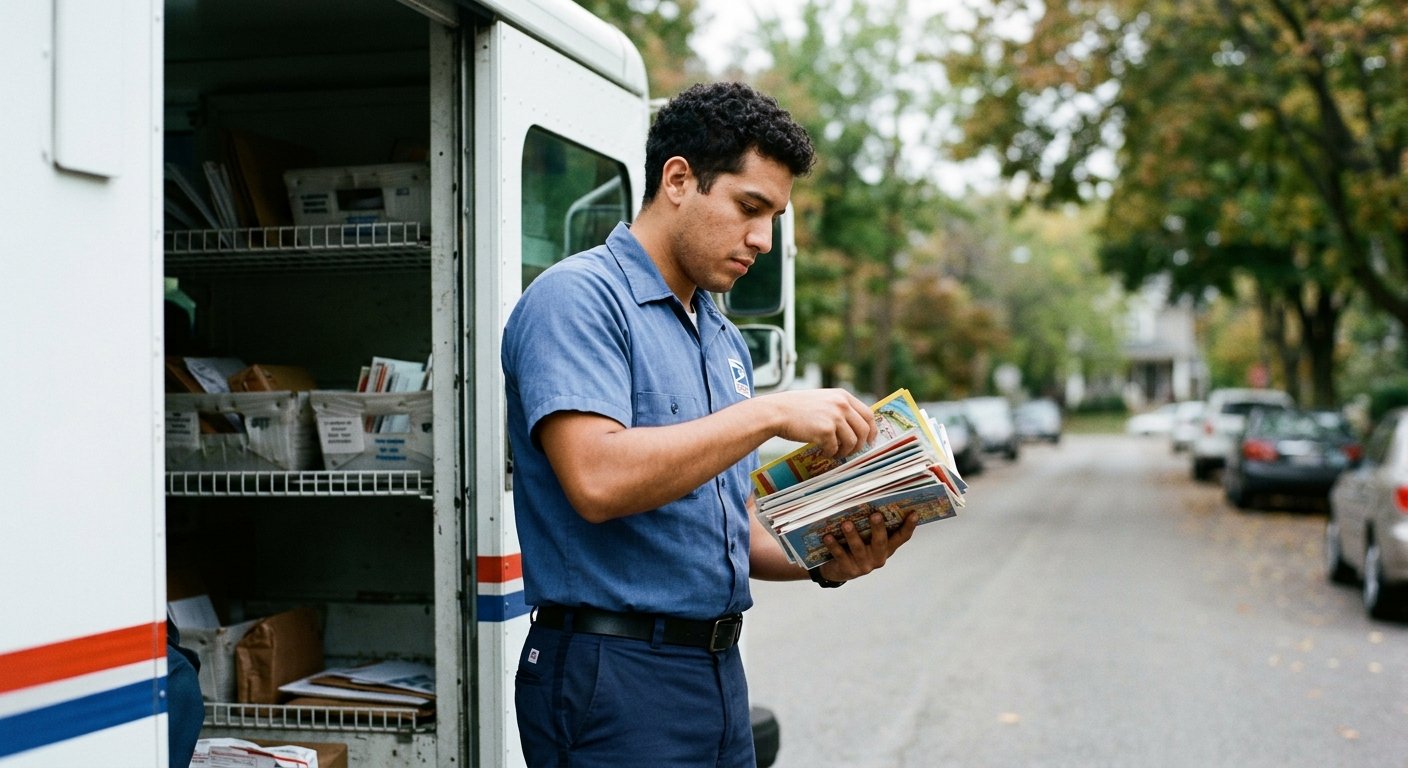
Agents sometimes ask whether they should use door hangers or EDDM (Every Door Direct Mail) for neighborhood prospecting. The honest answer: they serve different goals.
| Factor | Door Hangers | EDDM Postcards |
|---|---|---|
| Distribution method | Hand-delivered to door handle | USPS carrier route delivery to mailbox |
| Targeting precision | Street-by-street, address-specific | Full carrier route (typically 200–2,500 homes) |
| Best for | Circle prospecting, open houses, just-sold drops | Broad neighborhood saturation, seasonal campaigns |
| Personalization potential | High — can be address-specific | Moderate — no name targeting with EDDM |
| Postage cost | None (not mailed) | Approximate retail postage per USPS (see current EDDM rates at usps.com) |
For agents who want saturation coverage across an entire zip code or carrier route, EDDM campaigns typically offer the most cost-efficient reach. Door hangers shine when precision and personal presence matter more than volume.
How to Track Whether They’re Working
The fastest way to kill a door hanger campaign is to run it without tracking. Without a measurement mechanism, you’re flying blind — and you won’t know whether to scale up or adjust the message.
Effective tracking options include:
- Unique QR codes — Link to a landing page or home valuation tool specific to that campaign. Track scans in real time.
- Call-tracking numbers — Assign a unique number to each campaign. Calls are logged and recorded so you can measure volume and quality.
- Vanity URLs — A short, memorable URL (yourname.com/oak-street) is easy to type and easy to track in Google Analytics or your CRM.
- Promo codes — If you’re offering a free home valuation or market report, a code like “OAK2026” tells you exactly which door hanger drove the request.
Set a baseline before you launch: how many leads are you currently getting from this neighborhood? After two or three drop cycles, you’ll have enough data to evaluate whether the campaign is earning its keep.
A door hanger without a tracking mechanism isn’t a campaign — it’s a hope.
Design Elements That Drive Response
Most door hangers that fail do so because of design, not distribution. A cluttered piece with five different messages and three phone numbers gives the homeowner no clear next step. The most effective real estate print marketing pieces — whether postcards or door hangers — follow a simple formula: one audience, one offer, one action.
Design essentials for real estate door hangers:
- Professional headshot — People do business with people. Your face on the piece builds trust at a glance.
- Social proof element — “Sold in 11 days” or “3 homes sold on this street this year” is more compelling than any tagline.
- Single CTA — A QR code or a phone number, not both plus a URL plus a social handle.
- Clean hierarchy — Headline → proof point → CTA. Don’t bury the lead in body copy.
- Your brokerage branding — Compliance matters. Make sure your piece meets your brokerage’s co-branding and disclosure requirements.
Most state real estate licensing boards require that printed marketing materials include your license number and brokerage name. Check your state’s specific requirements before printing. The Association of Real Estate License Law Officials (ARELLO) maintains a directory of state regulatory bodies if you need a starting point.
Frequently Asked Questions
How many door hangers should I distribute per campaign?
For circle prospecting around a listing or sale, targeting the 50–200 nearest homes is a reasonable starting range. For a dedicated farming effort, aim to cover your entire farm consistently rather than cherry-picking streets. Consistency over volume is what builds name recognition over time.
Are door hangers legal to distribute in residential neighborhoods?
In most jurisdictions, yes — door hangers placed on door handles (not in mailboxes, which are federally regulated for USPS use only) are legal for private distribution. Some HOA communities or gated neighborhoods may restrict solicitation, so check local ordinances and community rules before a large drop. Never place anything inside a USPS mailbox; that requires proper postage and authorization.
How do I measure the ROI of a door hanger campaign?
Assign a unique tracking mechanism to every campaign — a QR code, a call-tracking number, or a vanity URL. Track inbound contacts over 30–90 days post-drop and attribute them to the campaign. Even one listing appointment from a 200-home drop can justify the cost many times over; run the hypothetical math on your average commission to set a realistic expectation before you launch.
How often should I drop door hangers in a farming area?
Most experienced agents combine door hanger drops with postcard mailings on a 4–6 week cycle. A door hanger every quarter, paired with monthly postcards, gives your farm consistent exposure without overwhelming residents. The key is showing up reliably — sporadic drops rarely build the brand recognition that converts to listings.
Can a full-service vendor handle printing and distribution for me?
Yes. A full-service direct mail partner can handle design, printing, address list acquisition, and — depending on the service — coordination of distribution. This is especially useful for busy agents who want to run circle prospecting campaigns without personally walking hundreds of homes. Ask your vendor what distribution services they offer or can coordinate on your behalf.
Ready to Put Door Hangers to Work in Your Market?
Shop Direct Mail handles strategy, design, list acquisition, printing, and mailing under one roof — so you can focus on appointments, not logistics.

About Shop Direct Mail Marketing
Shop Direct Mail is a full-service direct mail marketing partner for real estate agents, contractors, and local service businesses nationwide. We provide end-to-end strategy, design, list acquisition, printing, and mailing services that help small and medium-sized businesses cut through digital clutter with tangible, measurable campaigns. Our focus is on ROI-driven tactics like real estate farming, EDDM saturation, just-listed/just-sold postcards, and neighborhood prospecting that generate leads and customers business owners can track. Visit shopdirectmail.com →