In 2026, real estate agents face a paradox: digital ads are everywhere, yet they’re increasingly ignored. Facebook CPMs have climbed 40% year-over-year, and email open rates for cold prospects hover below 8%. Meanwhile, a well-executed neighborhood farming campaign using direct mail can generate a 2–5% response rate and position you as the go-to agent in just 6–12 months of consistent contact.
Real estate farming—systematically marketing to a defined geographic area with the goal of becoming the dominant agent—isn’t new. But in an era of digital fatigue, geographic farming postcards are experiencing a renaissance. Let’s break down how to launch, execute, and measure a neighborhood farming campaign that turns strangers into listing appointments.
What Is Real Estate Farming and Why Does It Still Work?
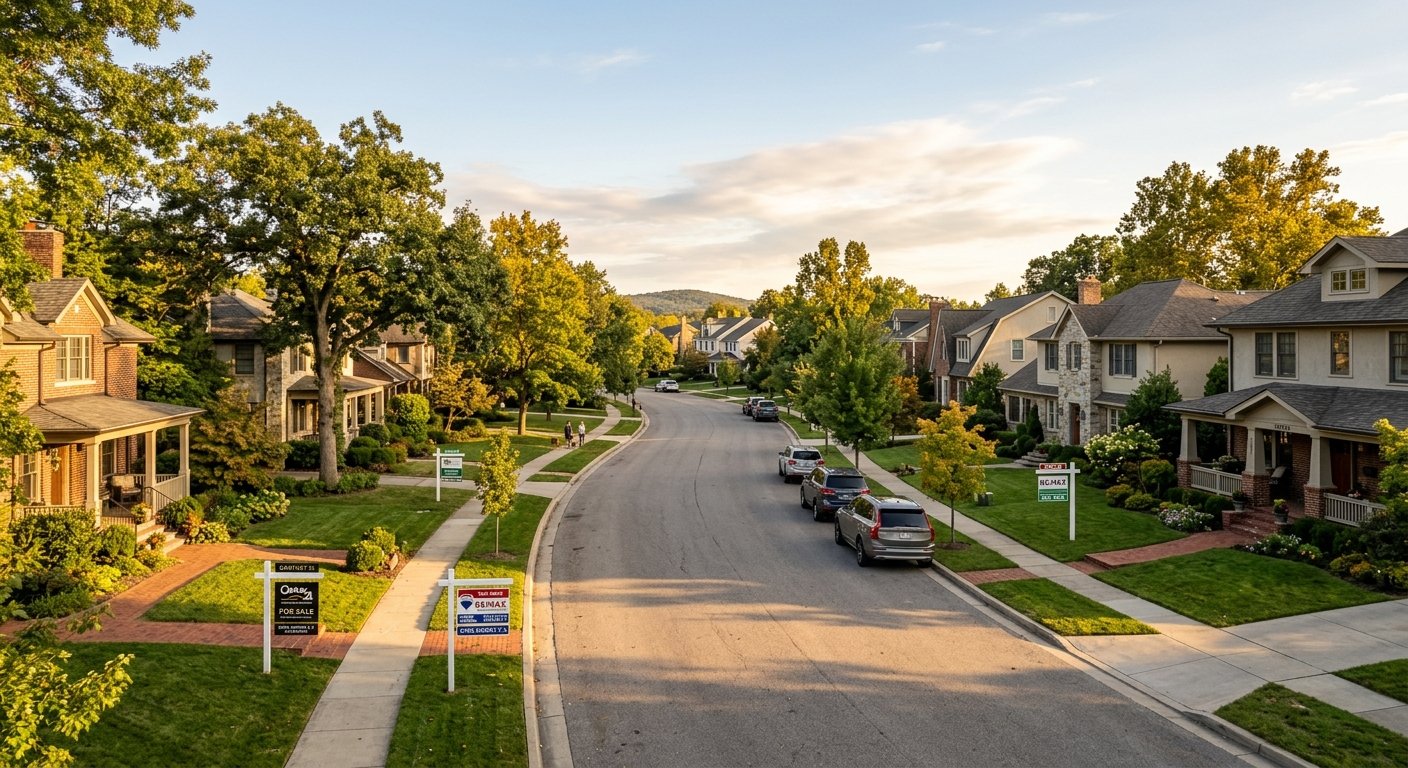
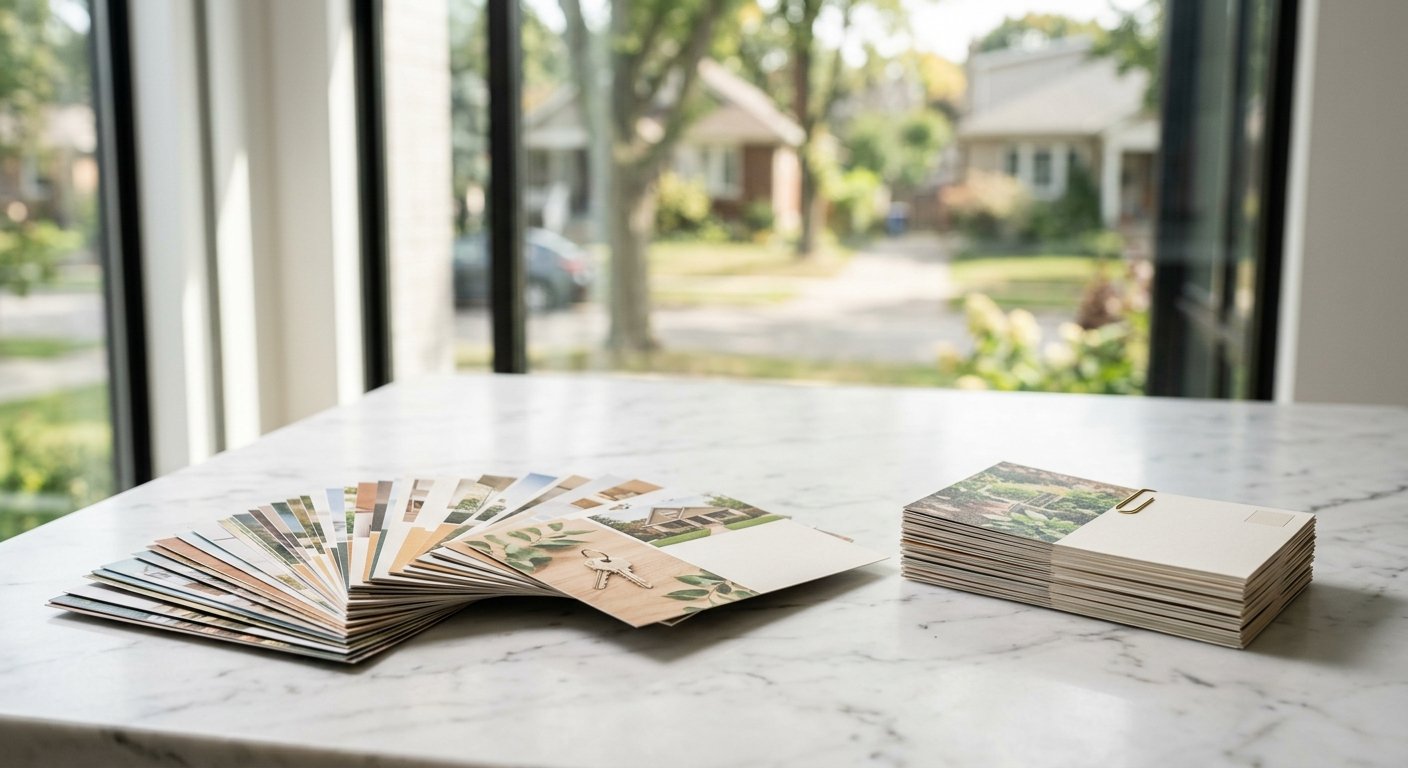
Real estate farming is the practice of sending consistent, branded marketing materials—usually real estate postcards—to a tightly defined neighborhood or carrier route. The goal is simple: when a homeowner thinks “sell,” they think of you first.
The strategy works because of frequency and visibility. Unlike a Zillow ad that vanishes in seconds, a postcard sits on a kitchen counter, gets pinned to a fridge, or lands in a stack of mail that’s reviewed over coffee. It’s tangible, unignorable, and locally relevant. Studies from the Data & Marketing Association consistently show direct mail achieving response rates of 5–9% for house lists and 1–2% for cold prospect lists—figures that digital channels struggle to match.
Geographic prospecting through direct mail also bypasses the algorithm. You don’t need to win an ad auction or pray for organic reach. You simply mail every address in your target zone, ensuring 100% household penetration.
How to Choose Your Farm Area
The most common mistake new agents make is farming too large an area or choosing a neighborhood at random. Here’s how to pick a farm that’s financially viable and strategically sound:
Size and Budget
Most successful farms contain 300–1,000 homes. Smaller than 300 and you won’t generate enough annual turnover to justify the effort. Larger than 1,000 and your cost-per-touch becomes prohibitive unless you have significant marketing budget.
Plan to mail at least once per month for a minimum of six months. Industry data suggests it takes 7–12 touches before a homeowner recognizes your name. If you mail 500 homes monthly at approximately $0.50–$0.75 per piece (printing, postage, list, design), you’re investing $250–$375 per month or $1,500–$2,250 for six months. That’s far less than a single Zillow Premier Agent zip code in many markets.
Market Fit
Look for neighborhoods with:
- Turnover rate of 5–10% annually: Check MLS data for sales velocity. If only two homes sold last year in a 500-home neighborhood, you’ll wait a long time for ROI.
- Price points you can competently serve: Don’t farm luxury estates if you’ve never listed above $400K. Conversely, don’t farm entry-level condos if your brokerage specializes in single-family homes.
- Geographic coherence: Ideal farms have natural boundaries—major roads, school districts, HOA borders—that create a shared identity. Residents should think of themselves as living in “that neighborhood.”
- Low incumbent competition: If another agent has been mailing the same 400 homes for three years, pick a different farm unless you can outspend and out-frequency them.
Personal Connection
Whenever possible, farm where you live, have lived, or have a legitimate connection. Mentioning “I’m your neighbor on Maple Street” or “My kids attend Lincoln Elementary too” dramatically increases trust and response.
Building Your Real Estate Farming Postcards Strategy
Consistency and relevance trump creativity every time. Here’s the framework top-producing agents use:
Monthly Themes
Rotate your messaging to stay fresh without reinventing the wheel:
- Just listed / just sold: Feature a property in or near the farm. Include sold price, days on market, and a note like “Thinking of selling? Let’s talk about what your home could bring.”
- Market updates: Share median prices, inventory levels, or absorption rates specific to the zip or neighborhood. Hyperlocal data proves you know the market.
- Seasonal tips: Spring curb appeal advice, fall maintenance checklists, winter energy-saving tactics. Provide value beyond the transaction.
- Community spotlights: Highlight a local business, park, or school event. Show you’re invested in the neighborhood’s quality of life.
- Testimonials and case studies: Let a satisfied client from a nearby street tell your story.
Design Essentials
Real estate postcards should be immediately recognizable as yours. Use the same color scheme, logo placement, and headshot every time. Standard sizes—6″ x 9″ or 6″ x 11″—work well and qualify for USPS automation rates, lowering your per-piece cost.
Include:
- Your photo and contact info on every card
- A single, clear call-to-action (CTA): call for a free home valuation, scan a QR code for a market report, visit a landing page
- A tracking mechanism—unique phone number, custom URL, or QR code—so you can measure response
- Minimal copy: headlines, bullet points, and white space win over walls of text
Shop Direct Mail offers full-service design, printing, and mailing for real estate farming postcards, so you don’t need to juggle multiple vendors or worry about USPS formatting requirements.
Mailing Frequency
Monthly is the gold standard. Bi-weekly can accelerate recognition but doubles your budget. Quarterly is too infrequent; you’ll lose momentum and brand recall.
Don’t skip months due to “slow season.” Farming is a long game. The agent who mails in December and January owns the spring listing pipeline.
List Acquisition and Targeting
You have two main options for building your mailing list:
Carrier Route (EDDM)
Every Door Direct Mail through USPS lets you blanket an entire postal carrier route without purchasing names and addresses. Rates run approximately $0.20–$0.25 per piece for postage, plus printing. EDDM works beautifully for initial saturation or when you want to cover 400–600 homes quickly.
Downsides: you can’t personalize by name, and you may mail to renters or vacant properties depending on the route composition.
Targeted List
Purchase a list of homeowner names and addresses filtered by your criteria—owner-occupied, length of residence, estimated home value, etc. This lets you personalize (“Dear Sarah”) and exclude renters.
Cost is typically $0.05–$0.15 per record for a one-time use. Many agents refresh their list quarterly to capture move-ins and remove move-outs.
Shop Direct Mail handles list acquisition for clients, pulling from national databases and scrubbing against USPS move-update files to ensure deliverability.
Tracking ROI and Measuring Success
One objection agents raise about neighborhood farming is “How do I know it’s working?” Here’s how to measure:
Response Metrics
- Direct response: Calls, texts, or web visits triggered by a specific mailer. Use call tracking numbers (Google Voice, CallRail, etc.) and unique landing pages or QR codes.
- Brand recognition: When you door-knock or call the farm, how many people say “Oh, I’ve seen your postcards”? This is harder to quantify but critically important.
- Listing capture rate: Track how many listings you win inside your farm versus outside. If you mail 500 homes and convert two listings in six months, that’s a 0.4% conversion—solid for a new farm.
Cost Per Acquisition
Let’s run sample math. You mail 500 homes monthly for nine months at $0.60 per piece all-in. Total investment: $2,700. You land one listing with a gross commission income (GCI) of $9,000. Your cost per acquisition is $2,700, and your ROI is 233%. Even if you only net one listing per year from a farm, the return often justifies the effort—especially when you consider repeat business and referrals from that client.
Time Horizon
Expect 6–12 months before you see meaningful traction. Agents who quit after three mailings rarely see results. Those who commit to 12+ touches often dominate their farm for years.
Advanced Tactics: Layering Channels
Targeted direct mail works best when paired with complementary tactics:
- Door knocking: Visit homes that received your postcard. Mention it as an ice-breaker: “I’m the agent you’ve been seeing on the postcards—just wanted to say hi in person.”
- Facebook geo-targeted ads: Run low-cost awareness ads to the same zip code. Repetition across channels compounds recognition.
- Neighborhood events: Sponsor a Little League team, host a shredding day, or co-brand a community garage sale. Show up where your farm gathers.
- Just-listed and just-sold additional touches: When you list or close a home in your farm, send an extra postcard to the surrounding 100–200 homes announcing it. This proves you’re active and successful locally.
Common Pitfalls to Avoid
Even experienced agents stumble when launching a farm. Watch out for:
- Inconsistent branding: Switching design templates or messaging every month confuses recipients. Stick to a recognizable look.
- Generic content: “Buy or sell with me!” without hyperlocal data or community tie-ins gets tossed. Make every card relevant to that neighborhood.
- Quitting too early: Month four often feels like a wasteland. Push through. Months seven through twelve are where the magic happens.
- Ignoring tracking: If you don’t know which mailers drive calls, you can’t optimize. Always use unique phone numbers or URLs.
- Farming someone else’s backyard: If the top agent in your market has been farming Oakwood for a decade, you’re fighting uphill. Find an underserved area.
Why Direct Mail Cuts Through in 2026
Digital ad fatigue is real. The average American sees 6,000–10,000 ads daily, most of them online. Email inboxes are war zones. Social feeds are pay-to-play. But the mailbox? It still gets opened, sorted, and reviewed—especially by homeowners over 35, who represent the majority of home sellers.
Real estate farming postcards deliver a physical presence that digital can’t replicate. They don’t require a login, a swipe, or a click. They simply exist in the prospect’s home, often for days or weeks.
And because direct mail is measurable—USPS provides delivery confirmation, and you control the call-to-action—you can calculate cost per lead and cost per acquisition with precision that rivals or exceeds digital channels.
FAQs About Real Estate Farming
How long does it take to see results from a real estate farming campaign?
Most agents see their first lead or listing appointment between months six and nine of consistent mailing. Brand recognition—people knowing your name—typically kicks in around month four. Plan for a 12-month commitment to achieve meaningful market share in your farm.
How many homes should I include in my farm area?
A farm of 300–1,000 homes is ideal for most agents. Smaller farms may not generate enough annual turnover, while larger farms become cost-prohibitive. Start with 500 homes and expand once you’re consistently capturing listings.
What’s a realistic response rate for real estate farming postcards?
For cold geographic prospecting, expect 0.5–2% direct response (calls, texts, web visits) per mailing. Over time, as brand recognition builds, you’ll see higher engagement and more inbound inquiries even without a specific CTA response.
Should I use Every Door Direct Mail (EDDM) or a targeted homeowner list?
EDDM is cost-effective for broad saturation and works well when you want to cover an entire carrier route quickly. Targeted lists cost slightly more but let you personalize by name and exclude renters, which can improve response rates. Many agents use EDDM for initial touches and switch to targeted lists once they refine their farm.
How much does a real estate farming campaign cost?
Expect to invest $0.50–$0.75 per piece all-in (design, printing, list, postage) for standard postcards. Mailing 500 homes monthly costs approximately $250–$375 per month, or $3,000–$4,500 annually. This is often less expensive than a single quarter of Zillow leads in competitive markets.
Can I track ROI from postcard marketing?
Yes. Use unique phone numbers (via call tracking services), custom landing page URLs, QR codes, or promo codes on each mailer. Track calls, form submissions, and listing appointments that originate from your farm. Compare your investment to GCI from farm-generated listings to calculate ROI.
What should I put on my real estate farming postcards?
Rotate themes monthly: just-listed/just-sold announcements, hyperlocal market data, seasonal home tips, community spotlights, and client testimonials. Always include your photo, contact information, and a single clear call-to-action. Keep copy short, use bullet points, and maintain consistent branding across every mailer.
Start Your Farm Today
Real estate farming isn’t a get-rich-quick tactic. It’s a disciplined, long-term strategy that rewards agents who show up consistently, provide value, and earn trust one postcard at a time. In a market crowded with digital noise, geographic farming postcards offer a clear path to becoming the recognized expert in your chosen neighborhood.
Shop Direct Mail specializes in real estate postcards and full-service neighborhood farming campaigns—from strategy and design through list acquisition, printing, and mailing. Whether you’re launching your first farm or scaling an existing one, we handle the logistics so you can focus on converting leads into listings. Explore our real estate postcard templates and EDDM services to get started, or contact our team for a custom farming plan tailored to your market.