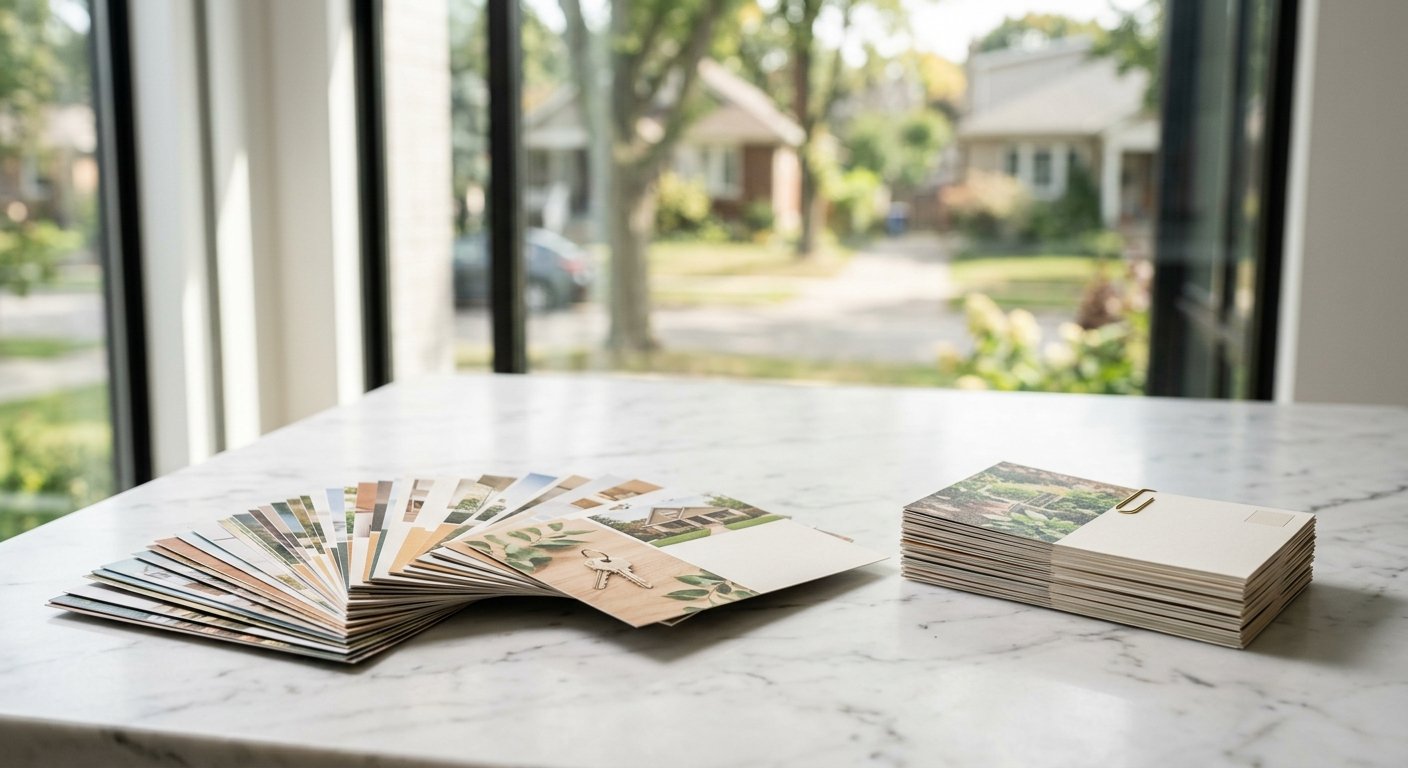
What separates the top-producing agents in any market from the ones chasing cold leads every month? Consistency. Specifically, a committed geographic farming strategy backed by real estate farming postcards that hit the same mailboxes, month after month, until homeowners think of one name when they’re ready to sell.
This isn’t a new concept — it’s a proven one. According to the National Association of Realtors, most sellers choose an agent they already know, were referred to, or had previous contact with. Farming postcards are how you engineer that familiarity at scale, before a homeowner ever picks up the phone.
Here’s how to build a geographic pipeline with direct mail that actually pays off — and how to avoid the mistakes that cause agents to quit too early.
What Is Real Estate Geographic Farming?
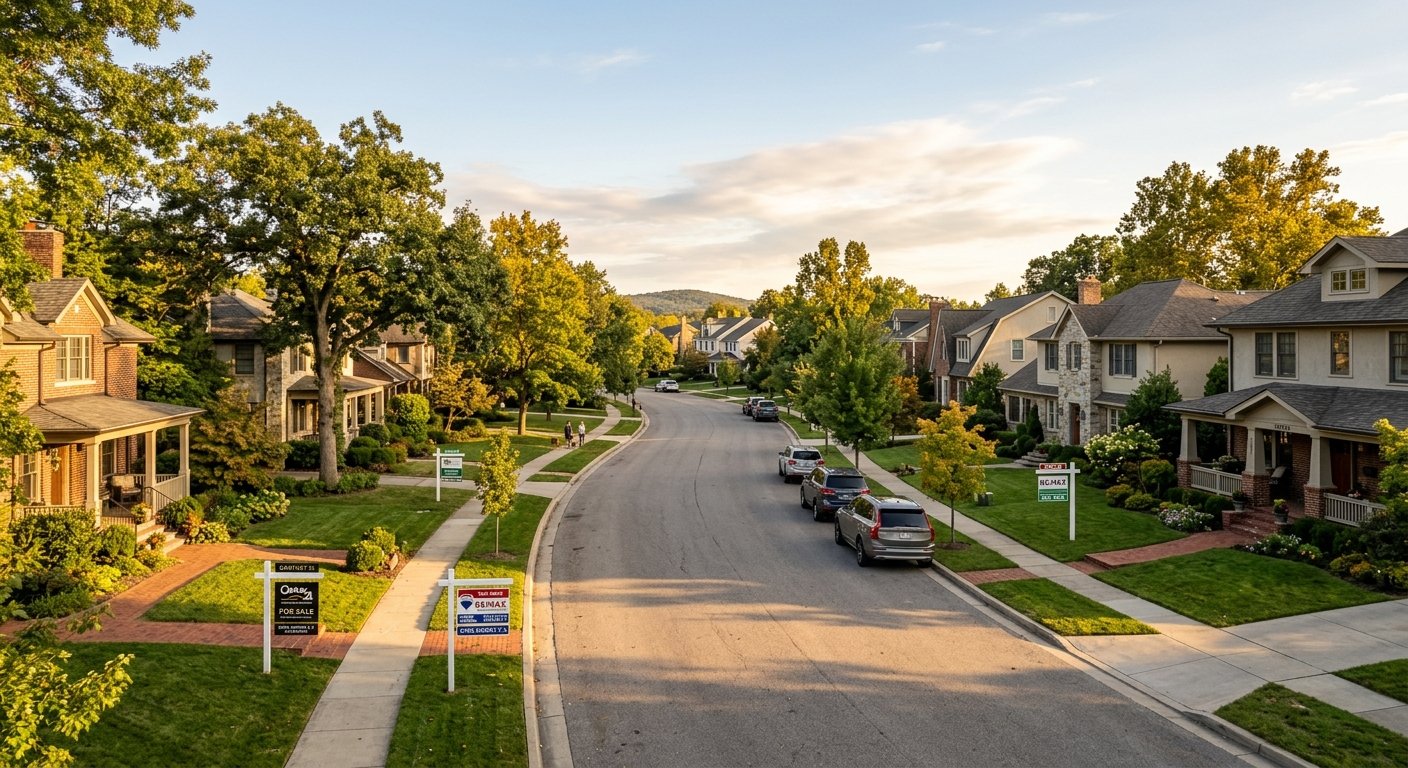
Geographic farming means selecting a specific neighborhood or carrier route — usually 200 to 1,000 homes — and mailing it repeatedly until you become the recognized local expert. Every postcard you send builds name recognition. Every just-listed or just-sold card proves you’re active in the area. Over six to twelve months, that repetition converts into listings.
The math is straightforward. If you’re farming 500 homes in a neighborhood with a 6% annual turnover rate, that’s roughly 30 transactions per year. At a median commission, even capturing two or three of those deals easily covers your annual mailing budget and then some.
The key word, though, is annual. Real estate farming is not a one-and-done campaign. Agents who mail twice and disappear get nothing. Agents who mail consistently for nine to twelve months start getting calls.
The Right Postcards for Each Stage of Your Farm
Not every mailer does the same job. Matching the right postcard type to the right moment in your farming cycle multiplies your results.
Just Listed Postcards
When you take a new listing in or near your farm, mail immediately. A well-designed just listed postcard announces that you’re active, creates social proof, and triggers curiosity from neighbors who are watching what homes sell for. These often generate the fastest response — neighbors want to know the price.
Just Sold Postcards
Just sold postcards may be the single highest-converting mailer in a real estate agent’s toolkit. They answer the question every homeowner in the neighborhood is silently asking: “What would my house sell for?” Include the sale price when possible, highlight days on market, and add a brief call-to-action about free home valuations. Circle these out to 200–500 homes surrounding the sold address.
Market Update Mailers
These build authority without a hard sell. Share neighborhood stats — average sale price, months of inventory, list-to-sale ratio — and position yourself as the local data source. Homeowners keep these. They feel like useful information, not advertising.
Seasonal and Event Cards
Holiday cards, spring market announcements, and community-focused mailers humanize your brand and keep the cadence alive in months when listings are slower. These are relationship-builders, not closers — but they matter.
Building Your Targeted Mailing List
Your list is the foundation of every campaign. A poor list wastes your print and postage budget immediately. A well-built list delivers your message to the right households, in the right neighborhood, with the right ownership profile.
For geographic farming, you have two primary options:
- Carrier route saturation (EDDM-style): Mail every deliverable address on a USPS carrier route. No names required, postage rates run approximately $0.20–$0.25 per piece, and it’s ideal when you want blanket neighborhood coverage without filtering by demographics.
- Targeted homeowner lists: Compiled by address, filtered by owner-occupancy, length of residency, estimated home value, and sometimes equity position. These are sharper and often more cost-effective when you want to reach specific homeowner profiles — like equity-rich long-term owners who are likely to consider selling.
At Shop Direct Mail, we handle list acquisition in-house, so you’re not piecing together data from three different vendors. We pull the list, clean it, and send it through NCOA (National Change of Address) processing before anything goes to print. That step alone eliminates wasted postage on undeliverable addresses.
How to Structure a 6-Month Farming Calendar
Six months is the minimum runway for geographic farming to show measurable results. Here’s a cadence that works:
- Month 1: Introduction mailer — who you are, what you specialize in, a compelling reason to keep the card (neighborhood stats, local market snapshot)
- Month 2: Just listed or just sold card (use a real transaction, even from an adjacent neighborhood if needed)
- Month 3: Market update with local data and a free home valuation offer
- Month 4: Testimonial postcard featuring a recent seller experience in the area
- Month 5: Seasonal or community-focused card — holidays, back-to-school, summer kick-off
- Month 6: Results mailer — homes sold in the neighborhood over the past six months, with your name attached to the activity
After six months, evaluate your inbound calls, website traffic from your unique QR code or vanity URL, and any direct responses. Adjust your messaging, then commit to another six months. The agents who dominate a farm have typically been mailing it for two or more years.
Tracking Your Results: Don’t Mail Blind
One of the biggest objections we hear is, “How do I know if this is working?” The answer: build tracking into every piece before it goes to print.
Here are four tracking methods that work for real estate farming postcards:
- Call tracking numbers: A unique phone number on each campaign that forwards to your main line — you see exactly which mailer drove the call.
- QR codes: Link to a landing page with a home valuation tool, a neighborhood report download, or a direct contact form. Track scans and conversions separately.
- Vanity URLs: A short, memorable web address unique to the campaign (e.g., yourname.com/oakwood) that you can track in Google Analytics or your CRM.
- Promo codes: Less common in real estate but useful for offers like “mention this card for a free comparative market analysis.”
USPS also provides mailing receipts and, with Informed Delivery campaigns, digital previews to recipients — adding another layer of measurable reach data you can reference.
Design That Gets Kept, Not Tossed
Your postcard has roughly three seconds before it’s sorted into the trash or the “keep” pile. Design matters more than most agents want to admit.
High-performing real estate farming postcards share a few characteristics:
- One dominant image (a sold property, a neighborhood photo, a professional headshot) — not a collage of five small photos
- A clear value proposition above the fold — what the recipient gets by calling you
- Limited copy — three to five short lines, not a paragraph of credentials
- A specific call-to-action — “Find out what your home is worth” beats “Contact me today”
- Consistent branding — same colors, fonts, and logo on every card so recipients recognize you before they read a word
Our in-house design team builds real estate mailer templates optimized for these principles. You can see how we approach real estate marketing design as part of a full-service campaign — no piecemeal coordination required.
What Does It Actually Cost to Farm a Neighborhood?
For a 500-home farm mailed monthly, you’re typically looking at $0.50–$0.90 per piece all-in (design, print, and postage) depending on postcard size and list type. That’s roughly $250–$450 per month, or $1,500–$2,700 for a six-month campaign.
One listing at median commission in most U.S. markets covers that investment many times over. The question is never really “can I afford to farm?” — it’s “can I commit long enough to see the return?”
According to USPS research on direct mail, physical mail generates higher brand recall than digital ads among recipients — a meaningful advantage in a market where every agent’s Facebook ad looks exactly the same.
Frequently Asked Questions
How long does it take for real estate farming postcards to generate leads?
Most agents begin seeing inbound inquiries between months four and six of consistent mailing. Some areas move faster, particularly if you have active listings in the farm zone. Committing to a minimum six-month calendar before evaluating results is strongly recommended.
How large should my farm area be?
For solo agents, a farm of 200 to 500 homes is manageable and cost-effective. Teams can scale to 500–2,000 homes. Smaller farms allow for higher mailing frequency, which drives faster brand recognition. Start focused and expand once you’re converting leads from the initial zone.
What’s the difference between EDDM and a targeted homeowner list for farming?
EDDM (Every Door Direct Mail) covers every address on a carrier route at a lower postage rate with no list required. A targeted homeowner list lets you filter by homeownership, equity, home value, or length of residency — useful when you want to reach specific seller profiles rather than every household. Many agents use both depending on the campaign goal.
How do I track whether my postcards are actually working?
Use a unique QR code, vanity URL, or call-tracking number on every campaign. These let you attribute calls and web visits directly to your mailer. Tracking tools should be built into the design before printing — not added as an afterthought.
Can I use farming postcards if I don’t have listings in the neighborhood yet?
Yes — and this is actually the best time to start. Market update mailers, home valuation offers, and community-focused cards don’t require active listings to deliver value. Use nearby sold data, area statistics, and your expertise to establish authority before you have a sign in the ground.
Start Building Your Farm — One Mailbox at a Time
Geographic farming is one of the most reliable lead-generation systems in real estate — but only for agents willing to play the long game. Consistency, smart list targeting, trackable design, and a clear six-to-twelve-month commitment are what separate the agents who own a neighborhood from the ones who tried it twice and moved on.
If you’re ready to launch or scale a farming campaign, Shop Direct Mail handles everything under one roof — strategy, design, list acquisition, printing, and mailing. Explore our real estate farming postcards and direct mail marketing services, or reach out to talk through the right approach for your farm area. We make it straightforward.