Direct mail marketing is the process of sending physical promotional materials—postcards, letters, flyers, or catalogs—directly to a targeted list of residential or business addresses. Unlike digital ads that compete for attention on crowded screens, direct mail lands in the hands of your prospects, offering a tangible, uncluttered path to action. In 2026, as email open rates stagnate and social media reach continues to shrink behind pay-to-play algorithms, direct mail has reemerged as a reliable, measurable channel for real estate agents, contractors, and local service businesses who need predictable lead generation.
This guide explains what direct mail marketing is, how it works, what realistic ROI looks like, and how to launch your first campaign this month—even if you’ve never mailed a postcard in your life.
How Direct Mail Marketing Works in 2026
At its core, direct mail marketing follows a straightforward process:
- Define your audience: Choose a mailing list based on geography (zip codes, neighborhoods, carrier routes), demographics (age, income, homeownership), or behavior (recent home buyers, expired listings, storm-affected addresses).
- Design your piece: Create a postcard, letter, door hanger, or flyer with a clear offer, strong headline, and single call-to-action.
- Print and mail: Partner with a full-service print and mail provider to handle production, addressing, sorting, and USPS delivery.
- Track and measure: Use unique phone numbers, QR codes, promo codes, or landing pages to measure response rates and calculate ROI.
The difference between effective direct mail and wasted postage lies in targeting and repetition. A single mailing to a cold list typically generates a 0.5%–2% response rate. But when you mail the same audience multiple times—like a real estate agent farming a 500-home neighborhood every month for nine months—brand recognition compounds, and response rates climb.
Direct Mail Marketing Strategy: What Works Now
The most successful direct mail marketing strategies in 2026 share three characteristics: hyper-local targeting, consistency over time, and a measurable offer.
Real Estate Agents: Geographic Farming and Lifecycle Triggers
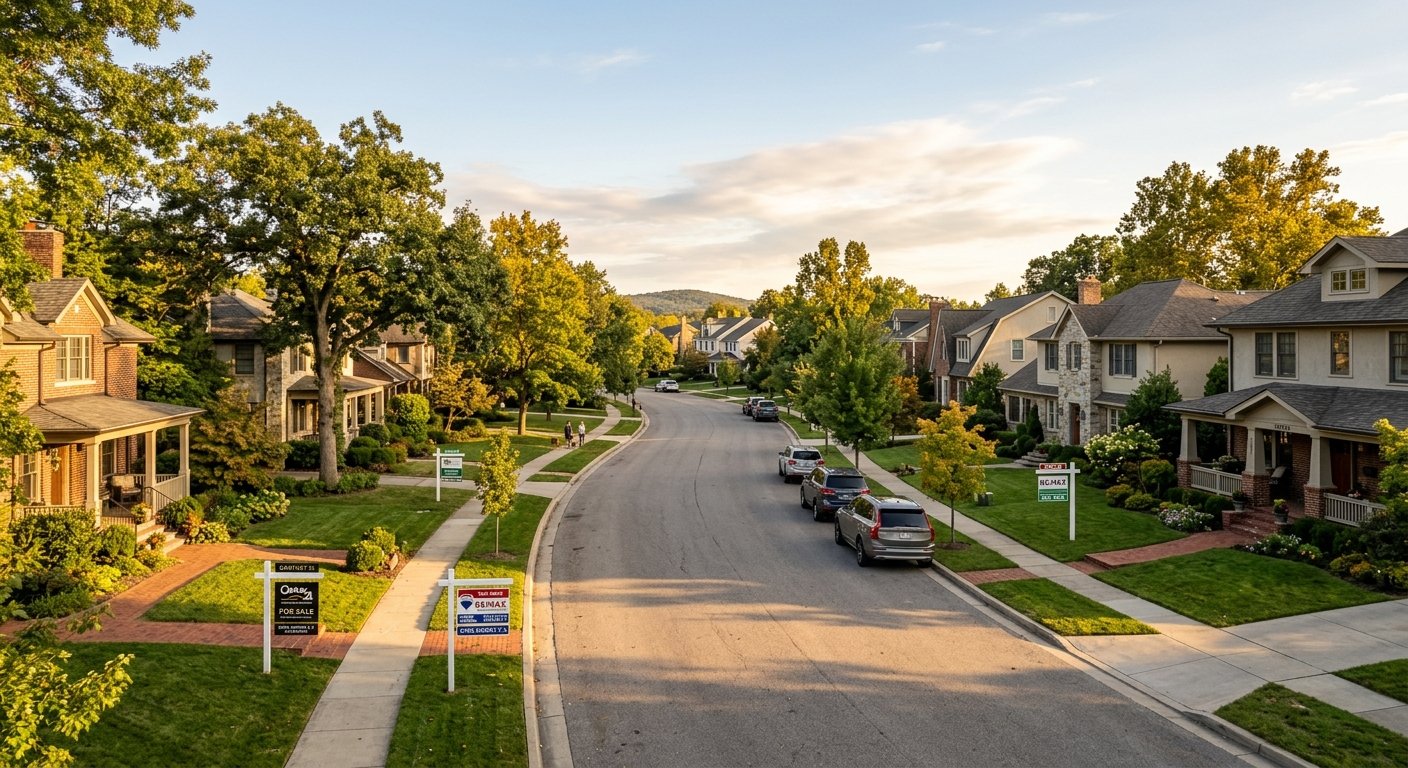
Real estate agents use direct mail to dominate specific neighborhoods through geographic farming—mailing the same 300–1,000 homes every 4–6 weeks for at least six months. Just-listed and just-sold campaigns announce new activity to surrounding neighbors, leveraging the “circle prospecting” principle that homeowners near a recent sale are statistically more likely to list within 90 days.
Expired-listing and FSBO (for-sale-by-owner) outreach targets motivated sellers with time-sensitive offers. These campaigns often see higher response rates—2%–5%—because the audience is already in-market.
Contractors: EDDM Saturation and Seasonal Campaigns
HVAC companies, roofers, plumbers, and landscapers rely on Every Door Direct Mail (EDDM) to blanket entire carrier routes without buying a list. EDDM allows you to mail every residential address on a USPS route for approximately $0.20–$0.25 per piece at retail rates, plus printing. Common postcard sizes—6.25″×9″, 6.5″×11″, or 6.5″×12″—meet EDDM requirements and fit standard mailbox slots.
Storm-chasing campaigns target zip codes affected by hail, wind, or flooding within 48–72 hours of the event. Seasonal maintenance offers—furnace tune-ups before winter, AC checks before summer—convert best when mailed 4–6 weeks before peak demand.
Local Service Businesses: Customer Reactivation and Neighborhood Awareness
Mortgage brokers, dental practices, gyms, and auto repair shops use direct mail to reactivate lapsed customers and introduce themselves to high-value neighborhoods. A chiropractor might mail a $49 new-patient special to homeowners within three miles; a fitness studio might send a 14-day trial pass to households with income above $75,000.
Repeat-buyer reactivation—mailing a “we miss you” offer to customers who haven’t visited in 6–12 months—typically outperforms cold prospecting by 3–5×.
Direct Mail ROI: Real Numbers from 2026 Campaigns
Direct mail effectiveness is measured by response rate, cost per acquisition, and lifetime customer value. Here’s what realistic ROI looks like across verticals:
Real Estate Example
An agent farms 500 homes in a target neighborhood, mailing a postcard every month for nine months. Cost: $0.65 per piece (design, print, postage, list). Total investment: $2,925 over nine months. If the agent closes one $350,000 listing with a 3% commission ($10,500 gross), the campaign pays for itself 3.6× over.
HVAC Example
A contractor mails 5,000 EDDM postcards promoting a $79 AC tune-up to three carrier routes in April. Cost: $0.45 per piece (printing + postage). Total: $2,250. If 1% respond (50 calls) and 40% book (20 appointments), and half convert to a $4,500 system replacement, the campaign generates $45,000 in revenue from a $2,250 spend—a 20× return.
Mortgage Broker Example
A broker mails 1,000 recent home buyers a refinance offer. Cost: $0.70 per piece. Total: $700. If 0.8% respond (8 calls) and two close, with an average commission of $3,000, the campaign nets $6,000 against $700 cost—an 8.5× return.
These scenarios assume strong offers, clear calls-to-action, and follow-up systems. Response rates vary by list quality, offer strength, and market timing, but the math remains straightforward: even a 1% response rate can deliver profitable ROI when your average customer value exceeds your cost per piece by 50× or more.
Tracking Direct Mail Effectiveness in 2026
One of the most common objections to direct mail is, “How do I know it’s working?” The answer: you track it the same way you track digital—by assigning unique identifiers to each campaign.
- Call tracking numbers: Use a dedicated phone number on your mailer so every inbound call is attributed to that campaign.
- QR codes: Link to a campaign-specific landing page and measure scans, form fills, and conversions.
- Promo codes: Offer a discount or bonus tied to a unique code (“Mention code SPRING26 for $50 off”).
- Personalized URLs (PURLs): Print a custom URL for each recipient (e.g., YourBusiness.com/JohnSmith) to track individual engagement.
- USPS Informed Delivery: Register your campaign so recipients see a digital preview of your mail, and you can append a clickable CTA to the email notification.
Combining direct mail with digital retargeting—using IP targeting or matched audiences based on mailed addresses—creates a multi-touch attribution model that lifts response rates by 20%–40%.
Common Objections (and Why They’re Wrong)
“Isn’t Print Dead?”
U.S. household mailbox volume has declined, but that’s exactly why direct mail works better now. The average American receives 3–5 pieces of personal mail per day in 2026, compared to 150+ emails. Less clutter means more attention. USPS data shows 79% of households read or scan their mail daily, and physical mail enjoys a 90% open rate compared to email’s 15%–25%.
“Isn’t This Expensive?”
Cost per piece ranges from $0.40 (simple EDDM postcard) to $1.50+ (personalized letter with insert). Compare that to Facebook lead ads at $8–$35 per lead or Google Local Service Ads at $15–$80 per lead. Direct mail’s upfront cost is higher, but the cost per qualified lead—and cost per customer—is often lower, especially for high-ticket services.
“How Long Does It Take to See Results?”
Response typically peaks within 7–14 days of delivery, but longer sales cycles (real estate, home services, B2B) may see conversions 30–90 days out. Geographic farming campaigns require 6–9 months of consistent mailing before top-of-mind awareness translates to listing appointments or service calls.
Launching Your First Direct Mail Campaign This Month
If you’re new to direct mail, start small, test fast, and scale what works. Here’s a tactical 30-day roadmap:
- Week 1: Define your audience. Choose 500–2,000 addresses based on geography (carrier route, zip code, neighborhood) or a purchased list (recent movers, homeowners by property value, business type).
- Week 2: Design your piece. Use a single, clear offer (free estimate, limited-time discount, market report), a strong headline, one high-quality image, and a single call-to-action. If you don’t have in-house design resources, full-service providers like Shop Direct Mail offer design, strategy, and list acquisition bundled with printing and mailing.
- Week 3: Print and mail. Approve your proof, set your in-home delivery date, and coordinate your tracking numbers or landing pages.
- Week 4: Track and follow up. Log every call, email, and QR scan. Calculate response rate, cost per lead, and cost per customer. Use this data to refine your offer, design, and list for your next drop.
Most businesses see their best ROI on the third, fourth, and fifth mailings to the same list—not the first. Budget for repetition, not one-and-done tests.
Why Full-Service Matters
Direct mail marketing involves multiple moving parts: list selection, design, copywriting, print production, USPS regulations, postal sorting, and delivery tracking. Coordinating these steps yourself can take 15–20 hours and risks costly errors—wrong postage class, non-compliant EDDM sizes, outdated addresses.
A full-service direct mail partner handles strategy, design, list acquisition, printing, and mailing under one roof, ensuring on-time delivery and USPS compliance while you focus on answering the phone and closing leads.
Frequently Asked Questions
What is direct mail marketing?
Direct mail marketing is the practice of sending physical promotional materials—such as postcards, letters, flyers, or catalogs—to a targeted list of addresses to generate leads, sales, or brand awareness.
What is a good response rate for direct mail?
Typical response rates range from 0.5%–2% for cold lists and 2%–5% for warm or repeat audiences. EDDM saturation and geographic farming campaigns often see higher engagement over time.
How much does direct mail cost per piece?
Costs vary by format, quantity, and postage class. EDDM postcards run approximately $0.40–$0.60 per piece; targeted postcards with purchased lists cost $0.60–$1.00+; personalized letters range from $1.00–$2.00 per piece.
How do I track direct mail ROI?
Use unique phone numbers, QR codes, promo codes, personalized URLs, or campaign-specific landing pages to attribute calls, visits, and sales to each mailing. Compare total revenue to total campaign cost to calculate ROI.
Is direct mail better than digital advertising?
Direct mail and digital serve different roles. Direct mail excels at hyper-local targeting, cutting through digital clutter, and reaching high-intent audiences (like homeowners in a specific neighborhood). Digital excels at retargeting, rapid testing, and broader reach. The best strategies combine both.
How often should I mail the same list?
For cold prospecting, mail every 4–6 weeks. For geographic farming (real estate), mail monthly for at least six months. For customer reactivation, mail quarterly or seasonally.
Start Your First Campaign Today
Direct mail marketing in 2026 isn’t a nostalgic throwback—it’s a high-ROI channel that delivers measurable results when you target the right audience, mail consistently, and track every response. Whether you’re a real estate agent farming your first neighborhood, a contractor launching an EDDM blitz, or a local service business reactivating past customers, the fundamentals remain the same: clear offer, strong design, smart targeting, and relentless follow-up.
Ready to launch your first campaign? Explore real estate postcards, EDDM services, door hangers, and full-service design and mailing solutions at Shop Direct Mail—or contact our team to build a custom direct mail marketing strategy for your business this week.