Carrier route mailing lets you saturate a specific geographic area — down to a single postal delivery route — with your marketing piece, reaching every residential or business address without purchasing a targeted list. It’s the engine behind USPS Every Door Direct Mail (EDDM), and it’s one of the most cost-effective tools available for real estate agents, contractors, and local service businesses that need hyper-local reach and measurable results.
- USPS EDDM carrier routes let you mail to every door in a defined area at a lower postage rate than first-class mail — no purchased list required.
- You choose routes by zip code, neighborhood, or even street-level boundaries, making geographic prospecting precise and scalable.
- Real estate agents, contractors, and local service businesses all use carrier route saturation to build brand presence before competitors do.
- Tracking methods like QR codes, unique URLs, and call-tracking numbers make every campaign measurable.
- A full-service partner handles route selection, design, printing, and drop-off so you focus on following up with leads, not logistics.
What Is a Carrier Route and Why Does It Matter?
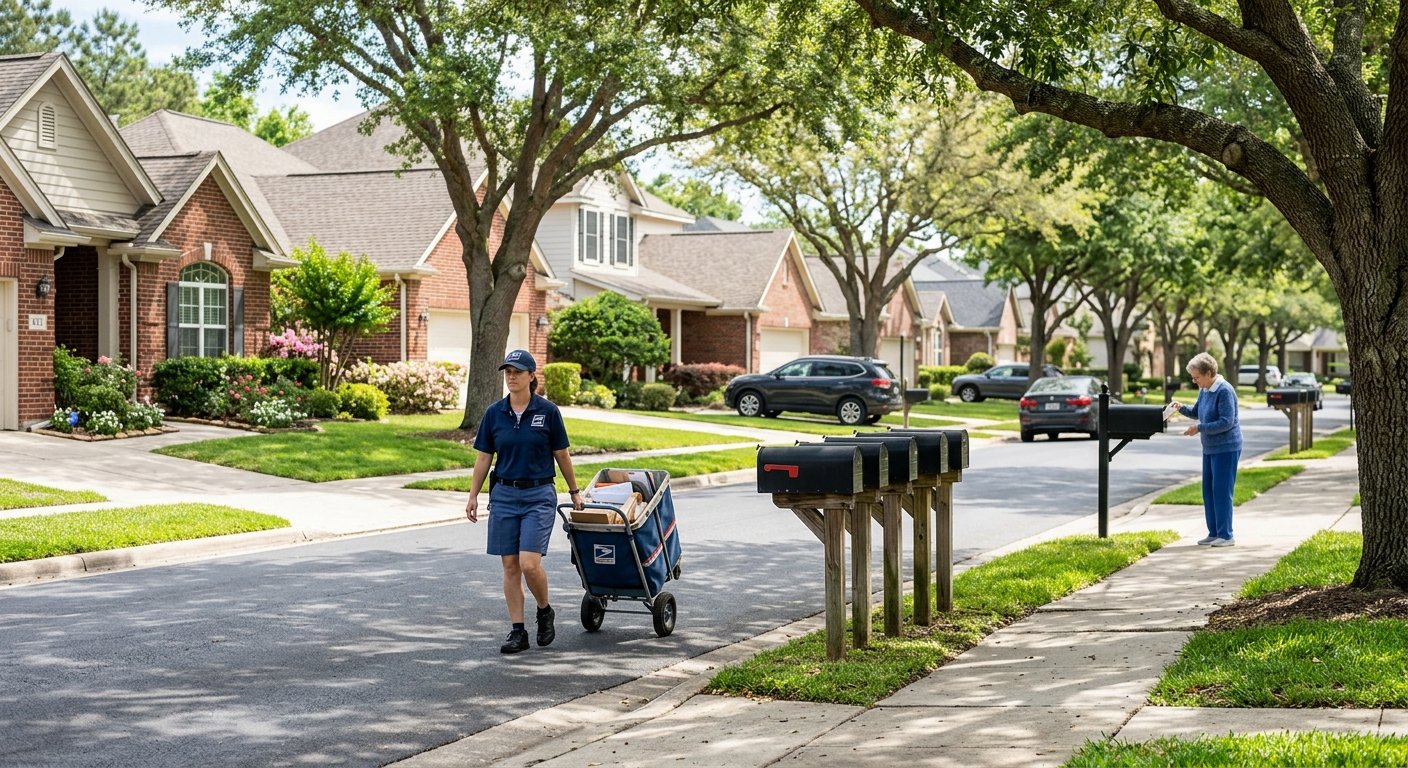
The USPS divides every city, suburb, and rural area into carrier routes — defined delivery sequences that a single mail carrier walks or drives each day. Each route typically covers a few hundred to a few thousand addresses. When you build a campaign around carrier routes, you’re essentially borrowing that delivery infrastructure to reach an entire neighborhood in one drop.
For local businesses, this precision is the point. You’re not blasting a generic metro area. You’re choosing the three carrier routes that run through the subdivision next to your new listing, or the six routes covering the zip code hit hardest by last month’s hailstorm. That targeting is what separates carrier route mailing from broad-reach advertising that hopes the right person sees it.
The USPS EDDM online mapping tool lets you browse carrier routes by zip code and see estimated delivery counts before you commit to a campaign. Use it to compare route sizes and avoid over- or under-mailing your budget. You can explore it at usps.com’s EDDM route selector.
How USPS EDDM Carrier Routes Work

Every Door Direct Mail is the USPS retail program that operationalizes carrier route saturation for small businesses. You select your routes, print mail pieces that meet size requirements (common formats include 6.25″×9″, 6.5″×11″, and 6.5″×12″), bundle them by route, and either drop them at the local post office or work with a full-service provider who handles the logistics for you.
The postage rate for EDDM Retail is published and updated by USPS — check the current rate at usps.com/business/every-door-direct-mail. It runs significantly lower than standard first-class postage, which matters when you’re mailing hundreds or thousands of pieces per campaign. The tradeoff: you mail to every address on a route, residential and/or business, with no individual name personalization. For neighborhood saturation goals, that’s rarely a limitation — it’s the strategy.
At Shop Direct Mail, we manage the entire process — route mapping, piece design, printing to USPS spec, and drop-off — so you don’t have to decode postal regulations or make a trip to the post office.
Who Should Use Carrier Route Mailing?
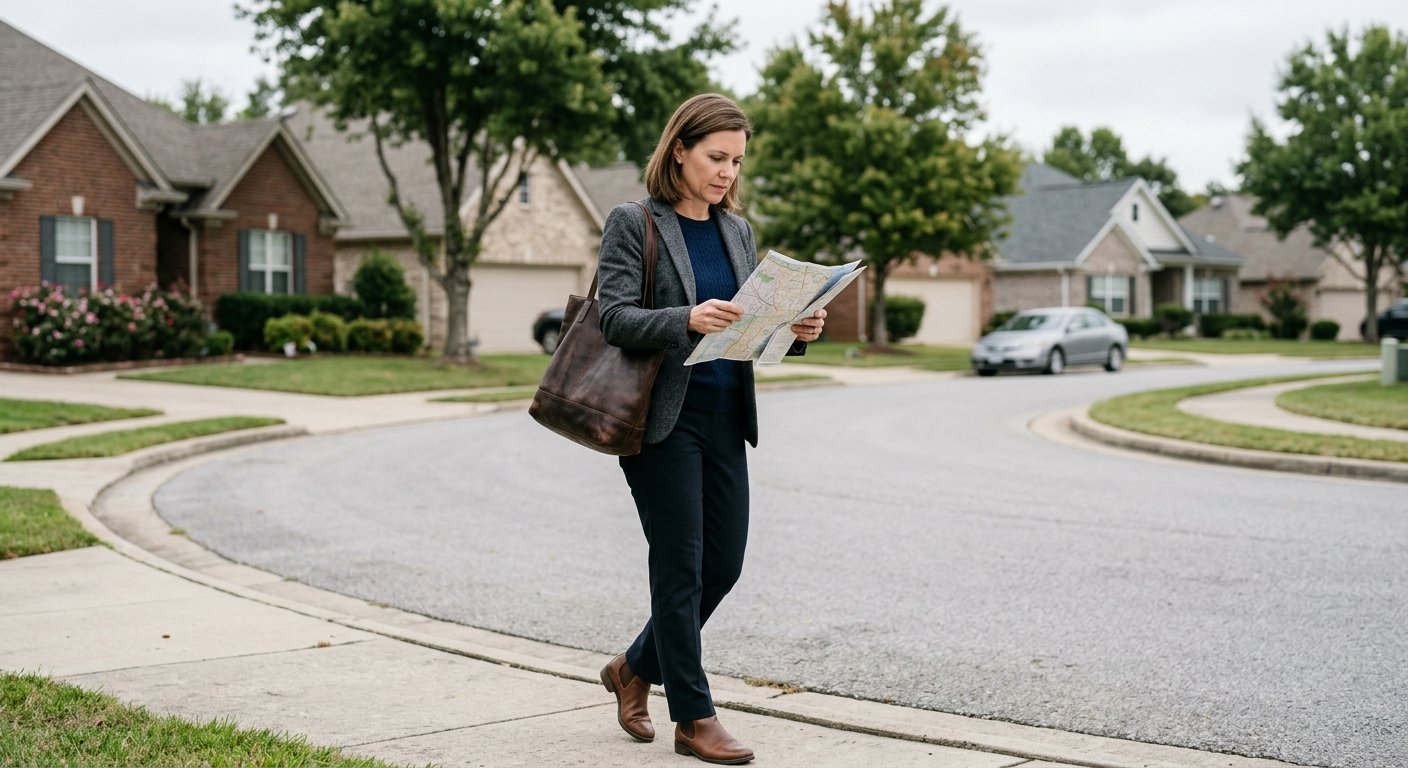
The short answer: any local business whose customers live or work in a defined geographic area. But the use cases differ by industry, and the strategy should too.
Real Estate Agents and Teams
Neighborhood farming is built on consistency, and carrier route mailing is its delivery mechanism. An agent farming a 500-home subdivision selects the two or three carrier routes covering that area and mails on a monthly or bi-monthly schedule. Over six to nine months, that repetition builds name recognition so that when a homeowner decides to list, your name is already in their kitchen drawer.
Just-listed and just-sold postcards work the same way — target the carrier routes immediately surrounding a new transaction to generate circle prospecting conversations before a competing agent does. Learn more about how we build these campaigns on our real estate postcards page.
Contractors
A roofing company doesn’t need a list of homeowners — they need every address in the zip codes affected by a recent storm. An HVAC company mailing a pre-summer maintenance special wants every household on the four carrier routes closest to their service hub. Carrier route saturation removes the list-building barrier and gets pieces in mailboxes fast.
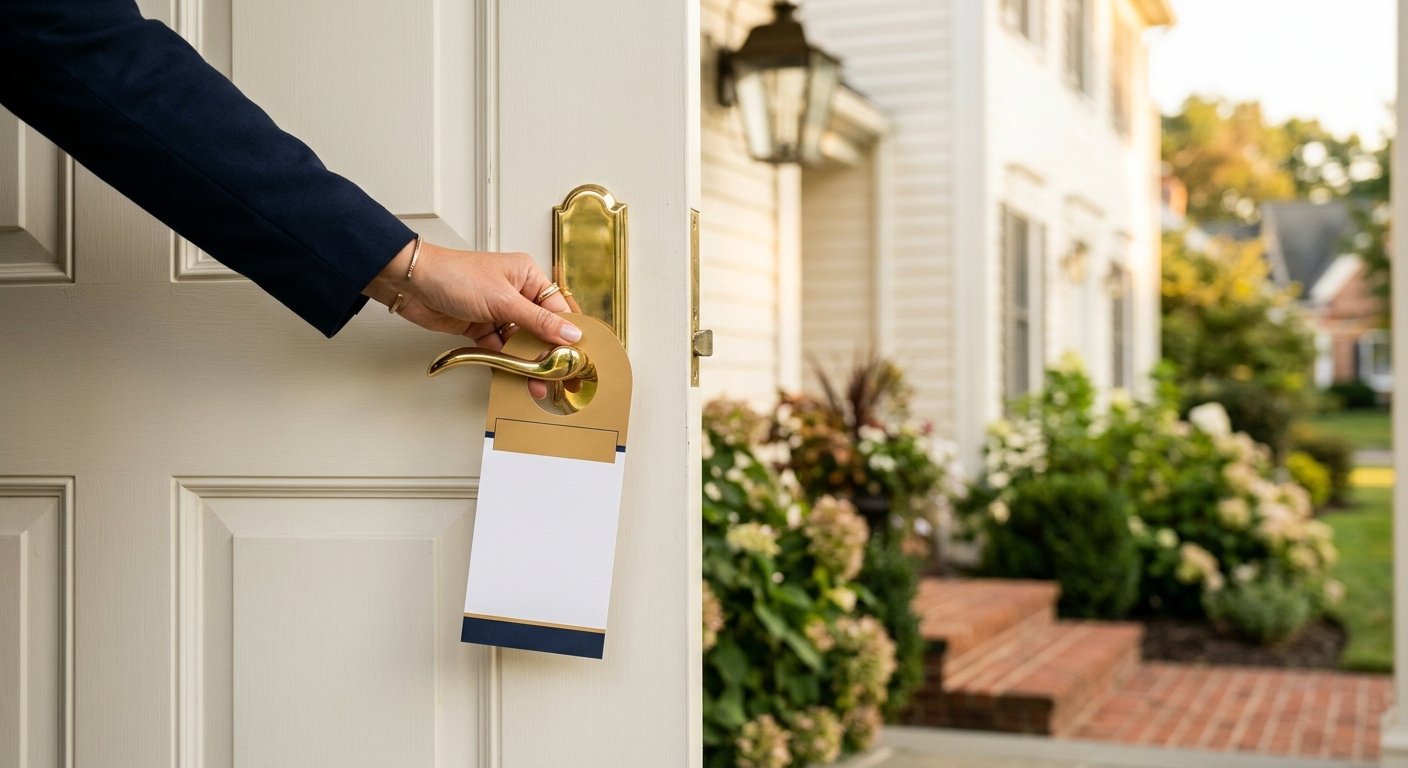
Door hanger campaigns follow similar geography. When a plumber finishes a job on Oak Street, the surrounding carrier route becomes the prime prospecting zone — neighbors are already aware something happened at the house down the block, and a well-timed mailer reinforces trust.
Local Service Businesses
A new dental practice, a fitness studio opening its second location, or an auto shop running a seasonal promotion — all of these benefit from hitting every household within a defined radius rather than hoping a digital ad finds the right person. Carrier route mailing puts a physical piece in hand, and USPS research on mail engagement consistently shows that physical mail drives higher engagement and recall compared to digital-only touchpoints.
| Business Type | Best Carrier Route Strategy | Recommended Frequency |
|---|---|---|
| Real estate agent | Farm a fixed set of routes, just-listed/just-sold saturation | Monthly or bi-monthly |
| Roofer / HVAC | Storm-zone saturation, seasonal service routes | Campaign-driven |
| Local service business | Radius saturation around storefront or service area | Quarterly or promotional |
Selecting the Right Routes: Geographic Prospecting Done Right
Route selection is where strategy meets execution. A few principles that guide effective campaigns:
- Match the route to your service radius. If you dispatch from one location, don’t mail routes 40 miles away. Profitable jobs come from proximity.
- Check route density. Some routes carry 300 addresses; others carry 1,500. Know what you’re buying before you budget the run.
- Prioritize consistency over volume. Mailing 800 homes monthly for six months outperforms a one-time drop of 5,000 homes — repetition is what builds recall and response.
- Layer demographics when it matters. EDDM doesn’t filter by demographic, but if you need to reach homeowners in higher-income brackets, you can supplement with a targeted purchased list and run parallel campaigns. We offer list acquisition as part of our full-service offering.
EDDM Retail requires that you mail to every address on a selected route — you can’t skip individual addresses. If your campaign requires demographic filtering (age, income, homeownership), a targeted mailing list paired with standard direct mail is the better fit. Both approaches work; the right one depends on your goal.
Tracking Results from Carrier Route Campaigns
Direct mail skeptics often assume you can’t measure a postcard. That’s a misconception worth correcting. Here’s how to build attribution into every carrier route campaign:
Use a unique QR code
Link to a campaign-specific landing page, not your homepage. UTM parameters in the URL tell you exactly which mailing drove the visit.
Add a call-tracking number
A forwarding number tied to the campaign records call volume so you can count inbound inquiries directly attributed to the mailing.
Include a promo code
Retailers and service businesses can attach a code to the mailer — every redemption is a trackable conversion with no guesswork.
Note your USPS receipt
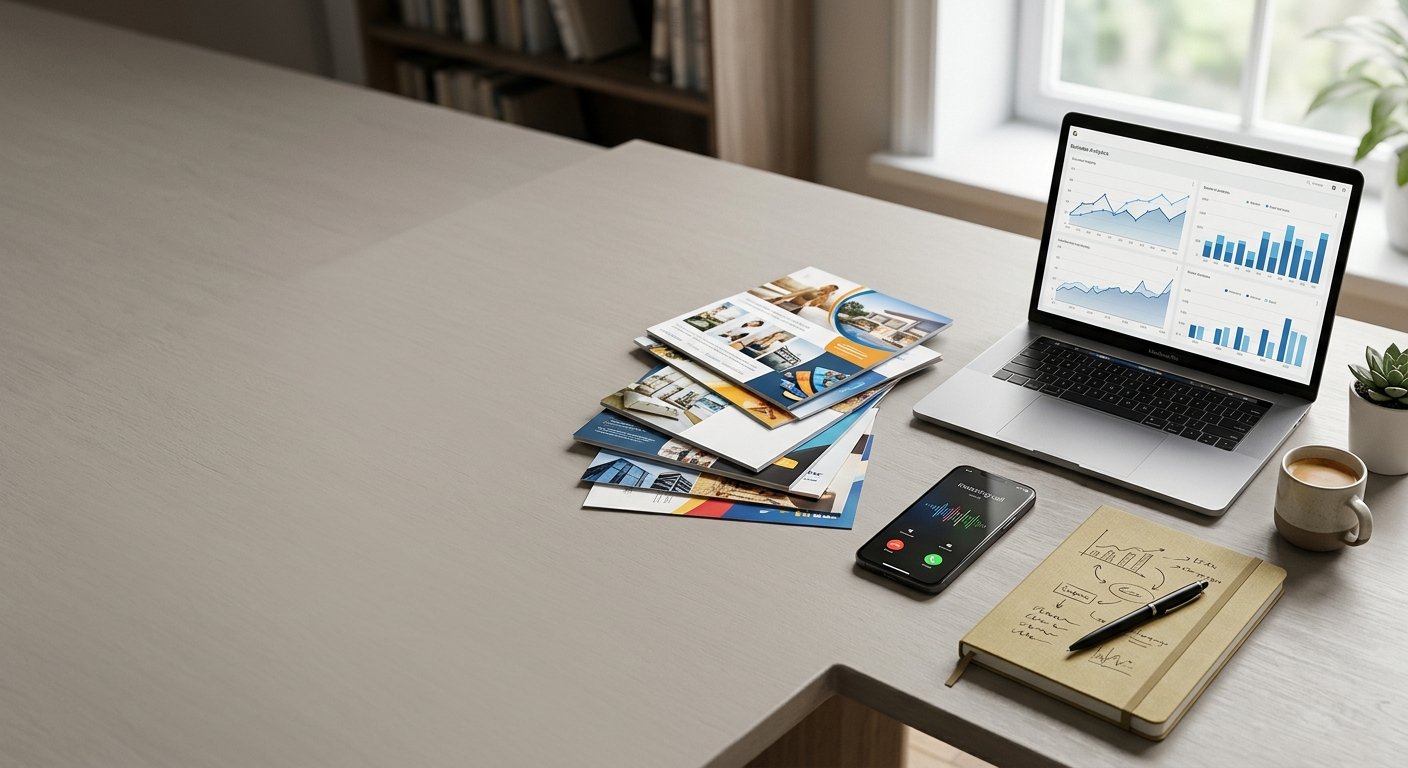
EDDM drop-off generates a receipt that confirms delivery count and date — your baseline for measuring campaign timing against lead spikes.
Combine two or three of these and you’ll have a clear picture of cost-per-lead from each carrier route campaign — the kind of data that makes your next mailing smarter than the last.
Repetition is what builds recall and response — one drop is an introduction; six drops is a relationship.
Design Principles That Drive Response
Carrier route saturation gets your piece in the mailbox. Design is what gets it off the counter and acted on. A few non-negotiables:
- Lead with the neighborhood, not your logo. A header that names the specific area (“Oak Hills Homeowners — New Listing at 412 Maple”) outperforms generic brand headlines every time.
- One clear offer, one clear action. Don’t make the reader choose between three things. Tell them exactly what to do next.
- Use both sides. The front earns attention; the back earns the response. Use the back for proof — a sold price, a before/after, a service guarantee.
- Size matters. EDDM’s minimum dimensions (6.25″×9″) give you a canvas that stands out in a standard envelope stack. Oversized formats increase attention — use them.
Our design team at Shop Direct Mail builds pieces specifically for direct mail response, not for award shows. That means hierarchy, readability, and a CTA that survives a two-second glance. Explore the full scope of what we offer at our Every Door Direct Mail service page.
Frequently Asked Questions
How many addresses does a typical carrier route cover?
Carrier routes vary widely — from roughly 300 to 2,000+ addresses depending on the area’s density. Rural routes tend to be larger geographically but lower in address count; urban routes pack more addresses into a smaller footprint. The USPS EDDM mapping tool shows exact counts before you select a route.
Do I need a mailing list to use EDDM carrier routes?
No. That’s one of the biggest advantages of EDDM. You select the routes, and USPS delivers to every active delivery address on them — residential, business, or both. No list purchase, no data hygiene, no suppression files required.
How is carrier route mailing different from standard direct mail?
Standard direct mail uses a purchased or curated list with individual names and addresses, allowing demographic targeting (age, income, homeownership). Carrier route mailing saturates every address on a route regardless of who lives there. EDDM costs less per piece and requires no list, but offers less demographic precision. Both have their place depending on your campaign goal.
What size does my mail piece need to be for EDDM?
USPS requires EDDM pieces to meet minimum and maximum size thresholds. Common approved formats include 6.25″×9″, 6.5″×11″, and 6.5″×12″. The piece must also be flat — not folded into a letter-size envelope. Full size and weight requirements are published at usps.com.
How often should I mail the same carrier routes?
For neighborhood farming and brand-building campaigns, monthly or bi-monthly cadences over at least six months tend to produce meaningful recognition. For event-driven campaigns — storm response, seasonal specials, grand openings — a concentrated burst of two to three drops over four to six weeks often works better. Consistency matters more than any single drop.
Ready to Map Your First Campaign?
Carrier route mailing isn’t complicated, but it rewards good planning. Route selection, piece design, USPS compliance, print specs, and drop logistics all affect whether your campaign lands well or sits in a pile. Getting those details right — consistently, across multiple mailings — is where a full-service partner earns its keep. Browse our direct mail marketing services to see how we bring strategy, design, printing, and mailing together under one roof.
Start Your Carrier Route Campaign
Tell us your target area and business type — we’ll map the right routes, build the design, and get your pieces in the mail.

About Shop Direct Mail Marketing
Shop Direct Mail is a full-service direct mail marketing partner for real estate agents, contractors, and local service businesses nationwide. We provide end-to-end strategy, design, list acquisition, printing, and mailing services that help small and medium-sized businesses cut through digital clutter with tangible, measurable campaigns. Our focus is on ROI-driven tactics like real estate farming, EDDM saturation, just-listed/just-sold postcards, and neighborhood prospecting that generate leads and customers business owners can track. Visit shopdirectmail.com →