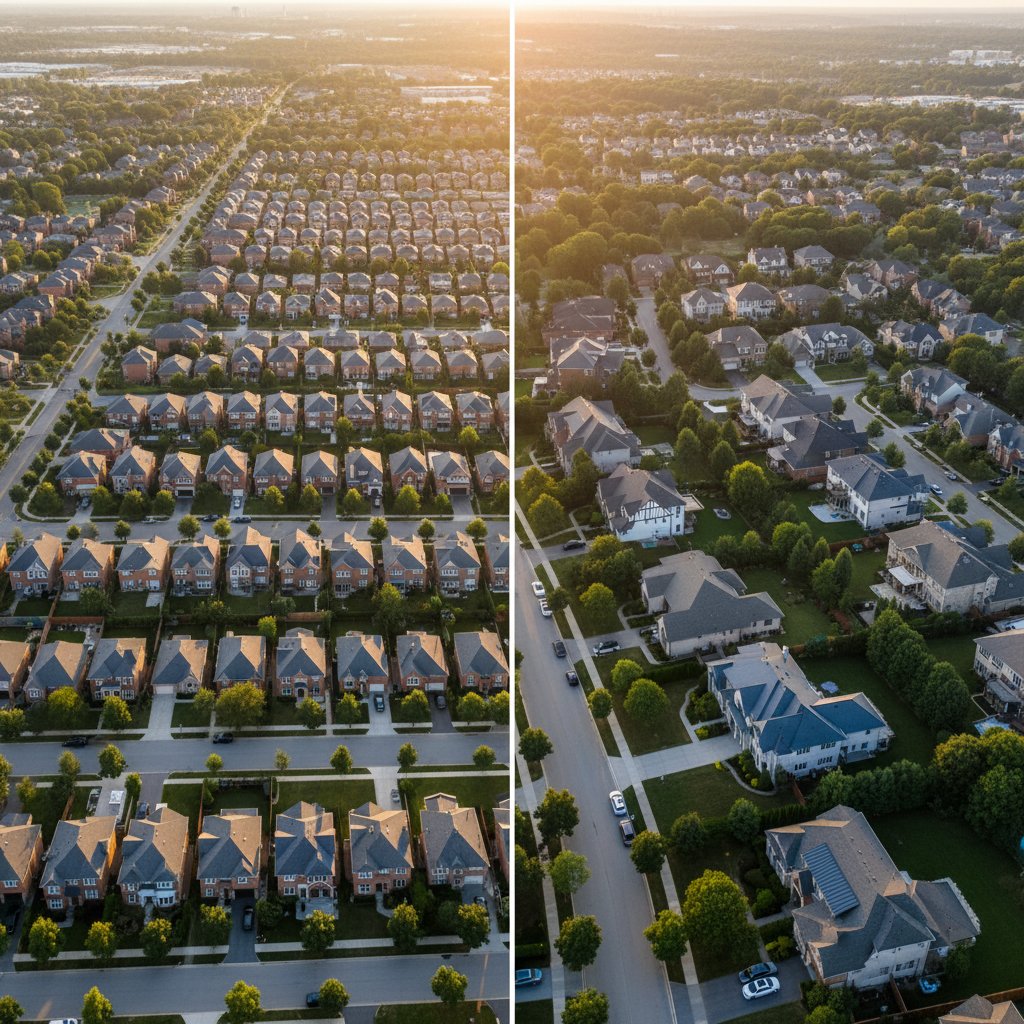
When you’re planning a local direct mail campaign, the first strategic decision is often the toughest: should you blanket an entire neighborhood with Every Door Direct Mail, or invest in a curated list of targeted households? Both approaches deliver tangible, trackable results—and both have funded thousands of profitable campaigns for real estate agents, contractors, and local service businesses. The right choice depends on your goals, budget, and market. Let’s break down exactly when each strategy wins, and what the ROI math looks like in real-world scenarios.
Understanding Every Door Direct Mail (EDDM)
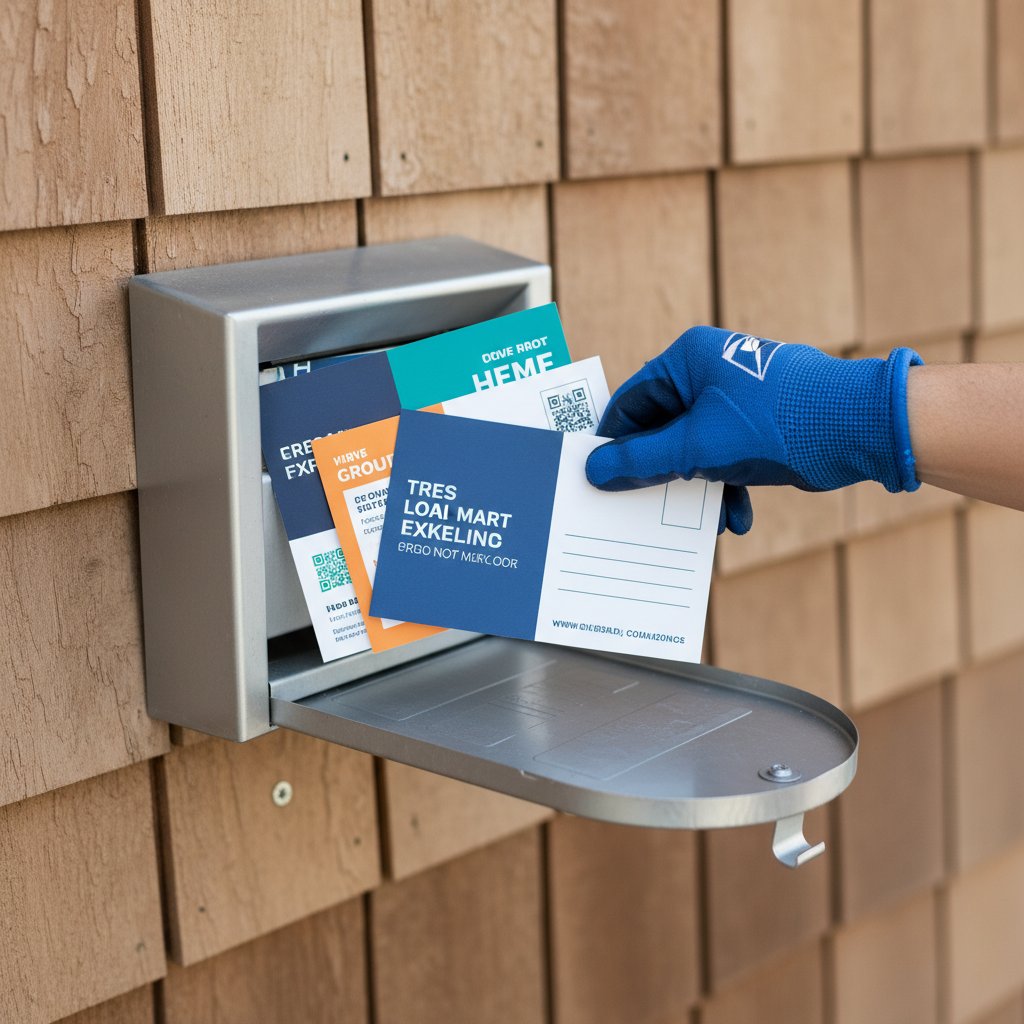
Every Door Direct Mail is a USPS program that lets you saturate every mailbox along specific carrier routes without buying or uploading a mailing list. You pick a route (typically 200–700 households), meet USPS size requirements (most commonly 6.25″×9″, 6.5″×11″, or 6.5″×12″), and your postcards or flyers are delivered to every address on that route—no individual names or street addresses required on the mail piece itself.
Current USPS EDDM retail postage typically runs around $0.20–$0.25 per piece, making it one of the most cost-effective ways to reach density. When you add printing on 14pt premium card stock with UV gloss coating, your all-in cost per piece typically lands between $0.35 and $0.50, depending on quantity and complexity.
EDDM works brilliantly when your offer is relevant to nearly everyone in a geography—think a roofer after a hailstorm, an HVAC company promoting seasonal maintenance, or a real estate agent farming a tight subdivision. It’s pure saturation: you’re buying reach, not precision.
Understanding Targeted Mailing Lists
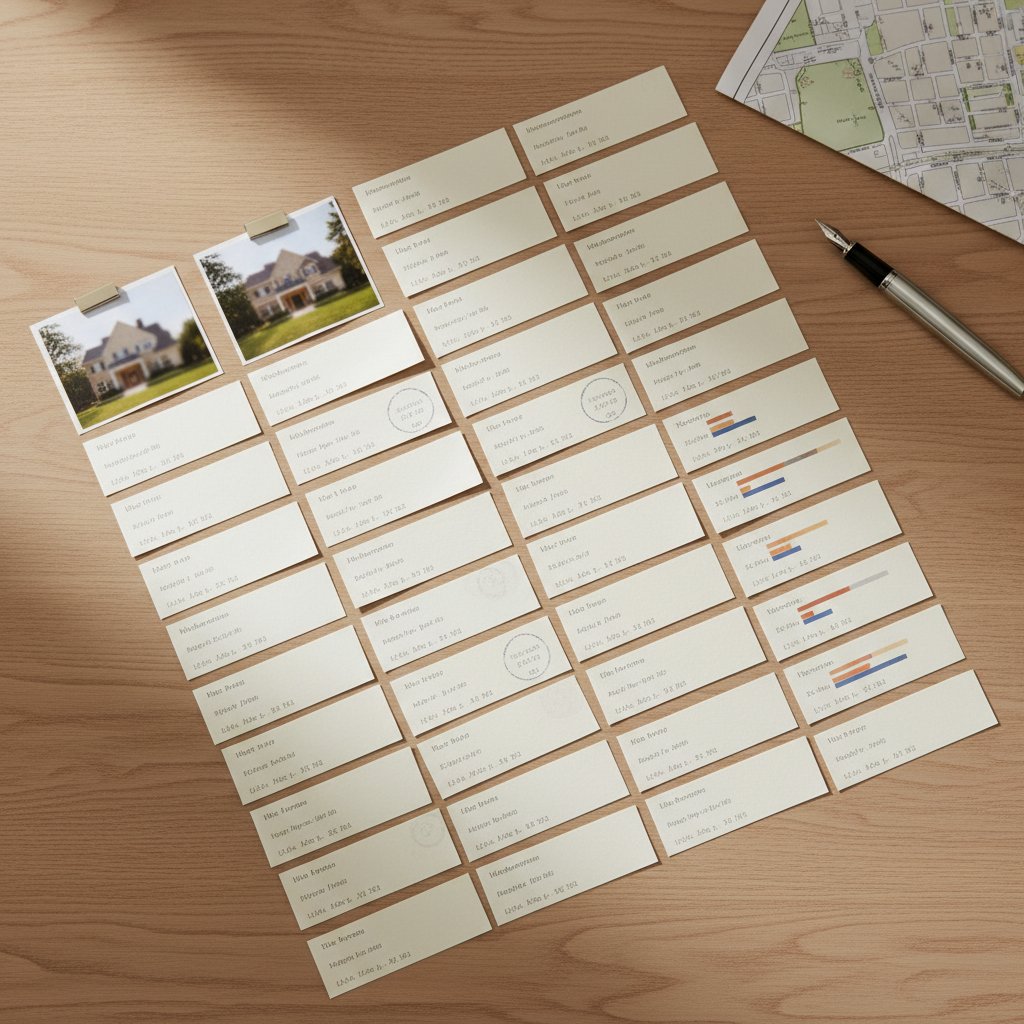
Targeted lists let you cherry-pick recipients based on demographics, homeownership status, property value, income, age, credit score, length of residence, and dozens of other criteria. You can mail exclusively to homeowners who’ve lived in their house 10+ years, or single-family properties valued above $400,000, or households with a mortgage originated in the last 24 months. List costs typically run $0.03–$0.08 per name, and you’ll pay first-class or standard postage depending on format—usually $0.50–$0.70 all-in per piece when printed and mailed.
Targeted lists shine when your ideal customer represents a minority of households in a geography. A financial planner targeting pre-retirees, a luxury remodeler pursuing high-value homes, or a real estate investor chasing absentee owners will waste money mailing to everyone. They need precision, and they’re willing to pay slightly more per piece to get it.
When EDDM Wins: High-Relevance, Low-Selectivity Offers
EDDM typically delivers better ROI in these scenarios:
- Real estate farming: An agent staking a claim on a 500-home neighborhood over six to nine months wants every household to know their name and see their recent sales. Excluding renters or older homeowners would dilute top-of-mind awareness.
- Storm-chasing contractors: After a hailstorm damages roofs across three zip codes, a roofing company wants to hit every home before competitors do. Speed and saturation matter more than filtering by property value.
- Seasonal services: An HVAC company offering spring tune-ups or a landscaping firm promoting seasonal cleanups has broad appeal. Most homeowners need the service eventually; the cost of excluding non-prospects isn’t worth the savings.
- New-mover welcome campaigns: Blanketing a growing subdivision with door hangers or postcards introducing your business captures attention when homeowners are actively hiring local vendors.
- Retail or restaurant grand openings: A new fitness studio, auto shop, or restaurant wants every household within two miles to know they exist. Demographic filters add cost without adding meaningful lift.
In our experience, well-executed EDDM campaigns for contractors and real estate agents often produce response rates between 0.5% and 2%, with higher returns on repeat mailings. A roofer mailing 5,000 homes at $0.40 per piece spends $2,000. If 1% respond and 20% convert, that’s 10 jobs—profitable at nearly any ticket size over $3,000. The math works because the cost per door is so low.
When Targeted Lists Win: Niche Audiences and High-Value Conversions
Targeted lists typically outperform EDDM when:
- Your offer serves a narrow segment: Reverse-mortgage lenders targeting homeowners age 62+ with equity, or estate-planning attorneys pursuing high-net-worth households, waste budget mailing to younger renters or lower-value properties.
- Customer lifetime value is high: If a single conversion is worth $10,000 or more—luxury remodeling, financial advisory, medical services—you can afford $0.70 per piece to reach exactly the right prospect. A 0.5% response rate on a hyper-targeted list often beats a 1.5% response on an EDDM route full of non-prospects.
- You’re pursuing expired listings, FSBOs, or pre-foreclosures: Real estate agents and investors chasing these motivated sellers need list data EDDM can’t provide. You’re buying intelligence, not just geography.
- Repeat-buyer reactivation: If you have an in-house customer list—past clients, leads who didn’t convert, service customers due for maintenance—mailing that list with personalized variable data printing almost always outperforms generic saturation.
- Compliance or branding concerns: Some industries (healthcare, finance) prefer addressed mail with recipient names for regulatory or trust reasons. EDDM’s “or current resident” format can feel impersonal in these verticals.
A mortgage broker mailing 2,000 homeowners whose loans are six months from ARM adjustment might spend $1,400 all-in and close three refinances worth $15,000 in commission. The cost per lead is higher than EDDM, but the conversion rate and customer value justify the spend.
Cost Comparison: Real Numbers for Real Campaigns
Let’s walk through the math on two identical 5,000-piece campaigns—one EDDM, one targeted list—for a home-services contractor promoting a $99 seasonal special:
EDDM Campaign (5,000 pieces):
- Printing (14pt gloss postcards, full color both sides): $900
- USPS postage (~$0.22/piece): $1,100
- EDDM bundling and drop-off: $200
- Total cost: $2,200 | Cost per piece: $0.44
Targeted List Campaign (5,000 pieces):
- Printing (same specs): $900
- Mailing list ($0.05/name): $250
- Standard postage (~$0.45/piece): $2,250
- List merge and postal prep: $150
- Total cost: $3,550 | Cost per piece: $0.71
The targeted campaign costs 61% more per piece. To break even on ROI, it needs to either generate 61% more responses, or convert leads at a significantly higher rate. If your offer appeals to most homeowners, EDDM wins. If it appeals to 30% or fewer, the targeted list likely justifies the premium.
Targeting Capabilities: What You Gain and Lose
EDDM’s simplicity is both its strength and its limitation. You can filter carrier routes by age (percentage of households over 65), income, and household size—but you can’t exclude renters, and you can’t personalize. Every piece is identical, and every door gets one.
Targeted lists unlock granular segmentation: homeowners only, property values, mortgage data, length of residence, household income, credit indicators, past purchase behavior, and more. You can append names and addresses for personalized messaging (“John, your home at 123 Maple is likely due for a roof inspection”), and you can layer multiple filters to isolate your ideal customer.
For real estate agents, this means the difference between farming a whole neighborhood (EDDM) and cherry-picking homeowners who’ve owned 8+ years and are statistically more likely to list soon (targeted). For a high-end remodeler, it’s the difference between mailing $200k–$2M homes (targeted) versus mailing every address including apartments and starter homes (EDDM).
Response Rates and ROI: What the Data Shows
Industry benchmarks suggest EDDM campaigns for local services typically see 0.5%–2% response rates on the first drop, climbing to 2%–5% after multiple touches in a series. Targeted campaigns often report 1%–3% on cold lists, and 5%–10%+ on warm lists (past customers, aged leads, referrals).
But response rate alone doesn’t determine ROI. A real estate agent mailing EDDM to 10,000 homes over six months might spend $4,000 and close two listings worth $20,000 in commission—a 5x return. A luxury contractor mailing 1,000 high-value homeowners might spend $800 and book one $40,000 job—a 50x return. Both campaigns succeeded; the strategy matched the business model.
The key is tracking. Use unique phone numbers (call tracking), dedicated landing pages, QR codes, or promo codes on every piece so you know exactly which campaign drove which lead. Shop Direct Mail integrates these tracking tools into design and helps clients measure results across both EDDM and targeted campaigns.
Hybrid Strategies: Combining Both for Maximum Impact
Smart marketers don’t choose one strategy forever—they deploy both tactically. A real estate agent might EDDM-farm a neighborhood for brand awareness, then mail a targeted list of 10+ year homeowners within that same geography with a personalized “thinking of selling?” message. A roofing company might EDDM after a storm for speed, then follow up 90 days later with a targeted list of homeowners who didn’t respond but fit an ideal profile (age of roof, property value).
Layering EDDM saturation with targeted precision lets you dominate a market without wasting budget. You’re paying for reach where reach matters, and paying for data where data matters.
Which Strategy Should You Choose?
Start with these decision rules:
- Choose EDDM if: Your offer has broad appeal, you’re building brand awareness in a defined geography, cost per door matters more than precision, or you’re launching a time-sensitive campaign (storm damage, seasonal promo, new-mover welcome).
- Choose a targeted list if: Your ideal customer represents a minority of households, customer lifetime value justifies higher cost per piece, you need demographic or behavioral data EDDM can’t provide, or you’re mailing past customers or nurtured leads.
- Choose both if: You have budget for a sustained campaign and want to layer saturation (EDDM) with precision follow-up (targeted lists) for maximum market penetration and conversion.
Most successful direct mail programs we design for real estate agents and contractors use both strategies across a 6–12 month horizon, adjusting mix based on what the data shows. There’s no single “winner”—there’s the right tool for the right job.
How Shop Direct Mail Helps You Execute Both
Whether you choose EDDM saturation, targeted list precision, or a hybrid approach, Shop Direct Mail handles strategy, design, list acquisition, printing, and mailing under one roof. You don’t coordinate a designer, a list broker, a printer, and a mail house separately—we manage the entire campaign so you can focus on converting the responses.
We help real estate agents map carrier routes for farming campaigns and source aged-homeowner lists for listing prospecting. We help contractors identify storm-damaged zip codes for EDDM blitzes and build high-value homeowner lists for premium services. Every campaign includes tracking tools—unique phone numbers, QR codes, promo codes—so you measure results, not just mail counts.
Our postcards are printed on 14pt premium card stock with full-color UV gloss coating on both sides, built to survive the mailbox and command attention. And because we serve both hyper-local South Florida markets and clients nationwide, we bring regional expertise and national scale to every project.
Frequently Asked Questions
What is every door direct mail USPS?
Every Door Direct Mail (EDDM) is a USPS program that allows businesses to mail postcards, flyers, or brochures to every address on a selected carrier route without purchasing a mailing list or printing individual names and addresses. You select routes based on geography, household demographics, and mail to all deliverable addresses at a reduced postage rate—currently around $0.20–$0.25 per piece. It’s ideal for local saturation campaigns where your offer has broad appeal across a neighborhood or zip code.
How do I send every door direct mail?
To send EDDM, you choose carrier routes using the USPS EDDM online tool, design a mail piece that meets size requirements (commonly 6.5″×11″ or 6.25″×9″), print your postcards with EDDM-compliant layout (no individual addresses required), bundle the pieces by route, and drop them at a USPS facility with the proper paperwork. Most businesses work with a full-service provider like Shop Direct Mail who handles route selection, design, printing, bundling, and USPS delivery to simplify the process and ensure compliance.
What are common mistakes when using EDDM?
The most common EDDM mistakes include choosing routes based solely on cost rather than fit (mailing areas where few households match your customer profile), running one-time campaigns instead of multi-touch series (saturation works best with repetition), neglecting tracking (no unique phone number or promo code means you can’t measure ROI), and using generic designs that don’t stand out in the mailbox. EDDM is not a shortcut—it still requires strategic targeting, compelling creative, and disciplined follow-up to convert responses into customers.
How long does USPS EDDM take?
Once your EDDM mail pieces are bundled and dropped at a USPS facility, delivery typically takes 7–14 business days depending on route density and local processing schedules. Plan 2–3 weeks total from final design approval to in-home delivery when working with a print and mail provider. For time-sensitive campaigns (storm damage, event promotion, seasonal offers), build extra lead time and consider hybrid strategies that combine EDDM with faster digital follow-up to ensure you don’t miss your window.
Make Your Next Campaign Count
EDDM and targeted lists both work—when matched to the right goal, audience, and budget. The businesses that win with direct mail don’t guess; they test, track, and refine based on real response data. Whether you’re a real estate agent farming a neighborhood, a contractor chasing storm leads, or a local service business building awareness, the strategy you choose today shapes the ROI you see in 30 to 90 days.
Ready to plan your next campaign? Explore real estate postcards, EDDM services, and targeted mailing lists at Shop Direct Mail—or reach out for a free consultation. We’ll help you choose the right strategy, design a campaign that stands out, and track the results that matter.