A well-placed door hanger generates a response rate that most digital ads can’t touch in hyper-local campaigns. While the average display ad earns a 0.1% click-through rate, physical direct mail pieces—including door hangers—typically produce response rates between 0.5% and 2% on cold audiences, and often higher when you’re farming a defined neighborhood repeatedly. For real estate agents, that math can translate directly to listings.
This guide walks you through every step of a real estate door hanger campaign: choosing your target area, designing a piece that converts, distributing it correctly, and tracking your results. Whether you’re a solo agent building your first farm or a team running a blitz around a fresh just-sold, this is the playbook.
Why Door Hangers Work for Real Estate Prospecting
Door hangers occupy a unique position in real estate marketing. Unlike postcards that land in a pile of mail, a door hanger demands attention—it’s physically hanging on the front door when the homeowner arrives home. It can’t be ignored the way an inbox notification can.
They’re also cost-effective for neighborhood saturation. A targeted run of 500 door hangers can be produced and distributed for a fraction of what a single week of paid social ads costs in competitive markets. More importantly, every piece is tracked: you know exactly how many homes received your message.
According to the Data & Marketing Association, physical marketing materials generate stronger brand recall than digital counterparts. For an agent working to become the name homeowners associate with their neighborhood, that recall is the whole game.
Step 1: Define Your Target Area
Effective door hanger marketing starts with geography, not design. Before you print a single piece, you need to answer: which homes, and why?
Geographic Farming Zones
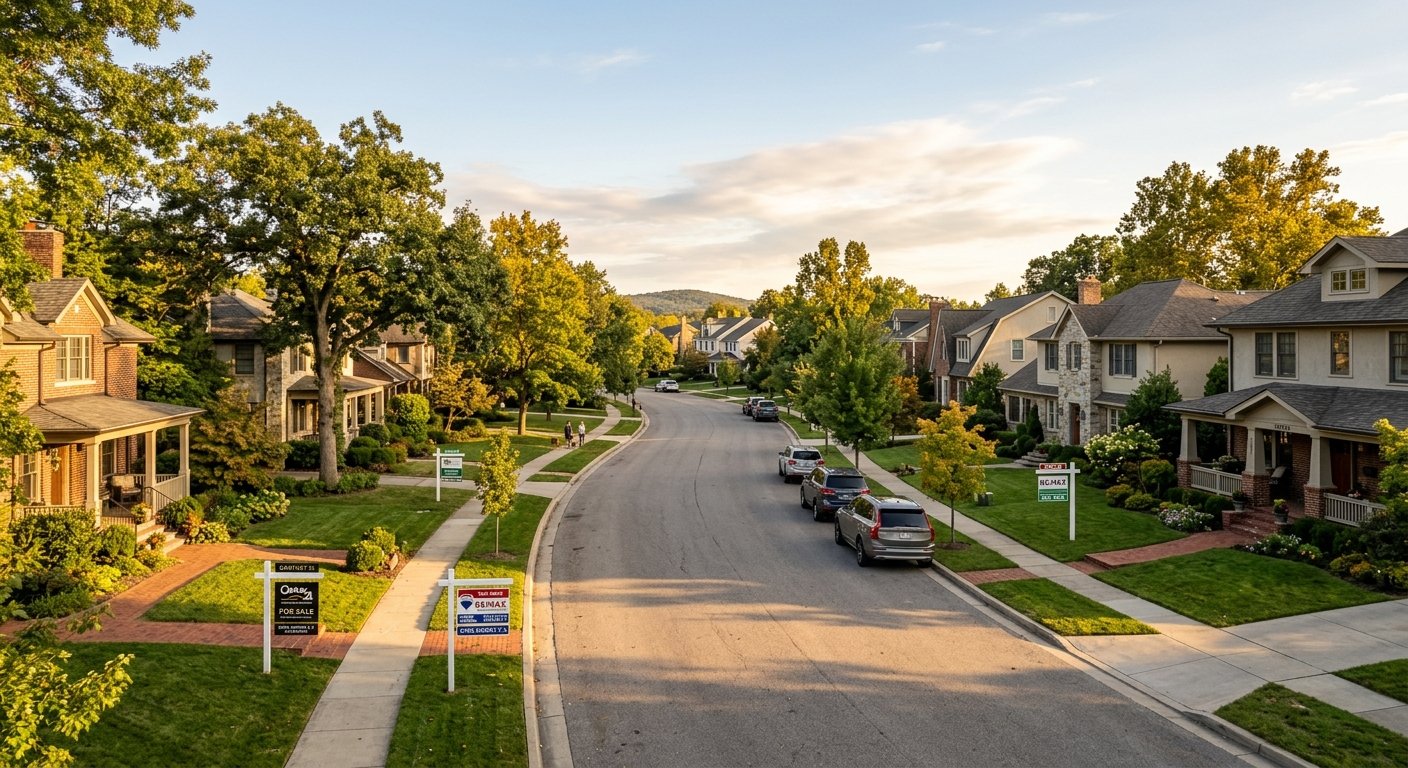
Most successful agents pick a farm of 300–600 homes in a defined neighborhood, subdivision, or zip code. Smaller than 300 and you won’t generate enough volume to be recognized. Larger than 600 and you’ll struggle to maintain the consistent contact frequency that builds top-of-mind awareness.
Look for neighborhoods where:
- Annual turnover is 5%–8% or higher (meaning 15–48 homes sell per year in a 300-home farm)
- You don’t already face a dominant agent with 30%+ market share
- Average sale price supports your commission goals
- The homes are walkable or densely clustered enough for cost-effective distribution
Circle Prospecting Around a New Listing
Just listed or just sold a home? Door hangers work beautifully for circle prospecting—hitting 200–400 homes immediately surrounding your new listing or recent sale. These neighbors are genuinely curious about what’s happening on their street, and your timing is perfect. Deliver within 48 hours of the event for maximum impact.
Step 2: Design a Door Hanger That Converts
The average homeowner gives a door hanger three to five seconds of attention before deciding to read or discard it. Your design has to earn that attention immediately.
Front Side: Stop the Scroll (On Paper)
Treat the front of your door hanger like a billboard. Use one bold headline that speaks directly to a homeowner’s interest. Strong options include:
- “Your Neighbor Just Sold for $485,000. What’s Your Home Worth?”
- “3 Homes Sold in [Neighborhood] This Month. Yours Could Be Next.”
- “Free Home Valuation—No Obligation, Just Numbers.”
Your headshot, brokerage logo, and contact information should appear on the front, but don’t let them crowd the headline. Homeowners respond to value, not agent photos.
Back Side: Give Them a Reason to Call
Use the back to provide genuine value: a recent sold list for the neighborhood, a QR code linking to a home valuation tool, a market snapshot, or a limited-time offer (free staging consultation, complimentary CMA). Include your phone, email, and website—but always make one call-to-action primary. Don’t ask them to do five things at once.
Size and Print Specifications
Standard door hangers are typically 3.5″×8.5″ or 4.25″×11″ with a die-cut hole or hook slot at the top. Use a thick stock—at least 14pt cardstock—so the piece feels substantial and holds up outdoors. Full-color printing on both sides is standard and expected. A flimsy door hanger signals a flimsy agent.
At Shop Direct Mail, our design team handles real estate door hangers from concept to print-ready file, so you don’t have to coordinate between a freelance designer and a print shop and hope the specs match. Everything is built for your campaign from the start.
Step 3: Plan Your Distribution
You have two realistic distribution options: hire walkers or do it yourself. Both work. Choose based on your time, budget, and the scale of your campaign.
DIY Distribution
For a 200–300 home circle prospecting blitz, many agents distribute themselves or with a team member. It takes two to three hours, costs nothing beyond printing, and gives you a genuine feel for the neighborhood—which houses are occupied, which have “For Rent” signs, which look like they might be ready to list.
Hiring a Distribution Team
For a larger farm of 400–600 homes, outsourcing distribution is usually worth the cost. Distribution services typically charge $0.05–$0.15 per door, meaning a 500-home farm costs $25–$75 to deliver. Always verify that your distributor provides route confirmation and doesn’t skip doors.
Frequency Matters More Than a Single Drop
One door hanger drop does not build a farm. Real estate prospecting requires repetition. Plan for a minimum of six touches over six months to start building recognition. Agents who commit to 9–12 months of consistent contact in a defined neighborhood consistently outperform those who run one-time blitzes. Pair your door hangers with a real estate postcard campaign for maximum coverage—some homeowners respond to the mailbox touch, others to the front-door touch.
Step 4: Track Your Results
One of the most common objections to real estate print marketing is “I can’t tell if it worked.” That’s a design problem, not a medium problem. Tracking a door hanger campaign is straightforward when you build measurement into the piece.
Tracking Methods That Actually Work
- Unique phone number: Use a call-tracking number exclusive to your door hanger campaign. Every inbound call from that number is a direct attribution.
- QR code with UTM parameters: Link to a unique landing page. Your analytics show you exactly how many scans converted to form fills or calls.
- Promo code or offer: “Mention code NEIGHBOR26 for your free home valuation” makes attribution easy and gives prospects a low-pressure entry point.
- Ask every lead: Train yourself to ask “How did you hear about me?” on every initial call. It’s simple and reliable.
Track your cost-per-lead over time. If a 500-piece campaign costs $350 in printing and distribution and generates 4 leads, your cost-per-lead is $87.50. If one of those converts to a $600,000 listing, the ROI math is obvious—and repeatable.
Step 5: Integrate Door Hangers Into a Broader Campaign
Door hangers are most powerful as part of a multi-touch strategy. Consider this layered approach for a new listing launch:
- Day 1: Distribute door hangers to 300 homes surrounding the listing
- Week 2: Mail just-listed postcards to the same households via USPS
- Month 2: Follow up with a just-sold postcard once the transaction closes
- Ongoing: Monthly farming postcard to maintain top-of-mind presence
This sequence means the same homeowner sees your name and brand across two physical channels within 30 days. That repetition is what moves you from “the agent who knocked on our street” to “the agent who sells in our neighborhood.”
If you’re also running EDDM campaigns for broader zip-code saturation, door hangers are the hyper-local complement—reaching the immediate cluster of homes most likely to call you about listing activity nearby.
Frequently Asked Questions
How many door hangers should I distribute per campaign?
For circle prospecting around a listing, 200–400 homes in the immediate surrounding area is typical. For neighborhood farming, plan to cover 300–600 homes consistently over 6–12 months. Smaller than 300 makes it hard to build recognition; larger than 600 stretches budgets and attention thin.
Are real estate door hangers legal everywhere?
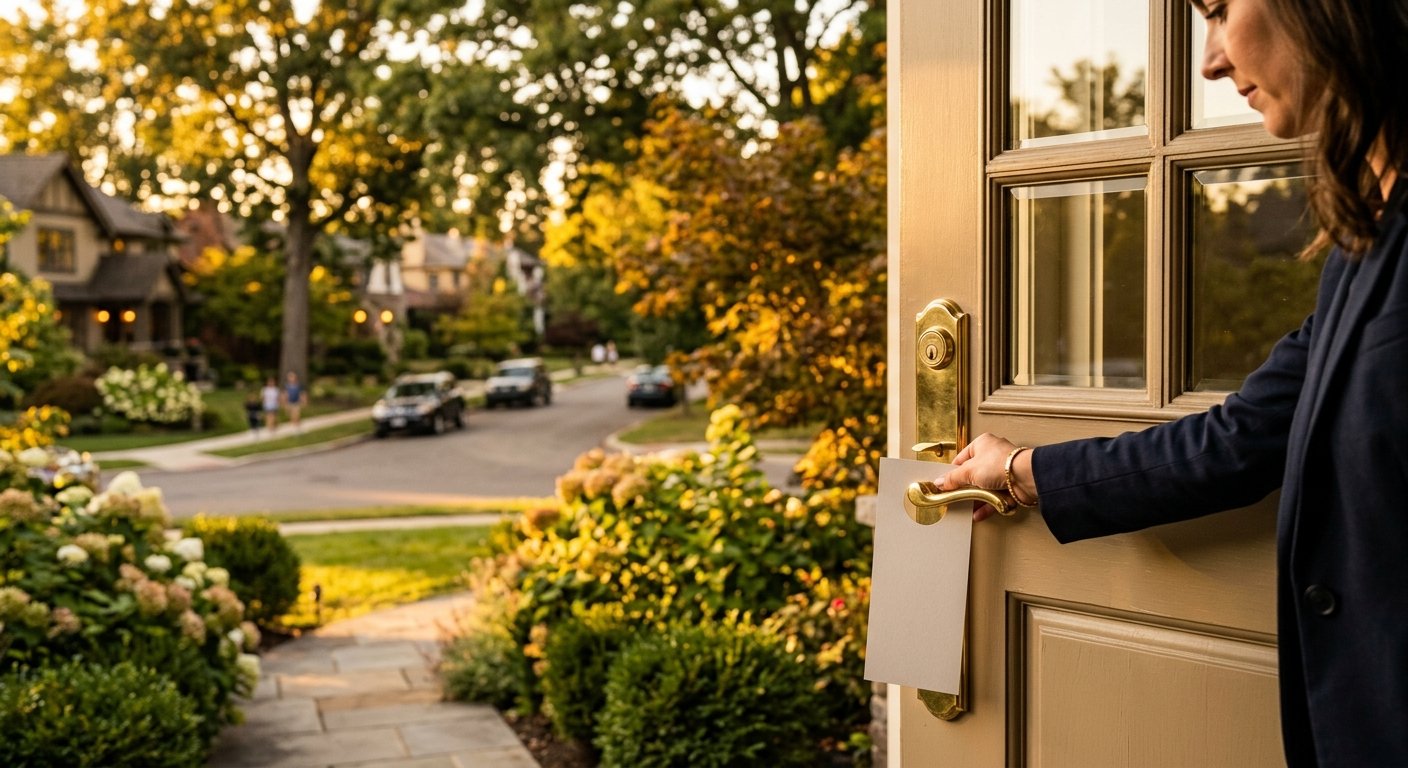
Most residential areas permit door hangers, but some municipalities and HOA-governed communities have restrictions. Always check local ordinances before distributing. Never place door hangers in or on mailboxes—that violates USPS regulations and can result in fines. The door handle or knob is the correct placement.
What’s the typical response rate for a real estate door hanger?
Response rates vary widely based on your offer, design, and how well you know your farm. Cold first-touch campaigns typically yield 0.5%–1.5% response rates. Repeated contacts in the same neighborhood often produce higher engagement as your brand becomes familiar. Tracking with a unique phone number or QR code will give you accurate data within your specific market.
How much do real estate door hangers cost to print?
Print costs depend on quantity, size, and stock. A run of 500 full-color, two-sided door hangers on quality cardstock typically costs $100–$200 in print alone. Add design and distribution, and a full campaign for 500 homes often runs $250–$450 total. At those economics, a single referral or listing covers the cost of months of prospecting.
Should I use door hangers or postcards for real estate farming?
Both work—and the most effective agents use both together. Postcards reach every household in a carrier route through the mailbox. Door hangers create a high-visibility, front-door impression that postcards can’t replicate. Combining them in a coordinated sequence maximizes the number of touchpoints a homeowner has with your brand.
Ready to Launch Your Door Hanger Campaign?
Real estate door hangers are one of the most direct, measurable ways to claim a neighborhood before your competition does. The strategy is straightforward. The execution is what separates agents who run one test campaign and quit from agents who build a consistent pipeline through print prospecting.
Shop Direct Mail handles the full process—strategy, design, printing, and fulfillment—so you spend your time on clients, not coordinating vendors. If you’re ready to put your name on every door in your farm, explore our real estate marketing materials or contact our team to build a campaign that fits your target neighborhood and budget.