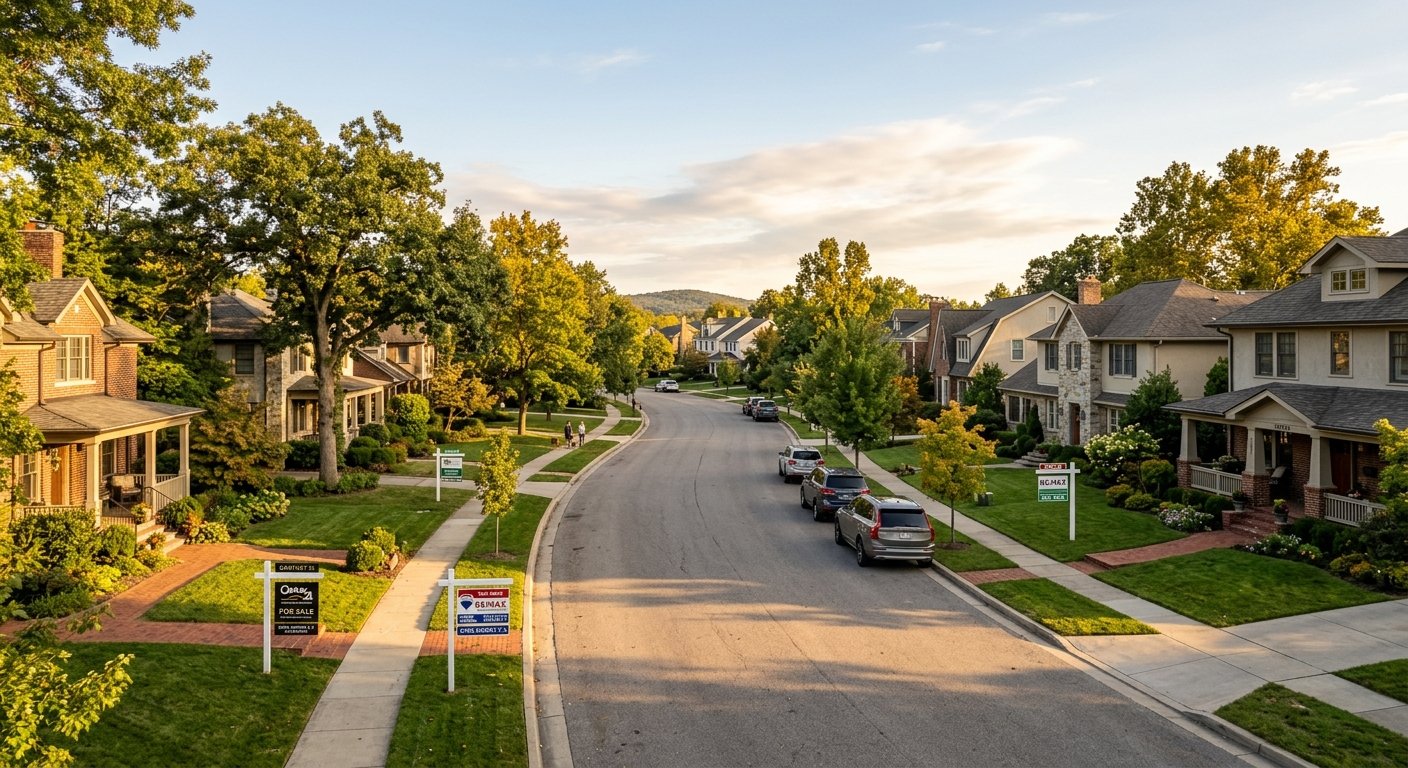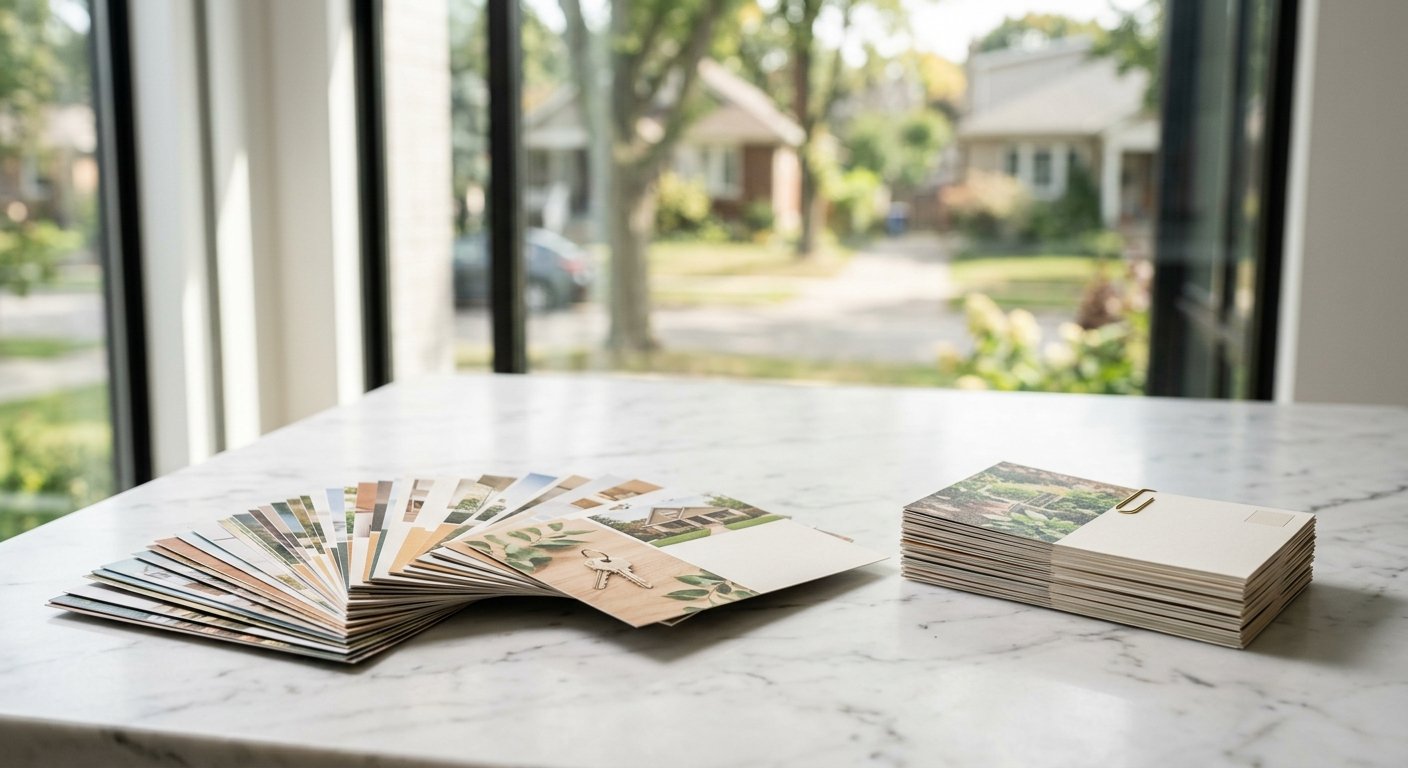
Only about 3% of homeowners in any given neighborhood are actively thinking about selling at any moment. But here’s the thing — if you’re the agent whose postcards, market updates, and sold announcements have been arriving in those mailboxes every month for the past year, you’re not just another agent when that 3% decides to pick up the phone. You’re the obvious choice.
That’s the power of real estate farming. And it starts with one critical decision: choosing the right neighborhood to farm.
Get this right, and a consistent six-month campaign can produce listing appointments, referrals, and a reputation that compounds over time. Get it wrong — and you’re spending money mailing strangers who already have an agent they love. This guide walks you through exactly how to evaluate and select a farm area worth your investment.
What Is Real Estate Farming (And Why It Still Works)?
Real estate farming is the practice of dominating a specific geographic area through consistent, repeated outreach — typically direct mail, with real estate farming postcards as the workhorse. You pick a neighborhood, show up every 4–6 weeks with valuable market information, and build name recognition until you become the “go-to agent” for that zip code or subdivision.
According to the National Association of Realtors, the majority of sellers still choose agents based on reputation and personal recommendations — often from neighbors. Consistent geographic prospecting builds exactly that kind of neighborhood reputation, something a boosted Facebook post simply cannot replicate.
Digital ads disappear. Mail lands on kitchen counters and stays there. That physical presence matters more than ever in a cluttered marketing environment.
The Numbers That Make a Farm Worth Your Time
Before you fall in love with a neighborhood, run the math. A farm area only makes financial sense if the turnover rate justifies your monthly investment.
Turnover Rate: The Most Important Metric
Turnover rate measures what percentage of homes in a neighborhood sell each year. A healthy farm target typically has a 5–8% annual turnover rate or higher. Here’s how to calculate it:
- Find the number of homes sold in that neighborhood in the past 12 months (pull from MLS)
- Divide by total homes in the area
- Multiply by 100 for your percentage
Example: 500-home subdivision, 30 closed sales in the last year = 6% turnover. That’s a viable farm. Below 3–4%? The neighborhood may not generate enough transactions to recover your mailing costs within a reasonable timeframe.
Average Sale Price and Your Commission Math
Pair turnover rate with average sale price. A neighborhood turning over 7% annually at $200,000 median price produces less gross commission opportunity than one turning over 5% at $450,000. Map both numbers before you commit.
A realistic scenario: 500 homes × 5% turnover = 25 transactions/year. At a 2.5% listing commission on a $400,000 average price, each listing is worth $10,000. If your farming effort earns you just 2–3 listings per year from that area, your ROI clears the mailing cost comfortably — even at $0.75–$1.00+ per piece per month for premium postcards.
How to Evaluate Competition in Your Target Area
Turnover rate alone won’t save you if one agent already owns 60% of the listings. Before you commit to neighborhood farming, check the MLS for the past 12–24 months and answer these questions:
- Is one agent listing 30%+ of homes in that area? If so, they’re likely already farming it aggressively.
- Are 3–5 agents splitting listings fairly evenly? That’s an opportunity — no clear dominant presence yet.
- Are listings scattered with no obvious agent pattern? You may have walked into an unfarmed neighborhood.
Finding an area without a clear market leader is one of the fastest ways to accelerate your farming results. You’re not competing for attention — you’re filling a vacuum.
Defining the Right Farm Size
Bigger is not better — at least not at first. New farmers often try to cover too much ground and end up mailing inconsistently because of budget pressure. That inconsistency kills results faster than any other mistake.
Starting Range: 250–500 Homes
For most agents launching a geographic prospecting program, a starting range of 250–500 homes hits the sweet spot between visibility and affordability. At approximately $0.75–$1.25 per piece (design, print, and postage), mailing 400 homes monthly runs roughly $300–$500 per month. That’s manageable for a solo agent and scalable as listings come in.
Once you’re generating consistent business from that core farm, expand by carrier route or adjacent subdivision — don’t jump to 1,500 homes before you’ve proven the first 400.
Consider EDDM for Saturation Campaigns
If your farm area aligns with a USPS carrier route, Every Door Direct Mail (EDDM) offers a cost-efficient way to saturate a neighborhood without purchasing a targeted list. EDDM retail rates run approximately $0.20–$0.25 per piece, making it one of the most affordable options for volume saturation. Standard EDDM sizes include 6.25″×9″, 6.5″×11″, and 6.5″×12″ — larger formats that stand out in the mailbox.
EDDM works best for broad neighborhood awareness campaigns. Pair it with a targeted list for FSBO, expired listing, or absentee-owner outreach within the same geography for layered coverage.
Practical Steps to Select Your Farm Area
- Pull 12 months of MLS data for the neighborhoods you’re considering. Sort by agent, volume, and price range.
- Calculate turnover rate for each candidate area. Target 5%+ to start.
- Assess agent concentration. Avoid areas where one agent holds 40%+ market share unless you have a compelling differentiator.
- Choose a size you can afford to mail consistently for 6–9 months. Commit before you start. The USPS recommends consistent mailing cadences for measurable recall results.
- Acquire your list. A targeted list by carrier route, subdivision, or homeowner demographic helps you reach the right households — not just every address in a zip code.
- Design and mail your first campaign. Lead with value: a recent sold report, local market snapshot, or a neighborhood-specific offer. Make it about them, not you.
Tracking Your Farming Campaign Results
One of the most common objections to direct mail is “how do I know it’s working?” The answer: build tracking into every piece from the start.
- Call-tracking numbers: Assign a unique phone number to your farming postcards so every inbound call is logged to that campaign.
- Custom URLs or QR codes: Drive recipients to a neighborhood-specific landing page. QR scans are trackable and increasingly common among homeowners of all ages.
- Promo codes: If you’re offering a free home valuation or market report, use a code tied to your direct mail piece.
- USPS Informed Delivery: This free service lets you confirm delivery dates and reach, adding another layer of campaign accountability.
Research from the Data & Marketing Association consistently shows direct mail response rates outperforming many digital channels for local targeting — typically in the 0.5%–2% range for cold prospect lists, with higher returns for warmed audiences receiving repeat touches. After 6+ months of consistent farming, response rates often climb as name recognition builds.
Common Mistakes to Avoid
- Mailing once and quitting. Real estate farming requires 6–9 months minimum before most agents see consistent listing leads. Stopping at month 3 is the most expensive mistake in direct mail.
- Choosing a farm because you live there. Personal attachment is fine, but make sure the numbers support it. Sentiment doesn’t pay for postage.
- Generic, logo-heavy postcards. Homeowners respond to data and relevance — recent sold prices, market updates, neighborhood stats. Your headshot is secondary to their equity position.
- Skipping list hygiene. A clean, deduplicated list ensures your budget isn’t wasted on vacant lots and duplicate addresses.
Frequently Asked Questions
How long does real estate farming take to produce results?
Most agents begin seeing measurable results — inbound calls, listing appointments, referrals — after 6–9 months of consistent monthly mailings. The first 90 days build awareness; months 4–9 build credibility. Commit to at least six months before evaluating ROI.
How many homes should I include in my farm area?
A starting range of 250–500 homes is manageable for most agents. This size supports consistent monthly mailing on a realistic budget while generating enough transactions to justify the investment. Expand once your first farm is producing results.
What types of postcards work best for neighborhood farming?
Market update postcards (featuring recent sold prices and days on market), just-sold announcements, and home valuation offers consistently outperform generic “I’m your agent” mailers. Lead with data your neighbors actually care about. You can explore professionally designed real estate farming postcards built specifically for geographic prospecting campaigns.
Should I use EDDM or a targeted list for my farm?
Both have a role. EDDM is ideal for saturation coverage within a carrier route at a lower cost per piece. Targeted lists let you filter by homeowner status, length of residence, or home value — useful when you want to focus on likely sellers. Many agents use EDDM for broad coverage and layer in a targeted list for higher-priority prospects within the same geography.
Can I farm multiple neighborhoods at the same time?
Yes, but only if you can sustain consistent mailing cadences across all of them. Spreading budget too thin and mailing irregularly is worse than farming one smaller area consistently. Nail your first farm before adding a second.
Ready to Start Farming?
Choosing the right farm area is the strategic foundation your entire campaign stands on. Get the turnover rate, competition analysis, and farm size right — then commit to showing up every month with content homeowners actually want to read.
At Shop Direct Mail, we handle strategy, list acquisition, design, printing, and mailing under one roof — so you can focus on converting leads instead of coordinating vendors. Explore our real estate farming postcards or browse our full real estate marketing services to start building the neighborhood presence your competition hasn’t claimed yet.