Direct mail open house invitations genuinely work — when they reach the right households at the right time. Agents who mail a targeted radius around a listing typically see stronger foot traffic than those relying on digital alone, because a physical postcard stays on a kitchen counter until the weekend arrives. The strategy works best when it’s timed 5–7 days before the event and mailed to a curated neighborhood list.
- Physical open house invitations outperform digital-only promotion for neighborhood foot traffic because they land where buyers live.
- A targeted radius of 200–500 nearby homes is the proven sweet spot for most listing price points.
- Mailing 5–7 days before the event gives USPS delivery enough time and keeps the card top-of-mind.
- Tracking tools — QR codes, unique URLs, and call-tracking numbers — turn every mailing into measurable data.
- Open house mailers double as real estate farming touchpoints, building long-term name recognition beyond the single event.
Why Physical Mail Still Drives Open House Traffic
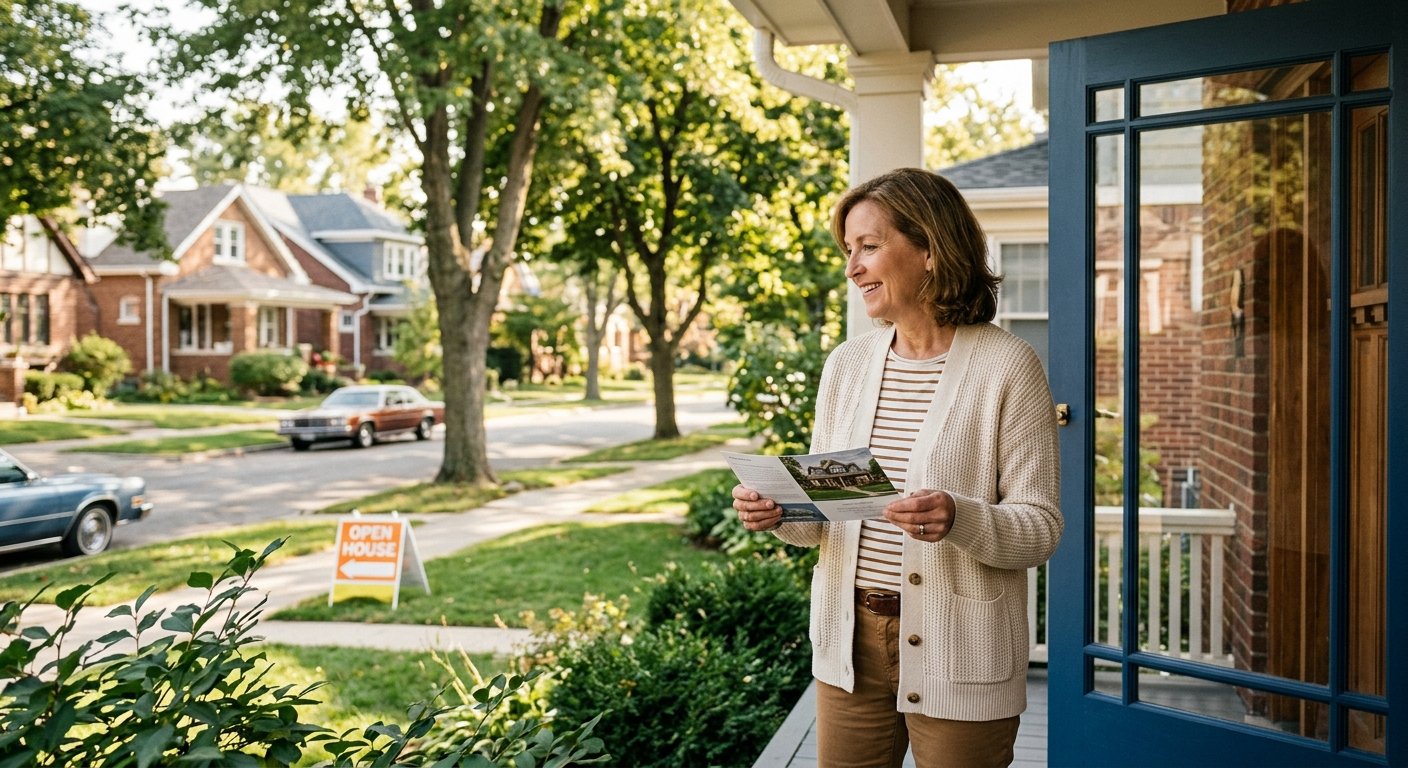
The skeptic’s objection writes itself: “Everyone is on social media — why spend money on postcards?” Here’s the short answer: the USPS reports that direct mail household response rates consistently outperform digital display advertising, and for hyper-local events like open houses, physical geography matters more than digital impressions. A neighbor scrolling past a Facebook ad doesn’t pause. A neighbor who picks up a glossy postcard showing the house three doors down? That’s a different story.
Open house foot traffic comes primarily from two groups: active buyers already searching in the area, and curious neighbors who might know a buyer, sell their own home soon, or simply want to see inside the house down the street. Direct mail postcards reach both groups simultaneously. A social media ad targets the first group only — and only if the algorithm cooperates. Real estate mailers reach every household in the delivery zone, no algorithm required.
Neighbors who attend open houses often become your next listing clients. They’re watching the market, tracking prices, and mentally comparing their own home. A well-designed open house postcard positions you as the area expert before you ever shake their hand.
How to Target the Right Households

The most common mistake with open house mailers is mailing too broadly or too randomly. A 5,000-piece saturation drop for a $400,000 suburban listing in a neighborhood of similar homes makes sense. That same 5,000-piece drop scattered across unrelated zip codes wastes budget and produces weak response.
Radius Targeting vs. Carrier Route Saturation
For open house marketing, you have two primary mailing approaches:
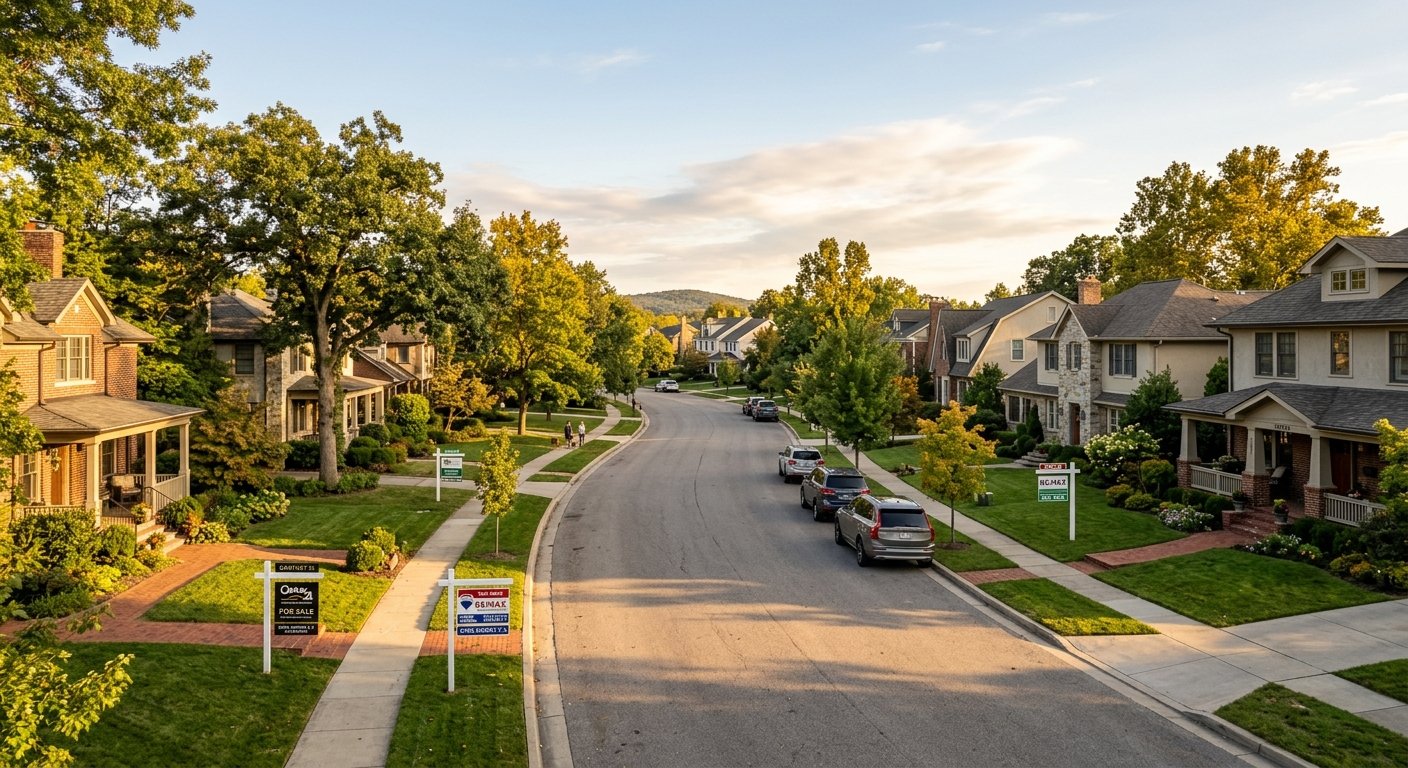
- Radius targeting: Mail to every household within a defined distance from the listing — typically a 0.25- to 0.5-mile radius. This is surgical. You’re reaching the neighbors most likely to attend or refer a buyer. A curated list from a list acquisition service lets you filter by homeowner status, estimated home value, or years in residence.
- EDDM saturation: Every Door Direct Mail covers every active delivery address on a postal carrier route. No list purchase required. Approximate retail rates run around $0.20–$0.25 per piece (rates change — verify current pricing at USPS EDDM’s official resource page), making it one of the most cost-effective ways to blanket a neighborhood. The trade-off: you can’t filter by homeowner status or income, so you’ll mail to renters alongside owners.
For most agents, a combination works well: radius-targeted lists for higher-end listings where precision matters, and EDDM saturation for entry-level or high-inventory neighborhoods where volume and cost efficiency are the priority.
| Targeting Method | Radius List | EDDM Saturation |
|---|---|---|
| List filtering | Yes — by owner, value, tenure | No — all active addresses |
| Approx. cost per piece | Higher (list + postage + print) | Lower (~$0.20–$0.25 postage) |
| Best for | Targeted farming, luxury listings | High-volume neighborhood coverage |
| Setup complexity | Moderate (list acquisition needed) | Low (no list purchase) |
What Makes an Open House Postcard Actually Work
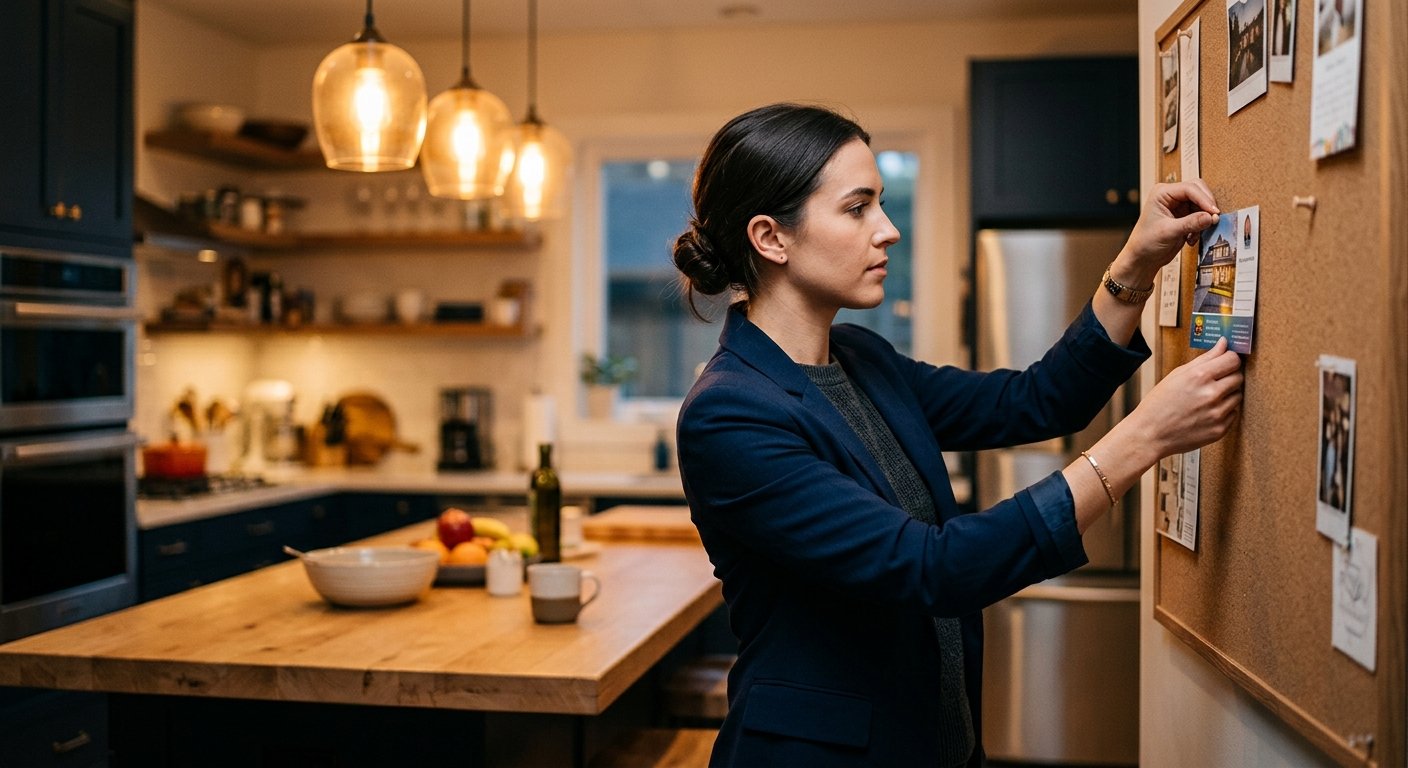
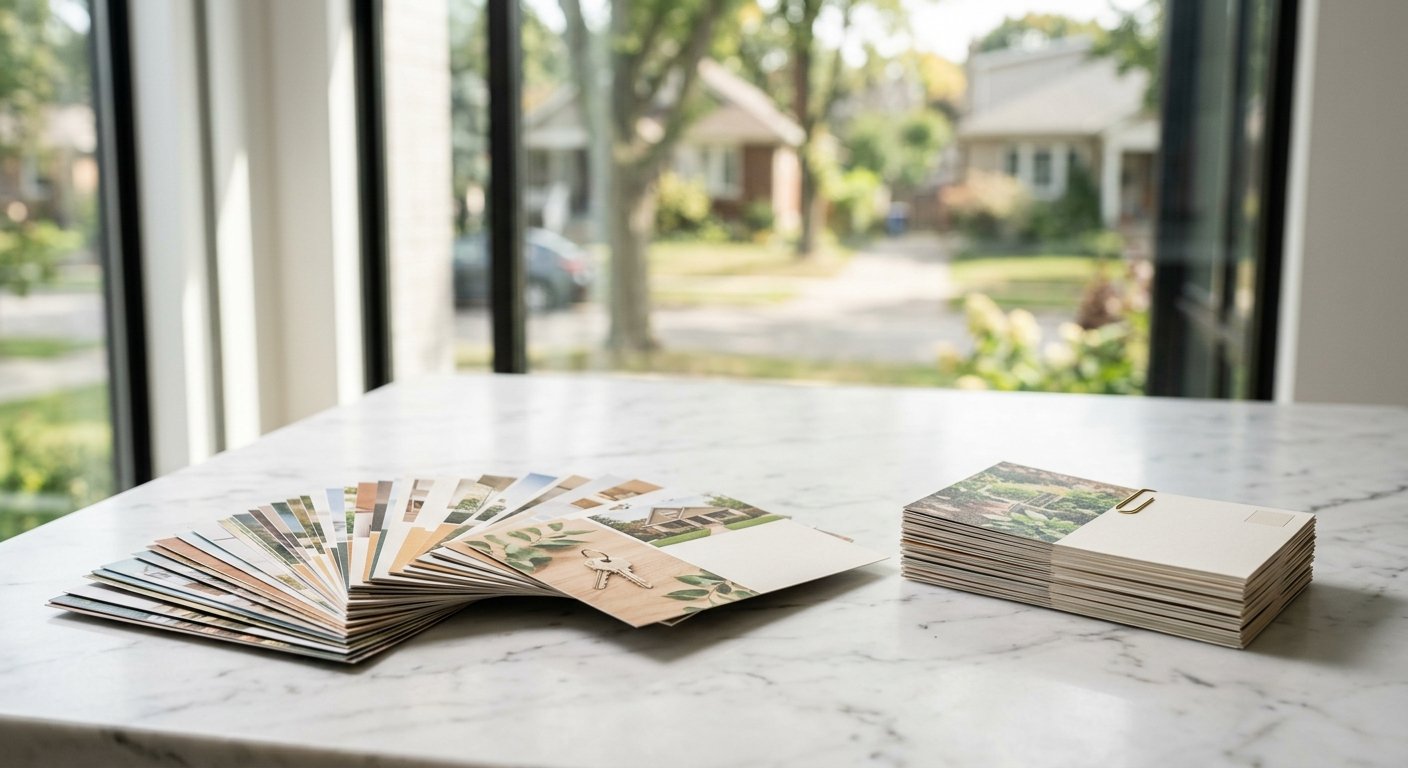
Design is where most agents cut corners and lose results. A postcard that looks like every other piece of real estate print marketing in the mailbox gets recycled without a second glance. One that stands out gets pinned to the fridge until Saturday.
The Elements That Drive Response
- A strong hero image: The exterior photo should be professionally shot and bright. If the listing photos are dark or unflattering, the postcard will be too.
- Date, time, and address — large: The single most important information. Make it impossible to miss at arm’s length.
- One clear call to action: “Join us Saturday” or “See it before it’s gone.” Don’t bury the event in paragraph text.
- Agent photo and contact info: Real estate is a trust business. A face on the card builds faster recognition than a logo alone.
- A QR code: Links to the listing page, virtual tour, or RSVP form — and gives you a trackable click metric you can actually measure.
At Shop Direct Mail, we handle design alongside printing and mailing under one roof, so agents aren’t piecing together three different vendors the week of a listing. When every element — layout, list, print specs, and drop date — is coordinated by one team, things go out on time.
For EDDM-compliant pieces, minimum dimensions are 6.25″×9″. Larger formats like 6.5″×11″ or 6.5″×12″ stand out more in a mailbox stack and typically see higher notice rates. If your goal is open house foot traffic, go bigger.
Timing, Frequency, and the Farming Multiplier
For a single open house, mail 5–7 days before the event date. USPS standard mail delivery typically runs 3–5 business days, so mailing too early risks the card being discarded before the weekend, and mailing too late means some households don’t receive it in time.
But here’s what most agents miss: the open house postcard is also a farming touchpoint. Every time a neighbor receives a card from you — whether it’s a just-listed announcement, an open house invite, or a just-sold follow-up — you’re accumulating name recognition. Real estate postcards work best as part of a 6-to-12-month consistent campaign, not a single one-off mailing. The agent who mails that neighborhood monthly for nine months is the one who gets the call when a homeowner decides to list.
The open house postcard is more than an event invitation — it’s a farming touchpoint that compounds over time.
Tracking Results: How to Know If It Worked
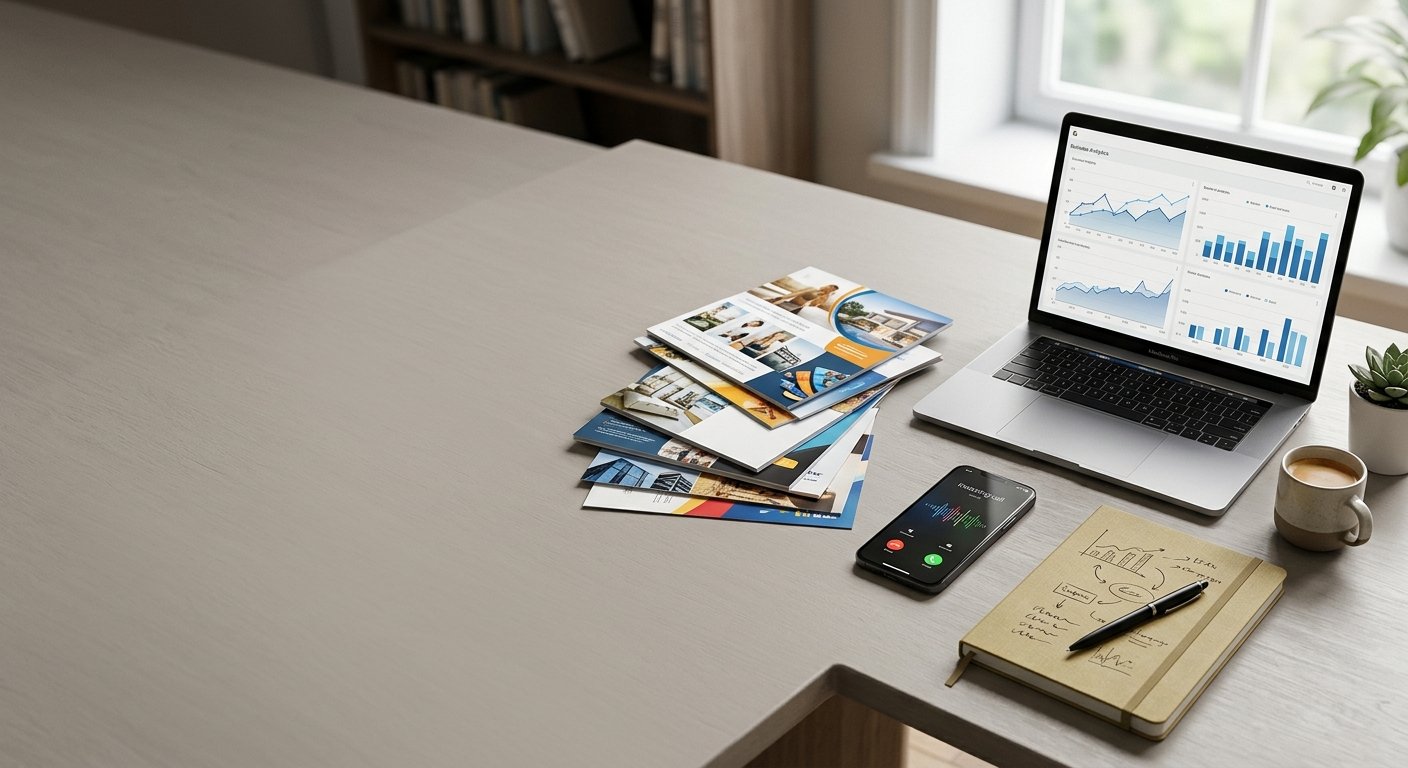
Direct mail is more measurable than most agents assume. If you’re mailing and not tracking, you’re leaving valuable data on the table. Here’s how to close that gap:
Use a unique QR code
Link to a landing page or listing URL that’s exclusive to the postcard. Every scan is a trackable lead from that specific mailing.
Add a call-tracking number
A forwarding number specific to the campaign captures every call that originates from the card, without changing your real contact number.
Ask at the door
“How did you hear about the open house?” is a simple question. Make it a habit and you’ll build a clear picture of which marketing channel drives foot traffic.
Review USPS delivery confirmation
EDDM campaigns come with postal receipts that confirm delivery date and route. Keep these for your campaign records.
Direct Mail vs. Digital-Only Open House Promotion
Digital promotion — social posts, email blasts, online listing syndication — reaches buyers who are actively searching. It’s a necessary part of any listing marketing plan. But it has a ceiling when it comes to neighborhood awareness. Neighbors who aren’t actively browsing Zillow won’t see your Instagram post. They will see a postcard in their mailbox.
The strongest open house campaigns run both channels in parallel: digital ads for active buyers, direct mail postcards for the surrounding neighborhood. The two complement each other without duplicating spend. For agents managing their own direct mail marketing budget, a 200–500 piece neighborhood drop is a manageable investment with a clear, trackable return.
Frequently Asked Questions
How many homes should I mail for an open house invitation?
For most listings, mailing 200–500 homes within a quarter- to half-mile radius is a practical starting point. Higher-priced listings in lower-density areas may warrant a wider radius. The goal is to reach neighbors likely to attend or refer a buyer, not to blanket an entire zip code.
How far in advance should I mail open house postcards?
Mail 5–7 days before the open house date. USPS standard delivery typically takes 3–5 business days, so this window ensures cards arrive with enough lead time for recipients to plan their Saturday without arriving so early the event feels distant.
Are direct mail postcards worth the cost for a single open house?
A neighborhood postcard drop for an open house is most cost-effective when it’s also treated as a farming touchpoint. The immediate goal is foot traffic; the longer-term return is name recognition in that neighborhood. Agents who view each mailing as part of a multi-touch campaign typically see stronger cumulative results than those treating it as a one-time expense.
Can I use EDDM for open house invitations?
Yes. EDDM is well-suited for open house mailers when you want to cover every household on one or more carrier routes near the listing. It’s cost-effective, requires no list purchase, and meets USPS size minimums (6.25″×9″ or larger). The limitation is that you can’t filter by homeowner status — you’ll reach renters alongside owners.
How do I track whether the postcard drove open house attendance?
Use a QR code linked to a campaign-specific landing page or virtual tour, a call-tracking number printed on the card, and a simple “how did you hear about us?” question at the door. EDDM mailings also come with postal delivery receipts that document the drop date and route covered.
Ready to fill your next open house?
Tell us about your listing and we’ll help you design, print, and mail a neighborhood postcard campaign that’s in the right hands before the weekend.

About Shop Direct Mail Marketing
Shop Direct Mail is a full-service direct mail marketing partner for real estate agents, contractors, and local service businesses nationwide. We provide end-to-end strategy, design, list acquisition, printing, and mailing services that help small and medium-sized businesses cut through digital clutter with tangible, measurable campaigns. Our focus is on ROI-driven tactics like real estate farming, EDDM saturation, just-listed/just-sold postcards, and neighborhood prospecting that generate leads and customers business owners can track. Visit shopdirectmail.com →