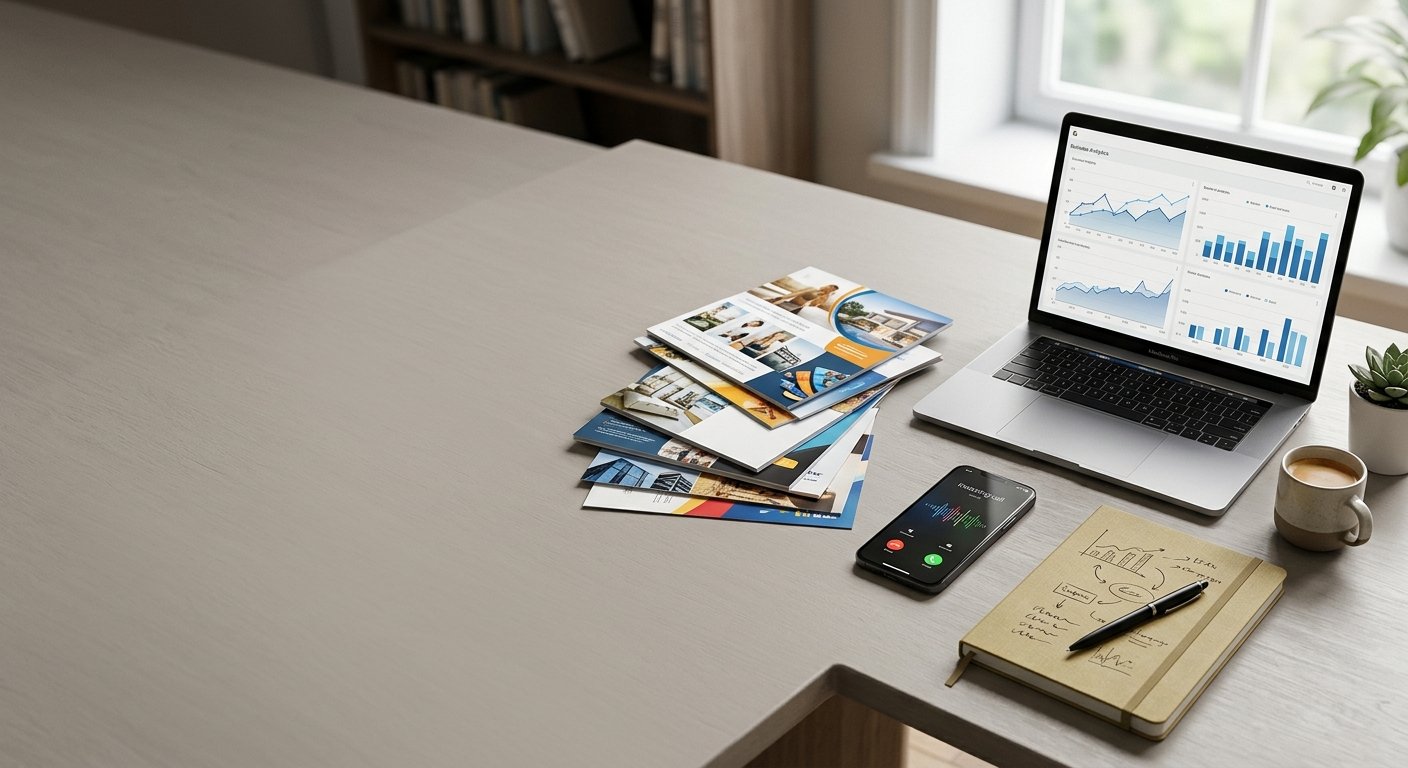
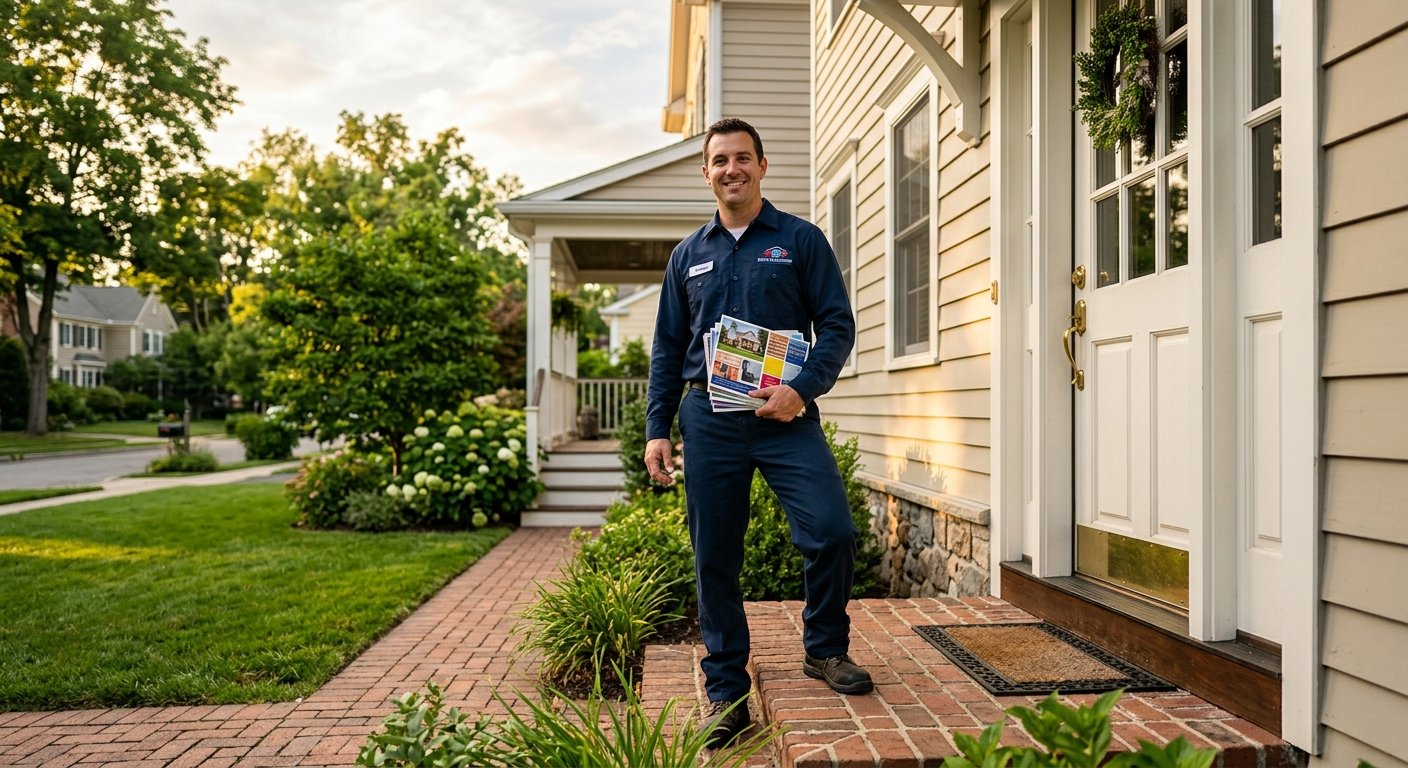
HVAC direct mail works by putting a physical offer in front of homeowners in your service area before a competitor gets there first. The most effective approaches combine targeted mailing lists — filtered by home age, ownership status, and carrier route — with consistent seasonal timing. For HVAC companies ready to grow past referrals, direct mail is one of the most trackable, cost-effective tools available.
- EDDM postcards let you saturate every home in a carrier route for roughly $0.20–$0.25 per piece — no list purchase required.
- Targeted mailing lists filtered by home age or income bracket improve relevance and response for maintenance contracts and system-replacement campaigns.
- Seasonal timing (pre-summer AC tune-ups, pre-winter furnace checks) consistently outperforms year-round generic messaging.
- Call-tracking numbers, QR codes, and promo codes make it easy to measure exactly which mailers drove phone calls and booked jobs.
- A 6–9 month commitment to the same neighborhoods builds name recognition that turns into calls when a system fails at 11 p.m.
Why Direct Mail Still Works for HVAC Contractors

Homeowners don’t search for an HVAC company when things are comfortable. They search — or grab the nearest piece of mail — when something breaks or when a seasonal reminder shows up at exactly the right moment. Digital ads disappear the second a homeowner closes their browser. A well-designed postcard sits on a kitchen counter until the problem arrives.
According to the USPS Delivers research hub, direct mail consistently achieves response rates that outperform digital channels for local service businesses. Cold targeted lists typically generate 0.5%–1% response rates; repeat audiences and saturation campaigns through Every Door Direct Mail often run higher. For a contractor running 2,000-piece drops, even a 1% response rate means 20 inbound calls — and a single HVAC repair or new install can easily cover the cost of the entire mailing.
The math is straightforward: direct mail roi for service businesses is easier to calculate than almost any digital channel. You know exactly how many pieces went out, what you paid per piece, and — with a call-tracking number — exactly how many calls came in.
A postcard that lands during the first heat wave of summer isn’t just marketing — it’s the answer to a problem the homeowner has right now.
EDDM vs. Targeted Lists: Which Is Right for Your HVAC Business?

The choice between EDDM saturation and a targeted mailing list isn’t either/or — it depends on your goal for each campaign. Here’s how to think about it:
| Criterion | EDDM Saturation | Targeted Mailing List |
|---|---|---|
| Best for | Brand awareness, seasonal promos, new service areas | System-age targeting, high-income homeowners, maintenance contracts |
| List cost | None — routes are public | Varies by filter complexity |
| Postage rate | Approx. $0.20–$0.25/piece (USPS retail) | Standard presort rates apply |
| Targeting depth | Geographic only (carrier route) | Age of home, income, ownership, HVAC purchase history |
| Minimum quantity | 200 pieces per route | Flexible by list vendor |
| Ideal campaign type | Summer AC tune-up, spring EDDM blast | System replacement, service agreement upsell |
EDDM postcards are the fastest way to blanket a zip code without buying a list. Shop Direct Mail handles the entire process — carrier route selection, design, printing, and USPS drop — so you’re not coordinating three vendors. For new service areas or storm-chasing campaigns, EDDM saturation is often the fastest path to coverage.
Targeted lists shine when you need precision. A 15-year-old home in a middle-income suburb is statistically far more likely to need a new system than a 3-year-old new build. Filtering by home age, square footage, or even recent HVAC permit activity can meaningfully improve the quality of your response — not just the volume.
Stack both approaches: use EDDM to saturate a new service area for name recognition, then follow up 60 days later with a targeted list campaign to the highest-probability homeowners in the same area. The first wave makes your name familiar; the second wave makes the pitch specific.
Seasonal Campaigns That Drive Real HVAC Calls
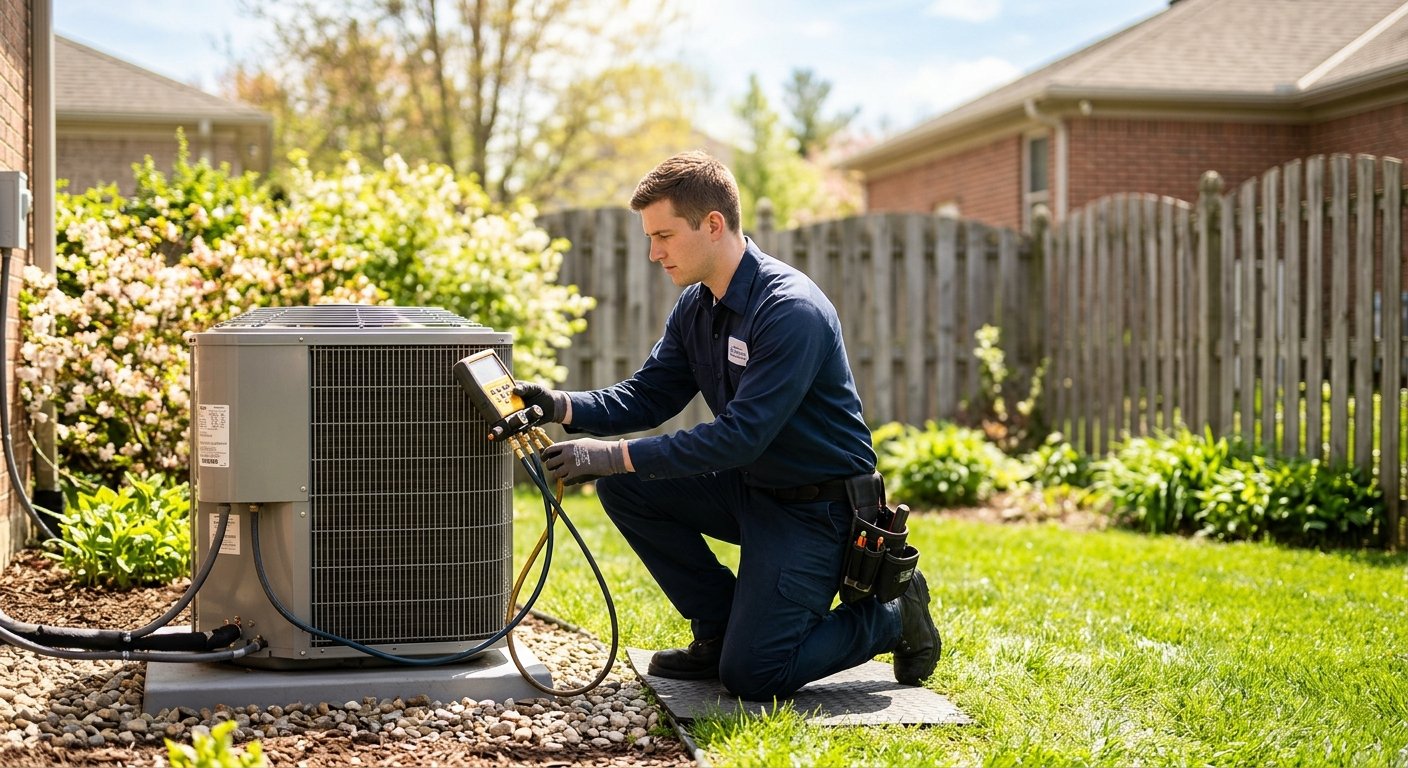
Timing is where most contractor marketing fails. Sending a generic “call us for all your HVAC needs” postcard in October doesn’t land with urgency. Sending a pre-winter furnace inspection offer in late September — before the first cold snap — does.
Pre-Summer (April–May)
Mail an AC tune-up or system check offer 4–6 weeks before peak heat. Homeowners booking early are easier to schedule and less likely to call three competitors.
Summer Storm Response (June–August)
If your market experiences significant weather events, a rapid EDDM drop in affected zip codes — focused on system damage assessments — can generate a surge of inbound calls within 7–10 days of mailing.
Pre-Winter (September–October)
Furnace tune-ups and maintenance agreements close best in fall. Homeowners want peace of mind before the cold sets in — this is also the best time to pitch annual service contracts.
Off-Season Reactivation (January–February)
Mail past customers with a loyalty discount or referral incentive. Reactivation campaigns to warm lists typically outperform cold prospecting on response rate at a fraction of the cost.
Postcard Design That Converts for HVAC
HVAC contractor postcards that convert share a few non-negotiable traits. They lead with the offer — not the company name. They make the phone number and QR code impossible to miss. And they include a deadline or limited-availability trigger that creates mild urgency without feeling gimmicky.
Size matters, too. A 6.5″×11″ postcard stands out in a standard mailbox stack. It gives you enough surface to include a strong headline, your core offer, social proof (a short review line or tenure statement), and a clear call-to-action — without feeling cluttered. EDDM-compliant sizes include 6.25″×9″, 6.5″×11″, and 6.5″×12″, all of which meet USPS Every Door Direct Mail size requirements.
Including a promo code (e.g., “FALL25”) on every mailer version lets you track which campaign drove each call — even if the homeowner doesn’t use the QR code. Ask your call-tracking provider to set up a unique number per campaign drop so you can attribute revenue directly to each mailing.
Shop Direct Mail’s design team builds contractor postcards with these conversion principles baked in — not as an afterthought. When strategy, design, printing, and mailing all live under one roof, your postcard doesn’t get lost in translation between vendors.
Measuring What Your HVAC Mailers Actually Do
One of the most common objections to direct mail is that it’s hard to track. It isn’t — if you set up measurement before you mail. Here’s a simple framework:
- Call-tracking number: Assign a unique local number to each campaign. Calls to that number are logged automatically, giving you call volume, duration, and conversion rate.
- QR code: Link to a dedicated landing page or a pre-filled contact form. Track page visits from each campaign drop separately.
- Promo code: Ask customers how they heard about you at booking. A simple code on the mailer makes this effortless for your office team.
- USPS Informed Delivery: Homeowners who use USPS Informed Delivery get a digital preview of incoming mail — giving your postcard a second impression before it even hits the box.
Track cost per call, cost per booked job, and average job revenue for each campaign. After two or three drops, you’ll have real data on what’s working and which neighborhoods convert best — intelligence you can feed back into the next campaign.
Building a Neighborhood Presence That Compounds Over Time
Local business marketing for HVAC isn’t a one-and-done play. The contractors who dominate a service area are the ones who show up in mailboxes consistently — not the ones who mail once when business is slow and disappear when it picks up.
A 6–9 month commitment to the same carrier routes or mailing list segment transforms a cold prospect into a familiar name. By the third or fourth mailer, homeowners recognize your brand before they open the envelope. That familiarity is what drives calls at inconvenient hours — when a system fails on a holiday weekend and they’re not going to research five companies. They’re calling the one they’ve seen before.
Consistency also compounds your investment. Each successive drop costs roughly the same, but the response rate tends to improve as brand recognition builds. That’s the real direct mail ROI story for service area marketing: it’s not just about the first campaign, it’s about the cumulative effect of showing up every season.
Frequently Asked Questions
How many homes should I mail to start an HVAC direct mail campaign?
A good starting point for most HVAC companies is 1,000–2,500 pieces per drop, covering 2–5 carrier routes near your primary service area. This gives you enough volume to generate statistically meaningful response data without overcommitting budget before you’ve tested messaging and offer types.
What’s the difference between EDDM and a targeted mailing list?
EDDM (Every Door Direct Mail) saturates every address in a carrier route with no list purchase — ideal for brand awareness and seasonal offers. A targeted mailing list lets you filter by home age, income, ownership status, or purchase history — better for system-replacement campaigns and maintenance contract upsells. Many HVAC contractors use both in combination.
How do I track which mailers are generating HVAC leads?
Use a unique call-tracking number on each campaign, pair it with a QR code that goes to a dedicated landing page, and include a promo code your office team can log at booking. These three layers give you call volume, digital engagement, and booked-job attribution for every mailer you send.
How often should an HVAC company mail to the same neighborhood?
For consistent brand building, aim for every 6–8 weeks in your core service area. For seasonal campaigns, plan around your two primary peaks — pre-summer (April–May) and pre-winter (September–October). Mailing too infrequently means homeowners forget you; mailing too frequently can feel intrusive and increase your cost without proportional return.
Is direct mail worth it for a small HVAC company?
For local service businesses with a defined service area, direct mail is often more efficient than digital advertising because you pay only for households in your actual coverage zone. A single HVAC install or multi-year maintenance contract can return the cost of an entire campaign. The key is consistent execution and proper tracking — not a single one-time mailing.
Ready to Fill Your HVAC Schedule With Direct Mail?
Tell us your service area and seasonal goals — we’ll build a campaign that gets your postcards in front of the right homeowners at the right time, from design through delivery.

About Shop Direct Mail Marketing
Shop Direct Mail is a full-service direct mail marketing partner for real estate agents, contractors, and local service businesses nationwide. We provide end-to-end strategy, design, list acquisition, printing, and mailing services that help small and medium-sized businesses cut through digital clutter with tangible, measurable campaigns. Our focus is on ROI-driven tactics like real estate farming, EDDM saturation, just-listed/just-sold postcards, and neighborhood prospecting that generate leads and customers business owners can track. Visit shopdirectmail.com →